


“If you don't like something, change it. If you can't change it, change your attitude.” Maya Angelou
It would have been easy to pick any of the beautiful women that have resisted, pushed forward, marched, motivated, or been martyred for others through words and actions. There is a long list of those many of us acknowledge, and surely a much longer list of those that we do not. I have chosen to share with you about one that is not well known, yet her works, and indeed, what she chose not to do in her life, had lasting impact in the lives of many.
Virginia (Tucker) Harris, or Mamaw
My heart has searched for an eloquent way to tell you about the woman who has inspired me throughout my life. The truth is not always gentle, and I have smiled and cried as I think of my great-grandmother’s life. The words and stories about her have come from the lips of many, because she was not a boastful woman. My own mother was named after Virginia, to honor her, and Mom also shared the care and wisdom given by her namesake. I can hear not only my great-grandmother, but also my Mom saying, “Pretty IS, is pretty DOES,” reminding me that actions can add to or detract from our beauty. Mom would tell me that who we are, and not how we look, is what is most important.
Imagine falling in love with a charming person, attractive and witty, that owned property, and promises, at the very least, the security of undying love. Life together begins hopeful, building the first part of a home that would grow as the family becomes larger. The new relationship energy wears thin as your new spouse is revealed to be inconsistent, undisciplined, and unchanging even when repentant. By the time it is comprehended that the need to be responsible will not alter the negative aspects of your spouse’s behavior, you are parents, and ultimately, without options of birth control, have seven children. This is what happened to Virginia Harris.
That is the socially acceptable description, though there were many truths much darker, and she handled each by not giving up.
My great-grandfather, Papaw, was a gambler and he liked to drink, and rarely stayed employed for long. He would sell portions of the property, sometimes for less than the full value, and even lost some of it wagering it when he had no money.
He also was unfaithful, and blamed his infidelity on other things, and I have no doubt it was the reason they each had their own bed during the few years I knew them when I was a child.
It would be easy for someone to say Virginia Harris should have left her situation. The first few decades of the 1900’s were not easy in rural Oklahoma for women in general. Women’s Rights were almost non-existent. Resources were not there for social or even medical care. Child labor legislation and securing the rights of children to live safely, without neglect or abuse, were new concepts even at the federal level.
Virginia Harris became a help to women in need, and a role model. She was a skilled midwife in an area that didn’t have a doctor closer than thirty miles away, and sometimes farther, if the doctor was working in the opposite direction. Women came to her, or someone took her to them, and she did prenatal check-ups as well. Age, race, and marital status were tenets of discrimination for some midwives, and physicians, too, but not for her. She said ‘no child was brought into this world by fault of their own,’ and she fully comprehended the security it provided to know she would do all she could to help. Some could offer her payment, perhaps a dollar, or food they had raised or grown, though most were quite poor. When her husband’s mistress found herself pregnant, the most important thing to Mamaw was the lives and health of mother and baby. She assisted her, woman to woman, in her time of need.
When the doctor could come to be with an expectant woman, he took Virginia Harris with him, for she knew the woman, and he taught her more each time, too.
My father’s mother travelled back to Oklahoma from California so that Mamaw could deliver her grandson when it was time. She knew her mother had helped more successfully deliver than many obstetricians in Northern California.
My great-grandparents had very little, and what finances they did have were from her laundering and ironing people’s clothes for pennies, sewing and mending, and midwifery. I can assure you there were times Papaw found money she had hidden, paltry as it likely was, and used it.
Virginia never faltered.
She forgave, and moved on for years. I know my great-grandmother and great-grandfather cared for one another, though the pain he caused would have drained many of their tolerance.
He made the knives she used to prepare all the wonderful meals she made, because the knives available for sale were all designed for use by right-handed people.
As a child, teachers would beat her for writing with her left hand, yet Mamaw knew school would secure the futures of her children. She sent them as long as she had at least a half potato to send for each child to eat for lunch, and if there was not enough food for everyone to go to school, she fairly had them take turns. Those that went would share what they learned with the ones at home. When life seemed difficult, or her children said, ‘I can’t,’ Mamaw would remind them about Thomas Edison not giving up on creating the light bulb, though he had more than a thousand failed attempts, by his own admission. He refused to say ‘I can’t’ because “can’t never did anything.”
There was a difficult decision Virginia Harris made, and it was to remove one of her daughters from school at age thirteen, and send her to live and work full time in a boarding house. The job would take her away from her family, to the city, and it happened suddenly. That daughter was my father’s mother, and she did as she was told, giving her pay to Mamaw, since her needs were all met by her employers. However, for a long time, she felt she was somehow being punished by not being permitted to continue her classes.
Years later, Mamaw explained to her daughter how she had found out the other girls in the family had each been molested by their father as they reached puberty. My father’s mother had always been closest to her Dad, pretty much a ‘tomboy’ and enjoying all the same tasks and sport as boys. She usually dressed in overalls, never one interested in dresses or frills. When her mother saw she was rapidly blossoming, and wanted to dress in a more feminine manner, she knew she had to do something. That was when she found her the job, and sent her away. She told her daughter years later that she knew if she hadn’t, her Dad “getting to her” would have been extremely hard on her because she was his favorite, and they’d always been close.
Mamaw saved the only one she could, finding out too late for the others. My heart breaks for the anguish she must have felt, yet I know she was keeping her children’s eyes on the future, not the past. My father’s mother never finished her education, yet she was the first to learn to use a computer, and she became a successful sales consultant, wife, and mom.
At a time in my father’s teen years when his undesirable behavior only resisted malevolently the efforts of his parents, it was decided to have him go to Oklahoma and live with his grandparents. Mamaw’s influence was renowned, and proved effective. The inner struggle of passing from child to man faded in her presence, for she greeted him and treated him as the man he was about to become, letting him know how he proceeded would determine whether he was now a man, or would be a child in her care.
It was not too many years later when a 50th anniversary celebration and family reunion happened at my great-grandparent’s, and people came from several states away to see one another and honor Mamaw and Papaw.
My mother, Virginia, traveled from Missouri, and my father was there from California. They had not seen one another in years. He asked how she was doing since the death of her fiancé in the Vietnam War. She confided that she saw and thought of him most of the time, and said, “I try to move on, and I can’t.”
My father said, “Well, you know what Mamaw would say…”
Mom smiled and they both said, “Can’t never did anything!”
After my father suggested Mom should have a visit in California for a change in environment, and could probably stay with his sister, that is exactly what happened.
Do you recall that I said my mother was named after Virginia, and would share to me what she had learned from her?
Virginia (Tucker) Harris was grandmother to both of my parents, and their mothers were Mamaw’s daughters. Yes, this does mean my parents were cousins! Though their marriage was cause for pause for some in our family, Mamaw loved both my Mom and Dad, and gave me love and acceptance, too.
I am thankful for those that passed a torch of knowledge and wisdom to me that enables me to maintain and pass on those principles in my own words and actions. Repeatedly, I encounter life that causes me to draw on the power of positive living my great-grandmother exhibited in all she did.
Mamaw did not allow the sorrows to eliminate the joys. She purposefully chose to improve life through diligence, education, perseverance, and love. Her demeanor of calm determination, her peaceful revolution, has reminded me I am here because of her.
About the Creator
Keep reading
More stories from LP Steinbeck and writers in Families and other communities.
The Bird and the Pearl
I had not eaten or drank anything all day. Yesterday was one month since my husband’s passing; food held no allure for me. A visitor stopped by in the afternoon, and it was probably the last person in the world that I wanted to see, yet in the queerest way I was thankful. I suddenly had the urge to lock-up the place I had been locked up in for three days, and go find something good out there. There must be a positive in this town, I thought.
By LP Steinbeck7 years ago in Families
Money-Saving Baby Hacks
In the beginning, baby's can be so expensive. You need so many things like a crib, bassinet, clothes, diapers, wipes, bottles, binki's, breast pump, toys, blankets, etc. Things add up and sometime's new parent's or even veteran parent's need ways to stay in budget and make life just a tad more frugal.
By Rich Burton7 days ago in Families
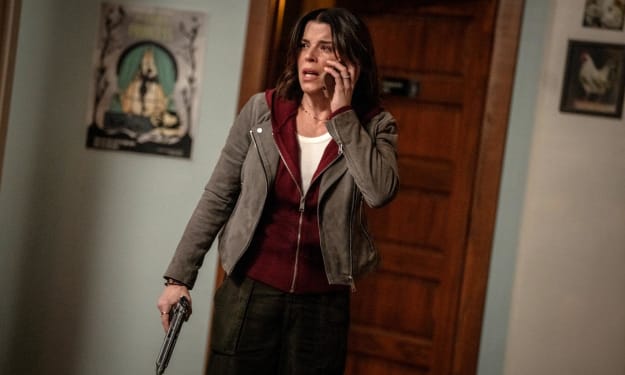
"Scream 7" (2026): Running out of Fresh Screams
This is the seventh time we’ve had a Ghostface crisis. Scream 7 is the latest edition of the Scream franchise. Sydney Prescott and her family are under attack by another anonymous killer dressed in a Ghostface costume. While having issues with her daughter, Tatum, they run from the bloody murders, trying to determine who is behind it all.
By Marielle Sabbag5 days ago in Horror



Comments
There are no comments for this story
Be the first to respond and start the conversation.