
Kids' and teens' mental health issues are lessened by exercise.
Some families are unable to routinely receive therapy. Others are concerned about drug side effects.

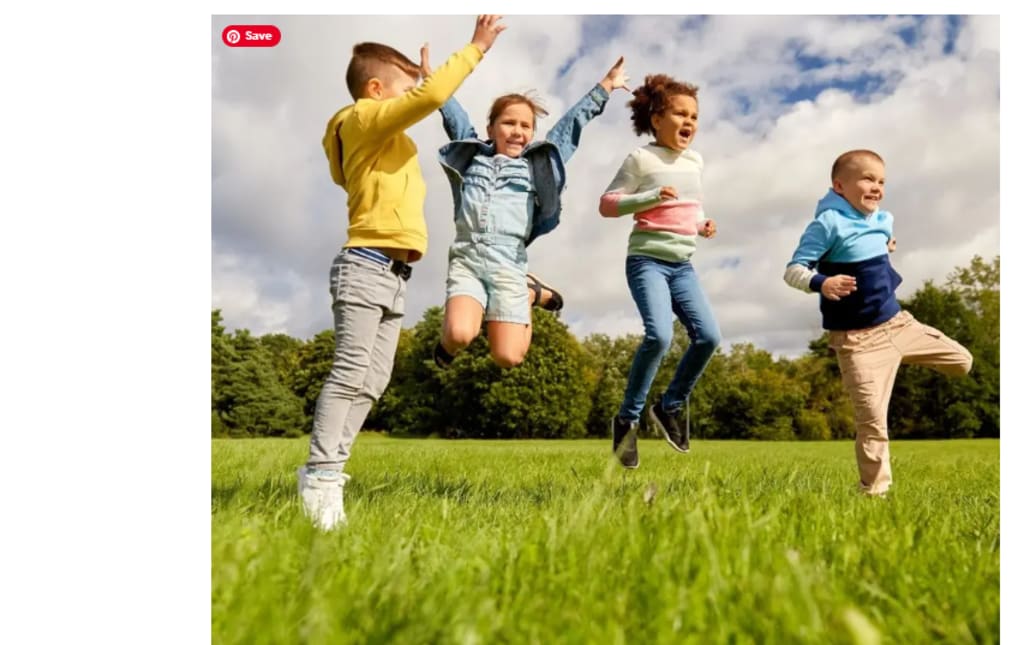
A lot of kids and teens are having mental health issues. The prevalence of anxiety and sadness is on the rise. Parents are seeking assistance, but not everyone responds well to conventional therapies. Exercise is currently being investigated as a useful strategy to enhance kids' mental health.
A useful remedy is provided by a recent study from the University of South Australia. It demonstrates how regular exercise, carried out as part of organised programs, can lessen young people's symptoms of anxiety and sadness. This research offers educators and parents an additional way to promote kids' mental health.
Children who exercise have better mental health.
Over 38,000 kids and teenagers between the ages of 5 and 18 participated in 375 clinical trials that the research team examined. This study is the biggest of its kind. Children who participated in exercise programs showed definite improvements in their mental health.
The study's lead researcher, Dr. Ben Singh, stated that anxiety and depression are two of the most common mental health conditions affecting kids and teens globally.
According to the statistics, both illnesses' symptoms were lessened by exercise. The greatest gains were seen in children with ADHD or clinical depression. Younger children did not respond as well as adolescents over the age of twelve.
Current therapies aren't always effective.
Antidepressants and therapy are common forms of treatment. These are frequently suggested initially. However, a lot of kids either don't get them or don't get anything from them. Some families are unable to routinely receive therapy. Others are concerned about drug side effects.
"We need alternatives," Dr. Singh said, adding that 40 to 60 percent of children do not receive treatment or do not benefit enough from it, even though evidence-based treatment guidelines frequently suggest cognitive behaviour therapy and antidepressants as first-line therapies.
Children can engage in safe and reasonably priced exercise at school, at home, or in the neighbourhood. Although it might be a part of the support system, it is not intended to take the place of medical care.
The best forms of physical activity for kids
According to the study, not all forms of exercise have the same effects. The best routines for depression are moderate-intensity ones that combine resistance and aerobic exercise. Low-intensity resistance training is more effective for anxiety.
For depression, programs that lasted less than twelve weeks produced greater gains. The length of the program had little bearing on the anxiety results. Regardless of the length of each session or the number of sessions per week, children benefited.
"Our study combines evidence from around the world to demonstrate that mild, low-intensity exercise is very effective in lowering anxiety in kids and teenagers, while medium-intensity programs that combine resistance and aerobic training, such as weighted circuits, can reverse depression," Dr. Singh said.
Teens have made more notable progress.
Compared to younger children, teenagers in the study showed greater improvement. Teenagers may have fewer opportunities for physical activity or experience higher levels of stress. The researchers hypothesise that as kids become older, exercise's positive effects on mental health get stronger.
Exercise was also highly effective for kids with ADHD and other mental health conditions. Compared to the overall population, these groups had greater improvements. This suggests that physical activity programs may be especially beneficial for kids who are already struggling.
Simple exercise is beneficial for kids.
Parents do not have to pay for trainers or gyms. The important thing is movement. Simple activities like walking, playing sports, or following routines at home can help kids. Including organised physical activities throughout the week is another way that schools may assist.
The study's co-author, Professor Carol Maher, stated that while "short, structured programs that include strength training or a mix of activities seem especially promising, simply exercising, even for short amounts of time, will deliver benefits."
"And parents, don't worry, you don't have to spend a fortune on a gym membership or training regimen; games, sports, and play-based activities are all beneficial forms of physical activity that can promote mental health."
Easy methods to enhance children's health
Promoting daily activities that their kids like is a good place for parents to start. More structured movement can be incorporated into the educational day. Over time, even brief pauses with minimal movement might have an impact.
"The main takeaway is straightforward: get moving and stay moving. Professor Maher pointed out that even brief exercise sessions can have a significant impact on a child's mental health and general well-being, particularly for those who are having difficulties.
Exercise is not a substitute for therapy or medicine, according to one study. However, it does demonstrate that exercise can help children's mental health. A good place to start for families looking for non-medical choices is with exercise.
The main lesson is straightforward. Children don't need to wait months or years to feel well; movement helps. In just a few weeks, results may be visible. Physical activity can be incorporated into the regular strategies we employ to promote the mental health of young people if we take the appropriate approach.
About the Creator
Keep reading
More stories from Francis Dami and writers in Families and other communities.
Is it possible to spread depression? Couples can kiss to share it.
Marriage is often described as a fusion of two lives: emotional, physical, and practical. We embrace the idea that couples influence others' habits, moods, and routines. But what if these changes go far beyond conscious behavior? And even depression can change between partners - what happens to your body bacteria that not only fight together, but also reflect that of your spouse?
By Francis Dami8 months ago in Families
Wise~Guys
— Look Behind what's in Front of You ~ Make Good Choices — Hey, So how you Doin'..! Made~Men — Mobster Movies romanticise a distinctive, elegant appearance, impeccable attire style, along with the 'Families' expressive lingo. Making their 'Bones' gave them Panache — with vintage fedoras, tailored pin-striped suits, mirror-polished wing-tip shoes adorned with tassels; with their 'Gun Moll' gorgeous dates on their arms.
By Jay Kantor17 days ago in Families
The quiet sound of families breaking
There is a kind of silence that is louder than any noise. It is the silence of a child waking in the night and realizing their parent is gone. It is the silence of a kitchen table with one chair suddenly empty. It is the silence of a home that still looks the same, but no longer feels the same. Across the United States, thousands of families live inside that silence. Not because of war. Not because of disaster. Not because of death. But because of policy.
By Kaylee Souther6 days ago in Families




Comments
There are no comments for this story
Be the first to respond and start the conversation.