
Inheritance Dilemma: How Tradition, Ignorance, and Patriarchy Keep Dividing Families
A deep dive into cultural biases, genetic misunderstandings, and the fight for equality
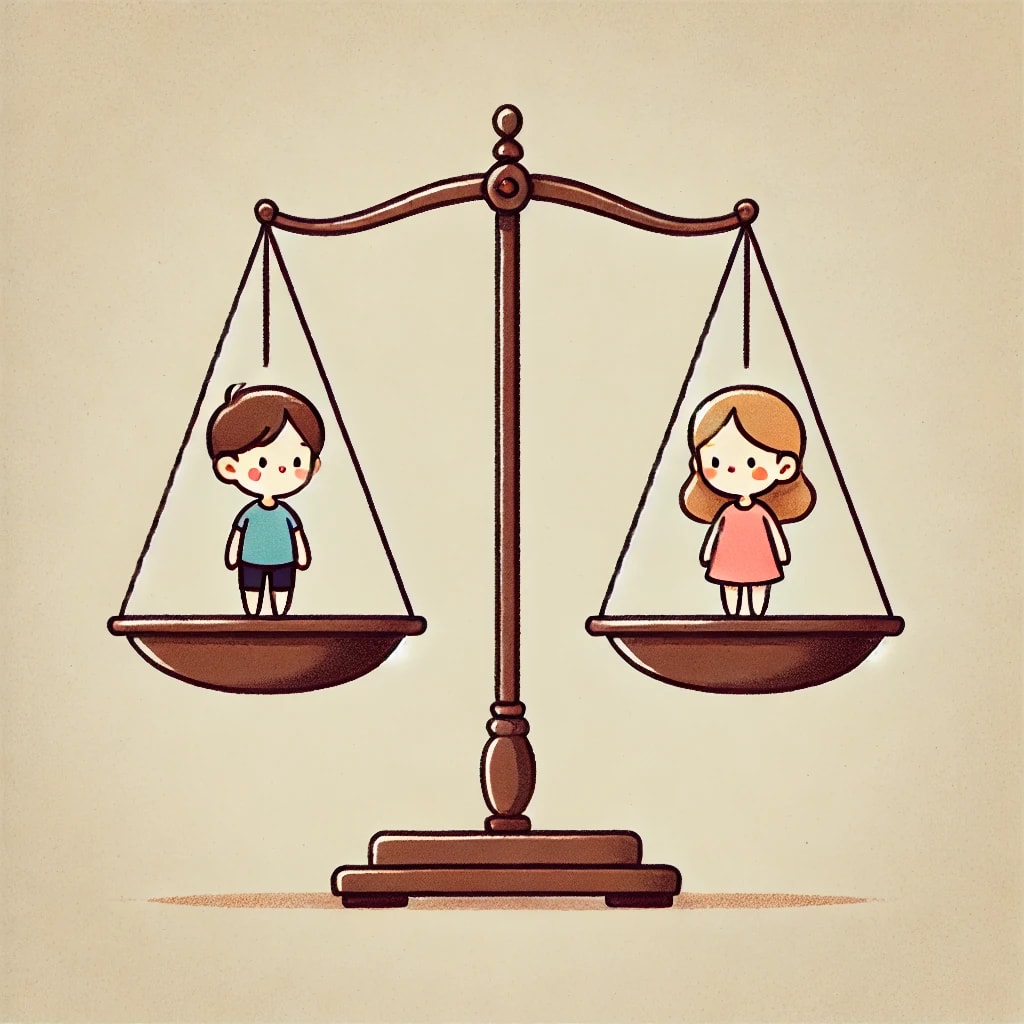
In Kosovo, the issue of inheritance is more than just a legal matter—it’s a cultural battleground. Despite laws that regulate it, inheritance remains a deeply contentious topic, tearing families apart, silencing women, and flooding courts with cases that drag on for years. Why does this problem persist in a society that’s rapidly modernizing? Is it purely cultural, or are there deeper layers of misunderstanding about genetics, equality, and tradition at play?
The debate is everywhere: on social media, in interviews, and in everyday conversations. What’s clear is that this isn’t just about tradition—it’s also about a fundamental lack of understanding of basic science. For example, when asked whether an aunt on the mother’s or father’s side is genetically closer, one woman insisted it was the maternal aunt because the child shares the same blood as the mother during pregnancy. In other cases, mothers refer to their children as "your seed," implying that the child’s identity is tied solely to the father. Many parents also feel closer to their sons, believing that their genetic lineage is carried forward only through male offspring.
It’s as if the biology we learned in school never reached the dinner table. Some people disregard science altogether, while others lean on religious or cultural beliefs. Yet, in no religious text have I found justification for such practices. Historically, inheritance and leadership roles in empires, kingdoms, and dynasties followed the paternal line. This might be explained by the fact that males carry the Y chromosome, passed unchanged from father to son, creating a clear genetic lineage. But the idea that women are merely vessels for male lineage is an outdated notion from the 18th century.
Modern science has unequivocally proven that a child inherits 50% of their genetic code from their mother and 50% from their father. Grandchildren inherit 25% from each grandparent, making nieces and nephews genetically equal in relation to their grandparents. Yet, cultural practices in Kosovo continue to favor sons, often leaving daughters feeling ashamed or guilty for claiming their rightful share of inheritance.
The Cultural Roots of Inequality
Where does this bias come from? The answer lies in history. In traditional Kosovar society, daughters were often treated as commodities, "sold" into marriage with little say in the matter. Sons, on the other hand, were seen as the sole heirs, the carriers of the family name and legacy. Brides brought into the family were expected to bear children (preferably sons) and serve the household. Families would go to extreme lengths to ensure a male heir—pressuring women to bear child after child until a son was born. In some cases, men would take second wives or divorce their spouses if they couldn’t produce a son.
This system was brutally unfair to women. Not only were they denied inheritance, but they were often married off young, without their consent, and expected to prioritize their husband’s family over their own. Education for girls was rarely a priority, and their worth was often measured by their ability to produce sons.
The Modern Paradox
Today, Kosovo is changing. Women are more educated than ever, outperforming men at all levels of schooling. They’re entering the workforce, contributing to their families, and challenging traditional gender roles. Yet, the inheritance issue persists. Statistically, women are more likely to care for aging parents, even after marriage, while sons often distance themselves—yet still claim their inheritance without hesitation.
This double standard is exhausting. Women juggle careers, households, children, and caregiving responsibilities, often at the expense of their own well-being. Meanwhile, men who contribute far less feel entitled to inherit everything. It’s a system that penalizes women at every turn, rooted in a patriarchal mindset that refuses to die.
Why Can’t Society Change?
How can a society still fail to recognize that there should be no distinction between children? How can it not see the injustice inflicted on daughters and women, which has no basis in science or religion? In an era where women are increasingly economically independent and making life choices for themselves, why do some still view them as second-class citizens?
The answer lies in the deep-seated fear of losing control. As Kosovo grapples with the decline of traditional family structures, rising numbers of single individuals, and falling birth rates, some see these changes as a threat. They cling to outdated practices, unwilling to confront the consequences of their actions.
But as the old Albanian saying goes, "What you sow, you shall reap." The seeds of inequality have been planted for generations, and now society must face the harvest.
#Kosovo #InheritanceRights #GenderEquality #Patriarchy #SocialChange #WomenEmpowerment #TraditionVsModernity #FamilyDynamics #CulturalNorms #ScienceAndSociety
About the Creator
Keep reading
More stories from Zana Sokoli and writers in Families and other communities.
Living with Endometriosis: The Battle I Didn’t Choose but Learned to Fight
The Silent Struggle of Endometriosis I can’t recall exactly how old I was when I got my first period, but I vividly remember the shame and silence that came with it. I kept it to myself, and when I didn’t get a second period for six months, I still didn’t tell anyone. The pain started when I was just a child in primary school. One day, the bleeding and cramps became so intense that I had to leave class. I pleaded with the school guard to let me go home, but he dismissed me, telling me to wait until the lesson was over. Standing there, humiliated and in agony, I felt invisible. That was the moment I realized my pain didn’t matter to others—and it wouldn’t be the last time I felt that way.
By Zana Sokoli10 months ago in Confessions
Wise~Guys
— Look Behind what's in Front of You ~ Make Good Choices — Hey, So how you Doin'..! Made~Men — Mobster Movies romanticise a distinctive, elegant appearance, impeccable attire style, along with the 'Families' expressive lingo. Making their 'Bones' gave them Panache — with vintage fedoras, tailored pin-striped suits, mirror-polished wing-tip shoes adorned with tassels; with their 'Gun Moll' gorgeous dates on their arms.
By Jay Kantor21 days ago in Families
Blessing Platinum-Williams on Church Belonging, Family, and Accountability: Community as Sacrifice and Care
Blessing Platinum-Williams is a London-based, self-taught software developer and the creator of Tonely AI, an “auto-reflect” keyboard for iOS and Android that surfaces the likely tone and intention behind a message as you type. Tonely aims to reduce everyday digital harm by prompting users to reconsider wording that may sound blunt, passive-aggressive, or manipulative. Privacy is a core design choice: Tonely runs tone detection on-device and, per its terms and privacy policy, does not upload or store your messages. She founded Tonely AI Ltd in Britain. She also has a law degree and a therapy-informed perspective on language for everyone.
By Scott Douglas Jacobsena day ago in Families



Comments (1)
Never divide families! They have to stay together! Great work!