
Blessing Platinum-Williams on Church Belonging, Family, and Accountability: Community as Sacrifice and Care
How does Blessing Platinum-Williams define Christian community as sacrificial care, and what practices sustain trust and accountability when conflict or harm arises?

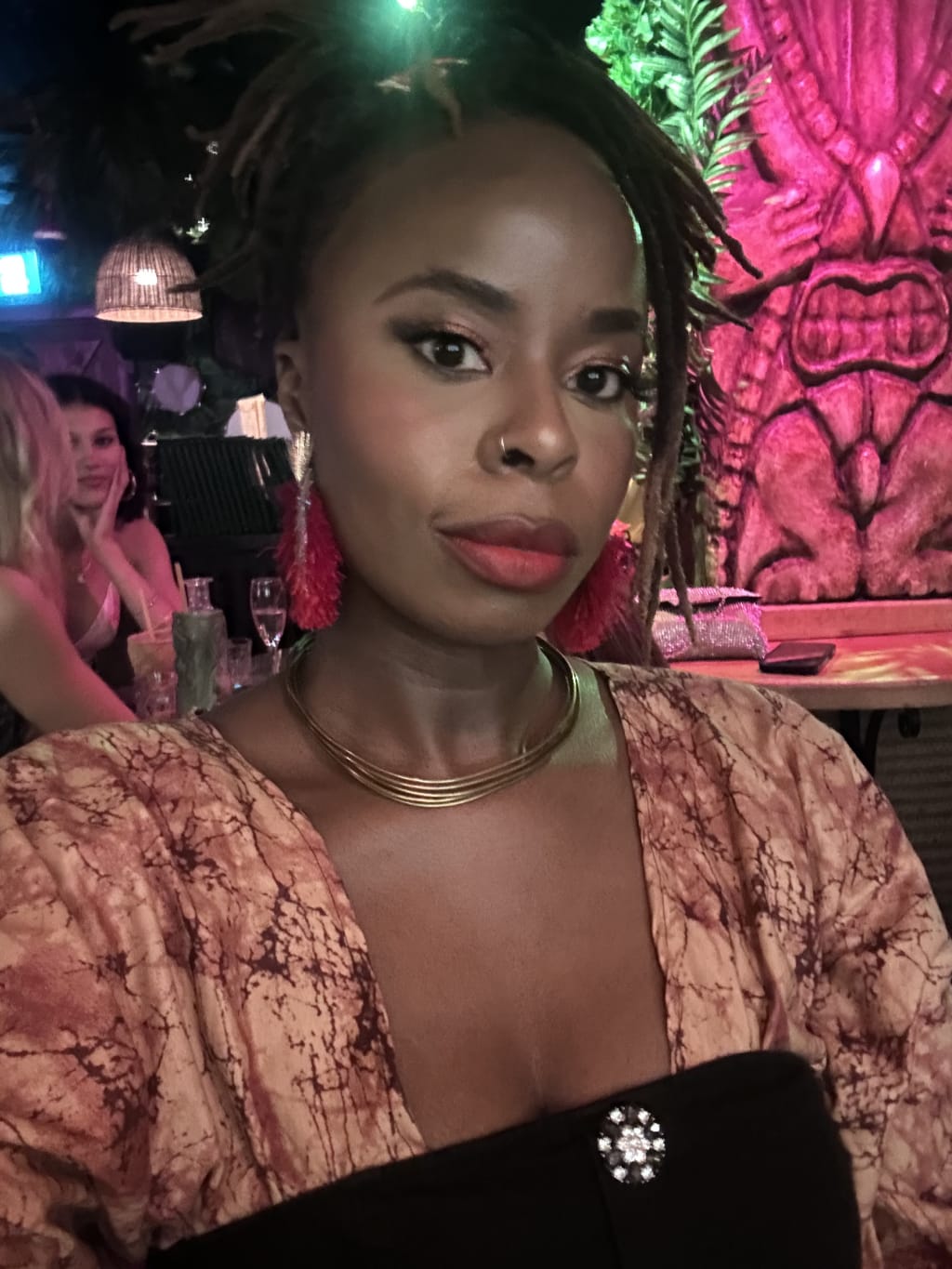
Blessing Platinum-Williams is a London-based, self-taught software developer and the creator of Tonely AI, an “auto-reflect” keyboard for iOS and Android that surfaces the likely tone and intention behind a message as you type. Tonely aims to reduce everyday digital harm by prompting users to reconsider wording that may sound blunt, passive-aggressive, or manipulative. Privacy is a core design choice: Tonely runs tone detection on-device and, per its terms and privacy policy, does not upload or store your messages. She founded Tonely AI Ltd in Britain. She also has a law degree and a therapy-informed perspective on language for everyone.
In this interview, Scott Douglas Jacobsen speaks with Blessing Platinum-Williams, creator of Tonely AI, about Christian community as sacrificial, Acts-shaped responsibility rather than convenience. Platinum-Williams describes belonging as a church “showing up” in crisis—materially, emotionally, and spiritually—while acknowledging the limits and risks of human care. She honours family roles as service modeled by Jesus and emphasizes “spiritual covering” through elders who pray and counsel. For durable unity amid polarization, she prioritizes shared submission to Scripture over trends. When abuse occurs, she calls for immediate acknowledgement and removal from power, centering support for those harmed. She measures health by trust, vulnerability, and shared joy and grief.
Scott Douglas Jacobsen: In your tradition, what does community mean in a theological sense?
Blessing Platinum-Williams: When Paul spoke about the Acts church, he described a community that came together to support one another materially, spiritually and practically. It was not performative or convenient; it was sacrificial. People interceded for one another, shared what they had and took responsibility for each other’s wellbeing.
I witnessed this kind of community in a church I attended for over seven years. One woman, a single mother recovering from addiction, was trying desperately not to relapse. The church rallied around her. People contributed in different ways. I babysat while she attended night school; others gave time, resources and prayer. We prayed, fasted and supported her consistently.
Sadly, she later relapsed and lost custody of her children. When that happened, I had already left the church, but they reached out to warn me not to give her money. Unfortunately, the message came too late. I had already helped, not knowing she had relapsed. That experience stayed with me. It showed me both the beauty and the limits of human care, and the weight of responsibility that comes with community.
Jacobsen: What makes belonging meaningful in church life?
Platinum-Williams: Belonging becomes meaningful when you know the church will show up at your hardest moments, not just your best ones. I once read about a family whose home burned down. Their church didn’t just pray. They booked the family an Airbnb, and an affluent member offered them a home to stay in. They even placed family photos around the house so it would feel familiar and safe.
That kind of care cannot be forced. It comes from genuine love and attentiveness. It’s the difference between attendance and belonging.
Jacobsen: How does your community view the role of the mother and wife?
Platinum-Williams: In every faith community I’m actively part of, the role of a mother and wife is deeply honoured. Whether I’m leading prayer groups at my children’s school or organising my hiking group, service is viewed as strength, not limitation.
I consider it an honour to serve my husband and children, and I’m raising my children to love serving too. Scripture is clear: if you are called to lead, you must know how to serve. Jesus Himself washed the feet of His disciples. My family grounds me, and I’m deeply grateful for the role God has entrusted to me.
Jacobsen: How does the faith community view the role of family within community?
Platinum-Williams: The family you are born into and the family you gain along the way are both significant. I believe God places us in families for reasons that often only become clear later.
The family I was born into carries deep history, including spiritual challenges. I’ve prayed intentionally against generational patterns that do not align with God’s will. At the same time, I’ve been blessed with spiritual elders who fast for me, pray for me and counsel me. That kind of spiritual covering is an immense gift.
Jacobsen: What practices reliably build community beyond coffee and small groups?
Platinum-Williams: Prayer and intercession. When people intentionally pray into one another’s lives, change happens. Scripture tells us that when Peter was imprisoned, the church prayed fervently, and an angel freed him. Collective prayer moves things that conversation alone cannot.
I run a hiking group as an attempt to bring people together. I underestimated how much work community takes. When I considered shutting it down, I felt the Lord tell me that this was my church. People come carrying burdens. They need a listening ear. I pray into their situations, often quietly, and testimonies follow. They may not know I’m praying, but they know they are cared for.
Jacobsen: What helps congregations stay intact amid disagreement or polarisation?
Platinum-Williams: Staying grounded in Scripture rather than opinions, trends or culture. Unity doesn’t require uniformity, but it does require shared submission to God’s Word.
Jacobsen: What does a credible process look like when abuse occurs or trust collapses?
Platinum-Williams: First, the wrong must be acknowledged. Silence protects harm. Those responsible must be removed from positions of power immediately to prevent further damage. Only then can healing begin. Prayer, accountability and support for those harmed must be prioritised.
Jacobsen: How do you measure a healthy community?
Platinum-Williams: Trust. Vulnerability. Shared joy and shared grief. A healthy community celebrates together, carries one another’s burdens and creates space where people can be honest without fear.
Jacobsen: Thank you very much for the opportunity and your time, Blessing.
Scott Douglas Jacobsen is the publisher of In-Sight Publishing (ISBN: 978-1-0692343) and Editor-in-Chief of In-Sight: Interviews (ISSN: 2369-6885). He writes for The Good Men Project, International Policy Digest (ISSN: 2332–9416), The Humanist (Print: ISSN 0018-7399; Online: ISSN 2163-3576), Basic Income Earth Network (UK Registered Charity 1177066), A Further Inquiry, and other media. He is a member in good standing of numerous media organizations.
About the Creator
Scott Douglas Jacobsen
Scott Douglas Jacobsen is the publisher of In-Sight Publishing (ISBN: 978-1-0692343) and Editor-in-Chief of In-Sight: Interviews (ISSN: 2369-6885). He is a member in good standing of numerous media organizations.
Keep reading
More stories from Scott Douglas Jacobsen and writers in Families and other communities.
Malka Shaw, LCSW: Orthodox Jewish Community, Belonging, and Resilience
Malka Shaw is an Orthodox Jewish social worker (LCSW) and educator who focuses on trauma, antisemitism, and Jewish community resilience. She founded Kesher Shalom Projects, offering workshops and support groups that build leadership, communication, unity, and Jewish pride. Raised loosely Conservative and drawn in adolescence to Reform youth programming, she describes her move toward Orthodoxy as a gradual, decades-long process deepened through immersive volunteering in Israel and sustained study. In clinical and communal settings, Shaw applies social-work principles—especially the principle of meeting people where they are—to help individuals and leaders turn isolation into connection and purposeful belonging. She trains allies in cultural competency.
By Scott Douglas Jacobsena day ago in Families
Wise~Guys
— Look Behind what's in Front of You ~ Make Good Choices — Hey, So how you Doin'..! Made~Men — Mobster Movies romanticise a distinctive, elegant appearance, impeccable attire style, along with the 'Families' expressive lingo. Making their 'Bones' gave them Panache — with vintage fedoras, tailored pin-striped suits, mirror-polished wing-tip shoes adorned with tassels; with their 'Gun Moll' gorgeous dates on their arms.
By Jay Kantor20 days ago in Families




Comments
There are no comments for this story
Be the first to respond and start the conversation.