
I'm not a bad daughter.
Independence for me was made to be a painful, double-edged sword.

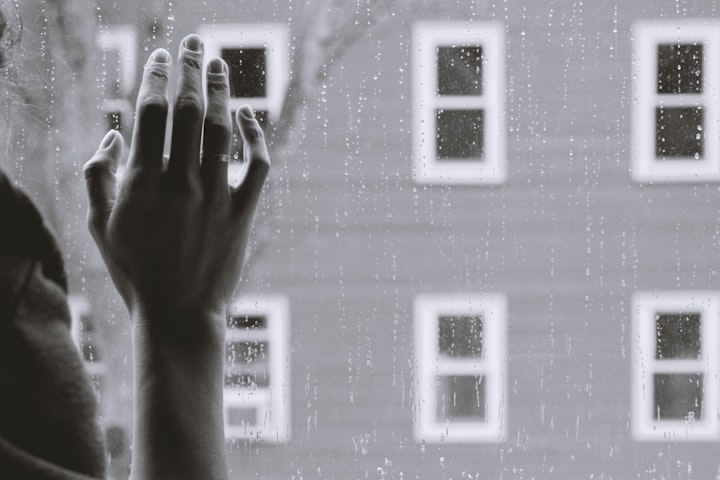
My supposedly healthy relationship with my parents was always dependent on me not knowing any better.
I realized that when they’d continuously bring up how quiet and docile I was as a little girl, “always so willing to listen,” my dad would say, looking at me as though I was no longer someone he knew or someone he was proud of.
It used to sting quite a bit, but now that I’m thousands of miles away from home at university, pushing twenty and have some time and space to think, reflect and heal, I can say it doesn’t really hurt me anymore. It isn’t fair in any sense of the word that I had to essentially make peace with the fact that I will forever live in the shadow of the daughter I could’ve been, the daughter they’ll always want me to be, but I’m okay with that.
Coming into my own meant I was considered significantly more ‘liberal’ than my father, which also meant to him that I didn’t really know anything and was simply emboldened by a couple of posts I saw on the internet. I can never really understand why I expected him to be able to compromise or disagree, my father is traditional in every sense of the word. He would groan about showing up to parent-teacher meetings because “the teachers always praise you anyway, what’s the point?” He’s not a medal-for-trying kind of guy, and I struggled with that immensely growing up. Heck, it wasn’t until I left for university that he first texted me, “I’m proud of you.”
You would think that after years of having strived for some semblance of recognition for my efforts, I would’ve been thrilled at that text. However, I wasn’t really surprised at how little I felt for it. If anything, that was what had me considering if maybe I was a bad daughter. He was trying, he was reaching out. But really? It took me having to leave my house altogether for him to realize that I was a good kid?
I could write an entire book about everything my parents made out to be bad in me, but that won’t help me heal and it won’t make our relationship better. There are a few things I have to chalk up to generational differences—the things all kids hear about the technology and modern ideologies—but everything else was a direct result of how much my family valued culture.
I grew up in a joint family. This meant that my father’s older brother and his family lived with us too. It’s been that way for as long as I can remember. Growing up as the only daughter among three boys, I was always considered one of them. I dressed conservatively, in full sleeves and flannel shirts, always wanted to cut my hair short and I didn’t mind a bit of rough and tumble. They praised these qualities in me, which ultimately led to a superiority complex and the all too familiar ‘I’m not like other girls’ phase, which I’m proud to say I’ve since outgrown. But that’s a key thing to consider, right? The praise of these supposedly masculine traits, how much they loved that I was a ‘tomboy’ and held no trace of explicitly feminine qualities?
Especially since it was as I began to explore my feminine side that problems arose?
My mother found herself thrilled initially, but now she says I went from covering up too much to barely covering up at all, and yes, I always hear the poorly veiled frustration no matter how hard she laughs after. Although her struggle to accept the change was notable, my father’s straight refusal to accept it led to the inevitable downfall of all peace and stability we’d had in our relationship.
When I would call out the sexist jokes and inappropriate comments about other women, I was always considered ‘too sensitive’ and told to lighten up. “I’m happily married,” he’d say, “but I’m not blind.” When it came to clothes I wore that he didn’t like however, he’d always ask me why I was willingly objectifying myself and would continue to act surprised when the hypocrisy frustrated me. That was the new dynamic. I wasn’t allowed to call him out on his behaviour, but when it was the prospect of other men potentially treating me the same way, I was always asked why I wanted to bring that upon myself.
That’s what made me a bad daughter, that I didn’t care for traditional, cultural norms that bestowed upon brown men the power to dictate what the women in their family did, everything from working to what they wore.
It was what radicalized me, seeing my mother turn away from cute shirts and dresses because she knew my father wouldn’t approve. I hated everything about the dynamic between the men and women in my family. I was no longer one of the boys. I had to clean up after them when they were messy with no complaint. I had to help lay the table while they sat mere centimeters away, on their phone or on the TV, feeling absolutely no obligation to help. The times where the task required more manpower and I felt I could sit out, my aunt would whisper, “You’re letting him do all the work? Get up.”
I wanted nothing to do with the idea that I couldn’t simply exist in my own home without being of servitude and my father especially hated that so fiercely.
My older brother is a bit of a wild card. He’d crashed the car, landed himself in fine after fine, but it was nothing they wouldn’t laugh about over a drink with him later. When I was caught sneaking out of the house, I wasn’t allowed to drive for a while. I’ve yet to hear him laugh about it over a drink. All I got after was passive aggressive comments and an even stricter eye on me at all times. When I got my first and only fine, my allowance was halted altogether. I was vilified almost immediately. “That car is registered under the company, what will people think, my daughter going out so late at night?”
I was a bad daughter because I didn’t let the fact that they considered the family’s reputation to lie on my shoulders stop me from being a teenage girl.
My father would call me selfish. Spoiled. Thoughtless. He let me drink. He paid for me to study in an international school. He was all for me establishing a strong career and being independent. Why was I acting out? He was so liberal, right?
Of course he couldn’t see the limits to his apparent progressiveness. Sure, he supports me establishing my own career and being independent, but he does expect me to get married. He and my mother must have a say in who my husband is, and I must eventually have children. “It’s a woman’s biological responsibility,” he’d say, “she carries the culture. The legacy.”
So when I told them I had no interest in getting married or having children, I struck a nerve. I’d crossed a line.
“That’s too independent.”
He couldn’t fathom why I felt no obligation or responsibility to abide by these expectations. After all, he’d given me such a wonderful life, way better than his own when he was younger. How was I not falling over with gratitude? How could I prioritize my own happiness so much? Why didn’t I care about what he thought, what my mother thought?
I remember standing at my school reception, surrounded by families embracing their children with pride while I fought back tears, the badge pinned onto my sweater reading head girl. He picked me up that evening and we drove back home in silence. I remember bursting into tears after winning a story-writing competition when my English teacher embraced me and told me she was proud. The news of these achievements always makes it to extended family and guests, but nothing was ever said directly to me. I remember when I was caught out on my first lie. The pure betrayal, as though I’d committed a horrible crime. I remember when the school counselor called home and told them I had anxiety, how my father told me others had it worse. That’s when I learned to cry silently in my bathroom. I remember when they went through my diary and approached me as though they couldn’t be more ashamed. I remember my father repeating my own words back to me in mockery, asking me how I could be so pathetically wounded over some boy. Every single time they would catch me vulnerable, catch a mistake, a slip-up, every time I was anything other than what they expected, I was punished for it.
They had made it clear they weren’t going to be around for my wins and would never forget my losses. It seemed like I was always disappointing them. But I’m not a bad daughter. I practically raised myself and my younger brothers. I’m drawing my boundaries and I’m not a bad daughter for it.
I have my own beliefs, I wear what I want and I’m not a bad daughter. I don’t talk back or snark, I call hypocrisy and bigotry as I see and hear it, and I’m not a bad daughter. I was a teenager once, so of course I snuck out and fell in love. I was never irresponsible, just rebellious. I’m not a bad daughter.
My parents will never really understand what it’s like to be their child. That’s okay. They will never accept their shortcomings and they will continue to expect some gratitude from my end. That’s okay. They take credit for a lot of traits in me that developed as an opposition to their conservative parenting and it’s so painfully ironic, but it’s okay.
They may never accept me for the woman I am now. That’s okay. But I am not a bad daughter because of it.
About the Creator
Sam
Twenty year old aspiring writer.
Instagram: @sa.m.rn
Keep reading
More stories from writers in Families and other communities.
Wise~Guys
— Look Behind what's in Front of You ~ Make Good Choices — Hey, So how you Doin'..! Made~Men — Mobster Movies romanticise a distinctive, elegant appearance, impeccable attire style, along with the 'Families' expressive lingo. Making their 'Bones' gave them Panache — with vintage fedoras, tailored pin-striped suits, mirror-polished wing-tip shoes adorned with tassels; with their 'Gun Moll' gorgeous dates on their arms.
By Jay Kantor21 days ago in Families
Thoughts on Vocal and the way the world is
"Death cannot stop true love, only delay it." – Wesley in The Princess Bride. I decided to come back to Vocal on a very cold and dark night at the end of December. I had been, and still am, convalescing from a horrible staph infection that had gone misdiagnosed for months. This, paired with the increasing challenges of being healthy, making the best choices for my co-parented child, being a wife, and being a director at a new job, was a lot to manage.
By Jazzy 3 days ago in Confessions



Comments
There are no comments for this story
Be the first to respond and start the conversation.