
I Keep Setting the Table for Three. There Are Only Two of Us Now
Grief lingers in the ordinary – a plate, a chair, a silence.

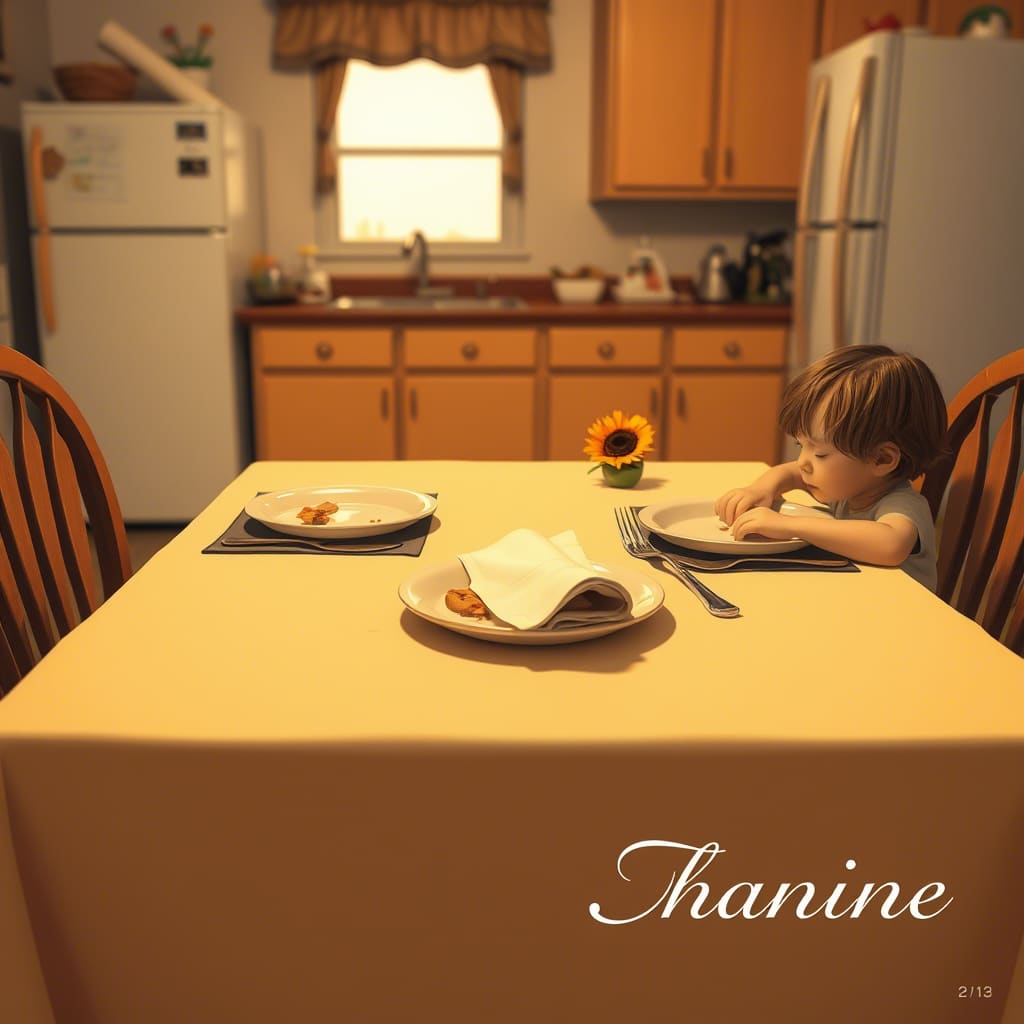
Every evening at six, I pull out the chairs, one by one, from the old oak dining table. It’s a simple act, mechanical by now. Fork, knife, spoon. Napkin folded in half. Water glasses. I place the plates carefully – one for me, one for Emma, and then… the third.
It happens without thought. My hands, it seems, remember what my heart won’t let go of.
Emma never says anything, but her eyes flicker toward the third plate each time. Sometimes she looks away quickly, pretending not to notice. Sometimes, she stares at it for a moment too long. We both eat quietly, chewing through our silence more than the food.
It’s been six months.
Six months since we lost Daniel.
He was ten. Bright-eyed, full of mischief, a constant flurry of questions and motion. He used to sit in that very seat, fidgeting with his fork, drumming the table with his fingers, humming off-key while waiting for dinner. He used to complain about vegetables and sneak extra rolls when he thought we weren’t looking.
The chair hasn’t moved from its place. His cup – the one with the faded cartoon lion – still sits in the cupboard. I know exactly where it is. I can’t bring myself to throw it out. Just like I can’t stop setting his place at the table.
Emma is only twelve. Too young to have grief folded into her bones. Too young to be this quiet, this careful. I hear her muffled cries at night, but when I knock gently, she always says, “I’m fine, Dad.” Then she’ll ask me something like, “Can I stay up a little longer?” or “Did Mom like sunflowers?” Changing the subject as fast as the pain creeps in.
She misses her brother in ways she can’t say.
And I miss my son in ways I can’t bear.
The doctors said it was quick. An undetected heart condition. One moment, he was running down the soccer field, hair flying, cheeks flushed. The next, he was on the ground, motionless, as coaches screamed and parents surged forward.
He was gone before I even made it to the hospital.
In the weeks after, I stopped doing everything. I forgot to shave. I didn’t eat. Emma would try to make toast, or heat canned soup, but sometimes she just went hungry, waiting for me to notice.
One night, she set the table herself. It was messy – forks upside down, napkins crumpled – but there were three plates.
She didn’t say it out loud, but I understood. She missed the noise. The way our family used to feel full. Complete. Warm.
So I started cooking again. Small meals at first. Pasta, grilled cheese, soup from scratch. Nothing fancy, just something warm to put on our tongues. Something to fill the space.
I didn’t plan to keep setting his place, but every time I reached for two plates, my hands reached for three.
And now, it’s a ritual. A quiet rebellion against forgetting.
People say grief gets easier. That time dulls the edges. But they don’t tell you how it hides in the ordinary things – the smell of his shampoo in the hallway, the soft curve of his handwriting on a notebook we forgot to throw away, a tiny sock stuck behind the dryer.
They don’t tell you that sometimes you’ll laugh, and feel guilty for it. Or that the guilt will become its own kind of grief.
Emma asked me last week, “Do you think it’s weird that we still set his place?”
I shook my head. “No. I think it’s love.”
She didn’t answer, but the next night, she put out his favorite cup.
Tonight, like every night, we sat down to eat. I passed the carrots. She passed the bread. The third plate stayed untouched, but it wasn’t empty. It held memory. Presence. The shape of what once was.
And when Emma reached for the salt, she looked at that third plate and smiled – just a little. It broke my heart and healed it at the same time.
There are only two of us now.
But sometimes, it still feels like three.
And maybe, for now, that’s enough.
About the Creator
Keep reading
More stories from Azmat Roman ✨ and writers in Families and other communities.
I Didn't Cry at the Funeral. I Cried in the Laundry Room.
Everyone kept watching me at the funeral. Eyes skimmed over my stiff posture and dry cheeks like they were waiting for a crack, a single shiver of emotion to make it all feel real. My mother had just died, and I stood at the edge of the casket like a stone monument—unmoving, unreadable. I didn’t cry.
By Azmat Roman ✨9 months ago in Families
Understanding Wife Psychology
Marriage is not just a legal bond; it is a psychological, emotional, and spiritual connection between two individuals. Understanding the psychology of your wife can greatly improve communication, intimacy, and harmony in your relationship. While every woman is unique, there are certain universal patterns in wife psychology that can help a husband navigate the complexities of married life.
By Jahid Hasan5 days ago in Families



Comments
There are no comments for this story
Be the first to respond and start the conversation.