
I Didn't Cry at the Funeral. I Cried in the Laundry Room.
Grief doesn’t always follow the script—we don’t always break where the world expects us to.

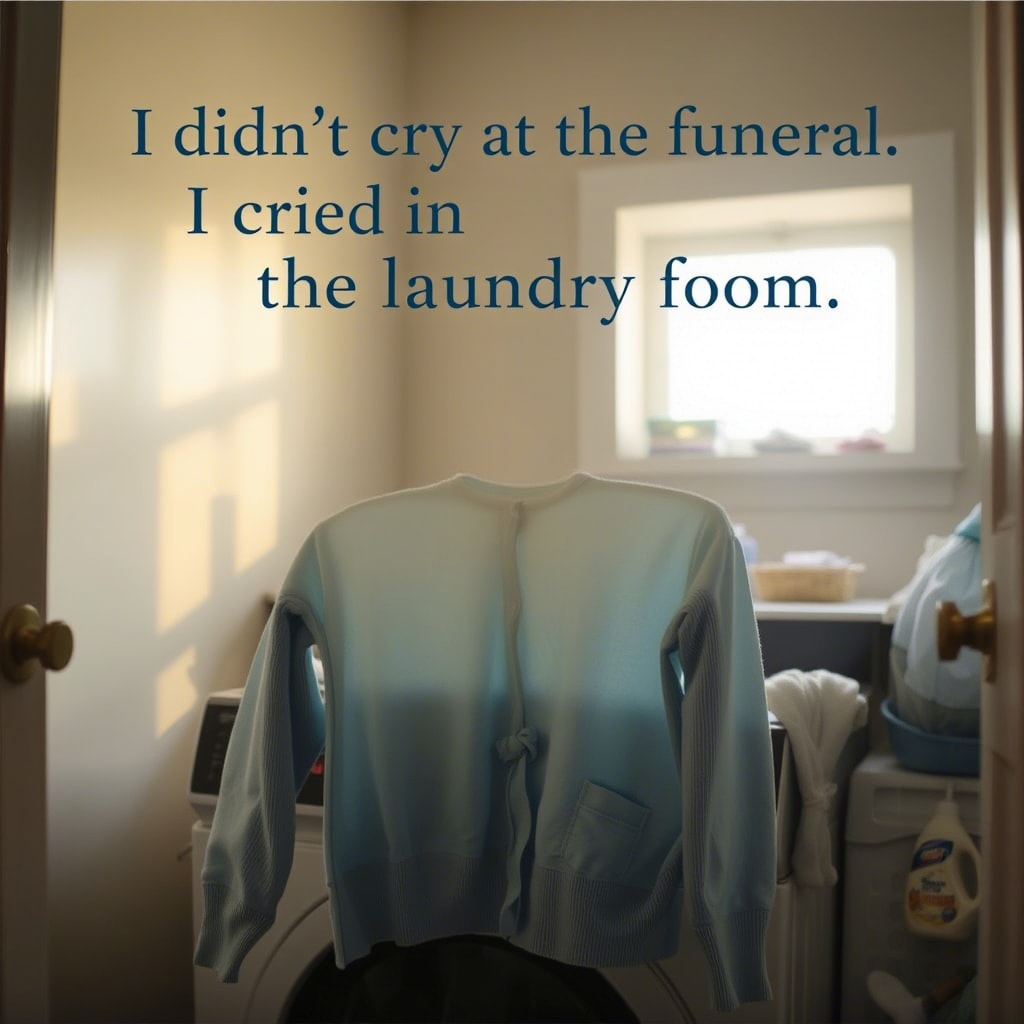
Everyone kept watching me at the funeral. Eyes skimmed over my stiff posture and dry cheeks like they were waiting for a crack, a single shiver of emotion to make it all feel real. My mother had just died, and I stood at the edge of the casket like a stone monument—unmoving, unreadable. I didn’t cry.
They whispered about it later, I’m sure. “In shock,” some probably said. “Cold,” others might have thought. I heard someone mutter something about how grief looks different for everyone, but even that was laced with disappointment, like they were cheated of a spectacle they had come prepared to witness.
I stayed composed, hugging the same people over and over. My aunt with trembling lips. My cousin, mascara-streaked and hollow-eyed. Friends of the family who clung to me with a kind of desperate affection that felt like a performance. I smiled, nodded, thanked them. Then I went home.
It wasn’t until three days later, standing in the small laundry room of my mother’s house—my house now—that I crumbled.
The dryer buzzed. That’s what started it. Just a mundane, everyday sound. The hum cut off, and I reached in to pull out the clothes I had forgotten to take out the day before. Warm fabric. A tangle of socks. One of her cardigans. That’s when it happened.
It was pale blue, the kind of soft wool she wore during long, sleepy Sundays. I used to tease her about dressing like someone’s grandmother. She would laugh and say, “Well, I am someone’s mother, and that’s just one cardigan away.”
I pressed it to my face, and that was it.
I didn’t just cry. I sobbed. The kind of grief that takes over your whole body, that makes your chest ache and your knees weak. I slid down against the washing machine and let the cardigan smother my face, muffling the sounds that poured out of me.
The thing no one tells you about grief is that it’s quiet when it wants to be. It doesn’t always announce itself at the big, dramatic moments. Sometimes, it sneaks up on you in between laundry cycles. Sometimes it waits until you’re alone, where no one is grading your performance.
At the funeral, I was too busy being her daughter. The role. The mask. The one people expected to hold it together, say the right words, offer the appropriate number of tears—not too much, not too little. People don’t like chaos at funerals; they like decorum. I gave it to them. I gave them my silence.
But in the laundry room, there was no one to impress. Just the faint scent of lavender detergent, the click of a slowly cooling machine, and a blue cardigan that smelled like her.
It wasn’t just the sweater. It was the realization that no one was ever going to wear it again. That there would be no more sleepy Sundays, no more late-night cups of tea, no more calls to ask if she remembered that recipe for butternut squash soup. She would never again laugh at my jokes or gently scold me for leaving wet laundry in the machine too long.
I thought about how I had gone through her closet just two days before and packed things into boxes like I was sorting through someone else’s life. Neat stacks, donation piles. Mechanically deciding what stayed and what went. I didn’t cry then either.
Maybe I was saving it for the laundry room.
There’s something so violently human about grief catching us off guard. We imagine it will come in waves we can predict, like tide charts of mourning. But really, it’s more like a rogue wave—it hits hard and without warning.
When I emerged from the laundry room, cardigan clutched against my chest, my face red and swollen, I felt lighter somehow. Like grief had loosened its grip on my ribs just enough for me to breathe again.
I still haven’t told anyone about that moment. Not because I’m ashamed of it, but because it feels like it was just for me. A sacred collapse. The kind of mourning that doesn’t need an audience or a eulogy. It just needed warmth, memory, and a safe place to fall apart.
Some people mark their grief in tears and tombstones. I marked mine in laundry.
And that’s okay.
Because grief doesn’t follow rules.
It follows love.
And love—well, it tends to linger in the smallest, most ordinary corners of our lives.
Even in a laundry room.
About the Creator
Keep reading
More stories from Azmat Roman ✨ and writers in Families and other communities.
She Only Lived Eight Years. But She Taught Me Everything.
I still remember the way her laugh echoed through our tiny house — bright, unfiltered, and bubbling with life. Emma had a way of making the ordinary seem magical. A cracked sidewalk became a hopscotch course. A broken crayon became a reason to invent new colors. And a rainy day? That was just an invitation for a pillow fort.
By Azmat Roman ✨7 months ago in Families
Wise~Guys
— Look Behind what's in Front of You ~ Make Good Choices — Hey, So how you Doin'..! Made~Men — Mobster Movies romanticise a distinctive, elegant appearance, impeccable attire style, along with the 'Families' expressive lingo. Making their 'Bones' gave them Panache — with vintage fedoras, tailored pin-striped suits, mirror-polished wing-tip shoes adorned with tassels; with their 'Gun Moll' gorgeous dates on their arms.
By Jay Kantor18 days ago in Families
Why Are Teachers Leaving Education?
As someone who is new to teaching, I will not sit here and pretend to fully understand everything veteran teachers have endured over the years. I do not yet have decades of experience to draw from. However, I can speak honestly about what I have observed in my year and a half in the classroom, and what I have learned in that short time is both eye opening and concerning. Teaching today is no longer just about teaching content. It has evolved into a profession that often requires educators to act as the judge, the juror, and the executioner, so to speak, all while being expected to maintain patience, professionalism, and compassion at every turn.
By Kimberly Nightengalea day ago in Families




Comments
There are no comments for this story
Be the first to respond and start the conversation.