
**I had a hard time feeding my Baby**
Current Short Story

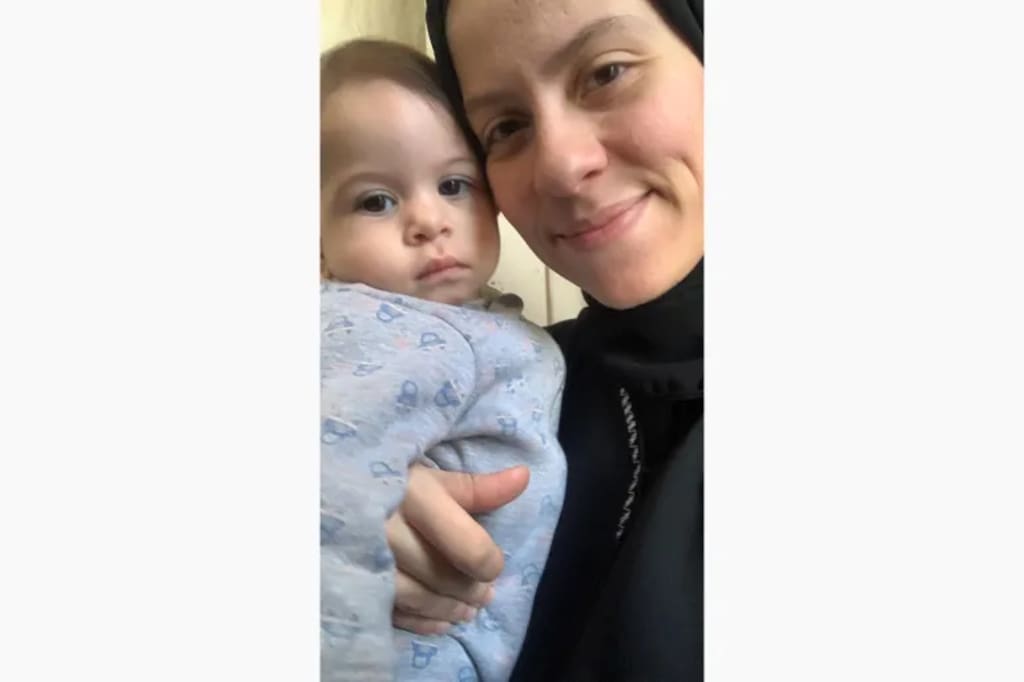
I am fighting to feed my infant in Gaza while Israel is causing hunger. Despite the lack of food, I want to keep breastfeeding Lya in the hopes that it would prevent her from starving.
When Israel began its attack of Gaza, my daughter Lya was just seven months old. She was born on March 19, 2023, two years after my spouse, Mohammed, and I were married.
Even though it wasn't simple, we were thrilled to have Lya in our lives. I thought carefully about everything Lya would need, including toys, clothes, and food recipes to make sure she had enough to eat. Before introducing solid foods, I insisted on nursing Lya exclusively for six months. I wanted her to benefit from my milk as she developed and her immune system strengthened.
I would spend roughly eight hours a day away from Lya because I am a working mother. When I worked, I used to rush home to see my daughter.
Then, on October 7, hostilities broke out. I'd survived many conflicts, but as a mother, this one would put my caution and preparation to the test. Israel quickly shut off the Gaza Strip's access to fuel, food, water, and electricity. Costs increased when supplies started to run short.
Lya worried about me and Mohammed. How would we obtain baby formula, diapers, and other necessities?
IOnce we collected a handful, we started to worry about whether we would find additional baby cereal and formula cans. Soon, we would have to make a difficult decision. We were not able to adequately prepare and preserve Lya's formula, so I reduced the number of servings each day from three to two in an attempt to feed her for as long as possible as I continued to nurse. This was due to the lack of gas, electricity, and clean water.
"Oh sweetheart, I'm at a loss." Only 4 percent of Gaza's population had access to clean, safe water even before the violence started. As the battle began, water became more and more scarce.
By November, our Gaza City apartment building was home to 31 family members, including my in-laws, and other displaced people who were forced to share a meager supply of water. Every person was limited to using around half a litre (half a quart) of water each day in order to protect our water supply.
As adults, we understood why we were thirsty, but it was hard to explain to the children why they were not allowed to drink water. I also realized that things would certainly get worse, so I set aside some water bottles for Lya. By December, the Israeli army had announced that it was going to launch a military attack on the al-Daraj area, where we were living, and we were forced to flee to my parents' house in western Gaza.
Their home was close to al-Shifa Hospital and had been vacant since November due to an Israeli attack on the facility. But in our despair, it was the only place we could go. We headed across town from al-Daraj, having packed our small bags of essentials for the inevitable time when we would have to go. I embraced Lya tightly, shut the door to our apartment, and made a self-promise to return to her. I was wearing a big jacket, and it was cold.
Israel abandoned our "refuge," which was one of their top priorities from the beginning of the war. The area around Al-Shifa was utterly destroyed. There was no internet, no power, and no water.
For three days we could not find any clean drinking water. In the end, I used the water bottles I had kept in case of emergencies. I carefully rationed the two litres (2 quarts) of water I had with Lya, who is now almost nine months old, so I could prepare her cereal, baby formula, and something to drink. In desperation, my spouse, our family, and I drank tainted seawater from a neighbor's well.
When we could get brackish water, we used it for cooking rather than squandering it for drinking. There was minimal flou and no fresh vegetables.
We only had one meal a day, which was always insufficient to fill us up and was either rice or beans. As the number of displaced people living with us increased, we had to share our limited resources with them.
Baby food was in short supply, so I bought as much as I could from the few pharmacies that had it in stock but were limiting their supply. But eventually, I could only feed Lya cereal for breakfast once a day. In addition, it was hard to find infant formula, so I couldn't make it for Lya whenever she was hungry. I had to save my water for emergencies and drank it very infrequently.
Lya was so hungry that my body was gradually running out of milk to feed her, so she would cry after I fed her. I desired to inform her that it We were eating soup or rice boiled in well water, and soon I had to give Lya some of it. Whenever I fed her, I felt bad and agonized because I was worried about what would happen to her body with each bite. I said to her, "Sweetheart baby, I have no choice." Stay healthy, my love.
We returned to our al-Daraj home in February, four months into the war, to find some clean drinking water again. Cereal, infant formula, and fresh produce were all absent, though. In the end, Israel allowed limited imports into northern Gaza in mid-April, including beef, poultry, canned products, and—most importantly—certain kinds of fresh fruit.
This was not a long-term plan. Right now, the flavor of fresh veggies seems unreal, and every Palestinian in northern Gaza is once again at risk of hunger.
According to UNICEF, 31% of children under two in northern Gaza are critically malnourished, and 90% of children in Gaza lack access to enough food to thrive. Hunger is currently rife in Gaza, according to independent UN experts.
On social media and TV, I can't stop seeing images of tiny bodies getting smaller and children in Gaza being reduced to bones. While I nurse Lya, I often wonder, "Will she do the same thing?because she enjoys biting my lips with her two tiny fingers. Somewhere in that parents are observing with delight as their babies attempt foods like bananas and mangoes or clumsily bite into a piece of cucumber. Lya is unaware of these tastes.
The only vegetables available in the northern Gaza marketplaces right now are field pumpkins. A kilogram (about two pounds) costs about forty Israeli shekels ($10.89). If this expensive, unknown stuff weren't necessary for me to purchase, Lya would only be able to eat bread and rice, but I can't avoid it.
Lya and I have been suffering from starvation and malnourishment for the past nine months, along with thousands of other mothers in Gaza who are struggling for their children to survive. I don't want to quit nursing Lya because I believe I'm still protecting her from the risks of malnutrition. I'll provide her with every vitamin.
that's still inside my body. Every single one of them.
I mumble, "My dear, please take what you can," into her smooth hair.
However, I've been feeling really weak and exhausted lately, which has caused me to consider quitting Lya's breastfeeding—something I've never wanted to do. This situation evokes a particular kind of melancholy to which many mothers can identify. I want to be able to tell Lya that I'm making every effort to ensure her well-being. I'm doing my hardest.
Every night when I go to bed, my intention is to wean Lya the next day. But since I know she's got no other choice, I don't when I wake up.
Every night as I cuddle with Lya while she eats and gazes up at me, the weight of these months hangs on me. I mutter to her that tomorrow we'll muster the fortitude to face another day. I tell her stories of a time when she'll feel comfortable in our home and taste the richness of fresh fruit. "My dear Lya," I address her with. "Remain resilient."
About the Creator
Abdul Qayyum
I Abdul Qayyum is also a passionate advocate for social justice and human rights. I use his platform to shine a light on marginalized communities and highlight their struggles, aiming to foster empathy and drive positive change.
Keep reading
More stories from Abdul Qayyum and writers in Families and other communities.
Winepress House
**Winepress House| Winepress Christian Church** Settled within the heart of a bustling city, in the midst of a mosaic of towering high rises and notable buildings, stood Winepress Christian Church. Its white steeple comes towards the sky, a guide of trust and haven in the midst of the urban sprawl. For numerous, it was more than fair a put of revere; it was a domestic.
By Abdul Qayyum2 years ago in Families




Comments (1)
Liked your stuff.