
I Blocked My Parents for a Month—And Found Peace I Didn’t Know I Needed
A bold story of reclaiming emotional boundaries in adulthood, and discovering who I was when no one was watching


The first time I hovered my finger over the "Block Contact" option on my mother’s name, I felt a tightness in my chest that reminded me of every Sunday lunch I had forced myself to sit through with a fake smile and a churning stomach. My parents weren’t monsters. They didn’t scream or curse. They didn’t hit or throw things. But they did something more invisible—they made me doubt myself, my worth, and the validity of my own feelings.
So I blocked them. For thirty days.
Not out of spite. Not to punish them. But to breathe.
The Invisible Weight of Family
Growing up, I was the "good kid" — the one who made straight A's, never talked back, and always said thank you. My parents, by all societal standards, were decent people. My dad was a retired naval officer with a commanding voice that made you sit up straighter. My mom was a homemaker who disguised her control as care. Together, they created a home where appearances mattered more than authenticity.
And I played my part well.
I didn’t realize until my late twenties how much of myself I had given up in that role. Every decision—from what I studied to who I dated—was filtered through the lens of "Would Mom and Dad approve?" It was like living under silent surveillance. And worse, I had internalized their voices so thoroughly that even when I moved to another city, I couldn’t escape them.
My parents didn’t like my therapist. "Why can’t you just talk to us?" they said. They questioned why I was still single at thirty. They sent passive-aggressive texts about family gatherings and made me feel guilty for not visiting enough.
But it wasn’t until a seemingly minor disagreement over my choice to skip a cousin’s baby shower that I snapped. The texts rolled in like a slow hurricane: "We’re just disappointed..." "This isn’t how we raised you..." "You’re becoming selfish."
And I realized something: if every interaction left me feeling like I was broken, maybe the relationship itself needed to break—if only temporarily.
The First Day of Silence
I didn’t announce it. I didn’t write a dramatic goodbye text. I simply blocked their numbers, archived our chat threads, and muted them on every platform.
The silence was deafening at first. My phone, always buzzing with "just checking in" texts that carried more control than care, was suddenly quiet. My anxiety didn’t disappear—it spiked. What if they had an emergency? What if I was being dramatic?
But then something unexpected happened: I slept through the night.
For the first time in years, I woke up without the pit in my stomach that usually came from dreading some new parental guilt-trip. I made my coffee slowly. I played music loudly. I went for a walk without checking my phone.
And it felt like my nervous system was recalibrating.
The Emotional Detox
In week one, I noticed how often I preemptively filtered my thoughts out of fear of how they would be received. I had spent so long managing my parents' emotions that I had neglected my own. Blocking them wasn’t just about digital boundaries—it was about emotional unhooking.
In week two, I cried. Not because I missed them, but because I grieved the version of myself who spent so long bending, twisting, and minimizing her needs to stay in their good graces. I saw my inner child clearly for the first time—a girl desperate to be seen, but only on their terms.
Week three brought clarity. I started journaling daily, listing things that made me feel strong, grounded, and authentically me. I called friends I hadn’t spoken to in months and realized I was far more honest with them than I had ever been with my family. I decorated my apartment in ways my mother would have hated—more plants, more color, less perfection.
Week four was powerful. I realized I didn’t need their permission to live. I didn’t need to constantly prove I was good. I didn’t need to anticipate their reactions before making a choice. I had spent so long being their version of a daughter that I hadn’t figured out who I was as a person.
The Myth of Unconditional Love
We love to romanticize family as the ultimate safe haven. But the truth is, not every family is safe. Not every "I love you" comes without strings. And not every parent-child relationship is nurturing.
Some parents, like mine, express love in controlling ways. They mistake obedience for respect. They equate disagreement with betrayal. And they weaponize disappointment like a blade dipped in honey.
When I blocked my parents, I didn’t stop loving them. But I stopped letting their love hurt me.
Reestablishing the Connection—On My Terms
After the thirty days ended, I didn’t unblock them right away. I waited another week. I wanted to be sure I wasn’t doing it out of guilt or obligation.
When I finally unblocked them, the messages came in almost immediately:
"We were worried."
"Why did you disappear?"
"We didn’t raise you to be this cold."
But this time, I didn’t flinch.
I responded with a simple message:
"I needed space to understand myself without your voices in my head. I’m okay. I love you. But moving forward, our relationship has to respect my boundaries."
They didn’t understand. Not fully. But they didn’t disown me either. And for now, that’s enough.
What I Learned from the Silence
Peace isn’t passive. It’s an active choice to remove the things that constantly disturb your emotional waters.
Boundaries aren’t walls; they’re doors with locks. You decide who enters and under what conditions.
You can love people and still need distance from them. One doesn’t cancel the other.
Guilt is a manipulator. It masquerades as morality when it’s often just social conditioning.
Healing doesn’t always look like reconnection. Sometimes it looks like redirection.
Final Thoughts
Blocking my parents for a month didn’t solve every problem. But it gave me something invaluable: clarity. It taught me that I’m not selfish for protecting my peace. I’m not a bad daughter for needing emotional boundaries. And I’m not broken for wanting to be seen without the fog of family expectation clouding my vision.
If you’re reading this and you’ve ever felt suffocated by the people who raised you, know this: your peace matters. Your voice matters. And sometimes, the bravest thing you can do is to press “Block”—not out of hate, but out of hope for a healthier future.
Because sometimes silence isn’t the absence of love.
It’s the beginning of self-love.
About the Creator
Muhammad Sabeel
I write not for silence, but for the echo—where mystery lingers, hearts awaken, and every story dares to leave a mark
Keep reading
More stories from Muhammad Sabeel and writers in Families and other communities.
3 Signs You’re An ‘Overgiver’ In Your Relationship, By A Psychologist
Being an “overgiver” means your default setting is to give more than what’s healthy, sustainable or reciprocated. And it’s not just your time or help; you likely offer others emotional energy, presence, concern, forgiveness and endless second chances, often at the cost of your own boundaries.
By Muhammad Sabeel6 months ago in Families
Wise~Guys
— Look Behind what's in Front of You ~ Make Good Choices — Hey, So how you Doin'..! Made~Men — Mobster Movies romanticise a distinctive, elegant appearance, impeccable attire style, along with the 'Families' expressive lingo. Making their 'Bones' gave them Panache — with vintage fedoras, tailored pin-striped suits, mirror-polished wing-tip shoes adorned with tassels; with their 'Gun Moll' gorgeous dates on their arms.
By Jay Kantor18 days ago in Families
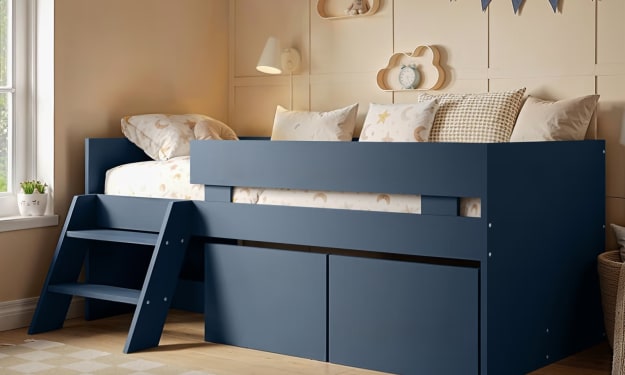
Kids Beds Suitable for Smaller Bedrooms: Smart Comfort Without Crowding
Not every child has a large bedroom. In many homes, space is shared or limited, which means every piece of furniture needs to be chosen carefully. A bed that is too big or bulky can make a small room feel cramped and uncomfortable.
By Shazad Khan2 days ago in Families



Comments
There are no comments for this story
Be the first to respond and start the conversation.