
How to Set Gentle Boundaries Without Time-Outs: Age-by-Age Guide
Discover Age-Appropriate Strategies for Setting Respectful Boundaries Without Time-Outs Using Gentle, Connection-Based Discipline Techniques

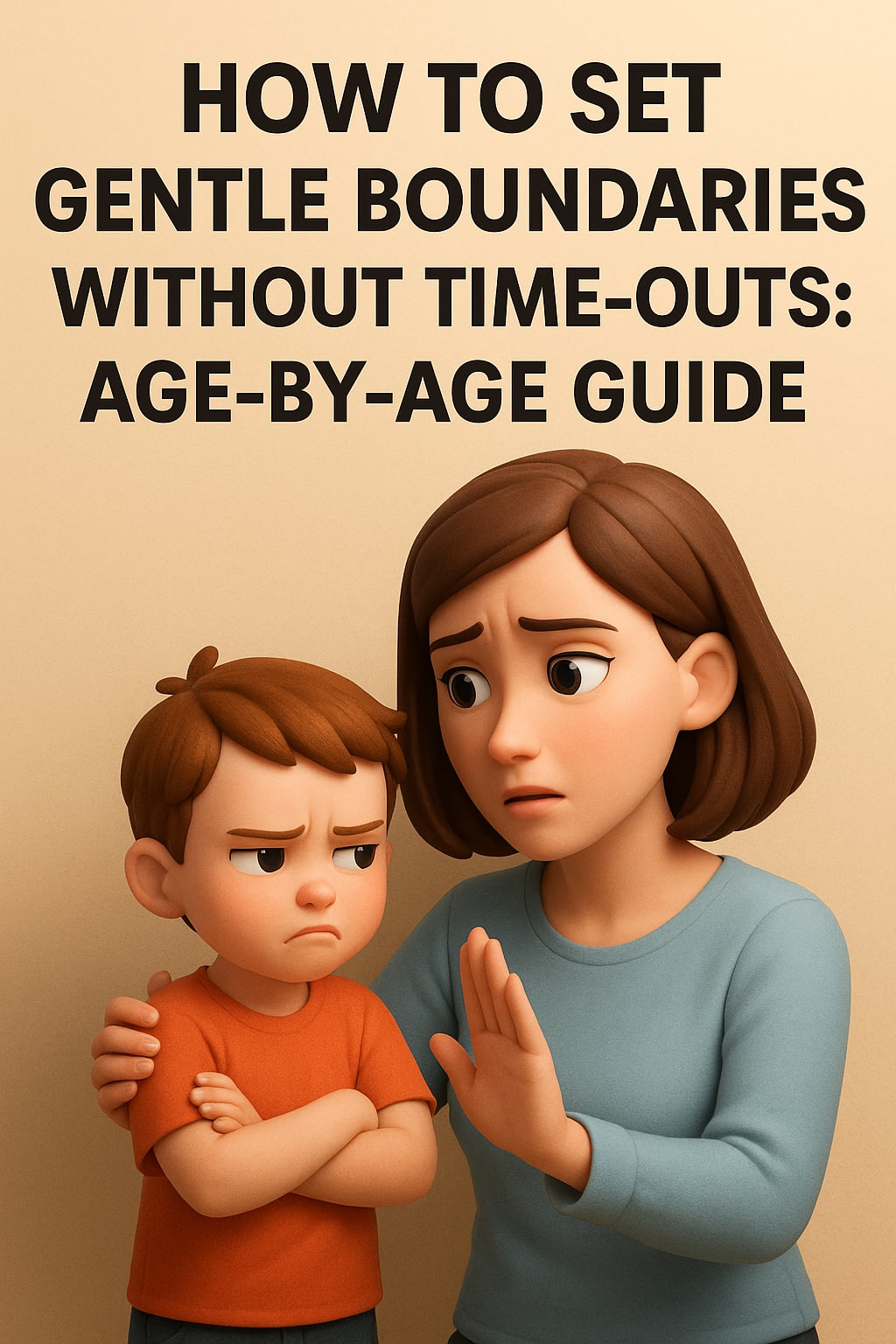
Setting boundaries is an essential part of parenting. But what happens when you're trying to guide your child without resorting to time-outs? You still want structure—just with a more respectful, connection-based approach. Fortunately, there are gentle, effective ways to establish limits that foster cooperation, self-regulation, and trust.
This age-by-age guide offers practical tools, ideas, and scripts to help you set boundaries without punishments or isolation. Let’s dive into how you can approach discipline in a way that nurtures emotional health and long-term respect.
Infants (0–12 Months): Building Trust Through Consistency
Infants aren’t capable of manipulation. They cry, fuss, or flail because they’re communicating discomfort or need. At this stage, “discipline” isn’t about control—it’s about responsiveness.
What to focus on:
- Build routines that help your baby feel safe and secure.
- Respond consistently to cries and cues.
- Set simple limits—like not letting your baby pull your hair—by gently moving their hand and saying, “That hurts Mama.”
How to set a boundary gently:
Let’s say your baby grabs your glasses. Instead of scolding, say in a calm tone, “Not for playing,” while slowly removing them. Offer a soft toy instead. Your tone, touch, and repetition are what matter here.
Toddlers (1–3 Years): Guiding Big Feelings
Toddlers are explorers. They’re learning how the world works—and testing boundaries is part of that process. They also have strong emotions they can’t yet regulate.
What to focus on:
- Use redirection instead of punishment.
- Keep your boundaries short, clear, and consistent.
- Offer choices where possible: “You can walk or I can carry you.”
How to set a boundary without time-outs:
Imagine your toddler hits during play. Instead of isolating them, you might say, “I won’t let you hit. I’ll help you be gentle.” Hold their hand softly. Keep them close. You’re showing that their feelings are valid, but the behavior isn’t acceptable.
This approach doesn’t excuse the behavior—it teaches through presence and modeling.
Preschoolers (3–5 Years): Encouraging Cooperation
Preschoolers crave autonomy but still need lots of guidance. They want to be “big” but aren’t always sure how. Tantrums, boundary-pushing, and loud defiance can feel overwhelming—but they’re developmentally normal.
What to focus on:
- Validate feelings while holding firm to limits.
- Use storytelling or play to work through challenges.
- Be proactive rather than reactive—preview expectations before transitions.
Boundary example without a time-out:
Your preschooler throws blocks when frustrated. Kneel to their level. Say, “It’s okay to feel mad. But I won’t let you throw. Let’s build something together, or we can take a break together.” Offer co-regulation before demanding self-regulation. That’s how they learn.
Early Elementary (6–8 Years): Teaching Empathy and Accountability
At this stage, kids understand cause and effect more clearly. They can reflect on their actions and are beginning to develop empathy—but they still need support when emotions run high.
What to focus on:
- Let natural consequences do some of the teaching.
- Encourage problem-solving together rather than laying down punishment.
- Keep your tone warm but confident.
How to hold a limit without punishment:
Say your 7-year-old refuses to clean up after snack time. You might say, “I see you’re tired, but we all clean up after ourselves. Let’s do it together now, and next time, we’ll plan for more time before screen time.”
When they participate, even reluctantly, acknowledge it: “Thanks for helping clean up. That shows responsibility.”
This kind of boundary builds internal motivation—not fear.
Tweens (9–12 Years): Balancing Independence and Structure
Tweens are seeking more freedom while still needing structure. They may resist boundaries more directly. Your job? Stay connected while holding firm lines.
What to focus on:
- Be clear about expectations, but allow them space to negotiate.
- Include them in boundary-setting conversations.
- Show that you respect their opinions—even when you say no.
Gentle boundary in action:
Your child wants more gaming time on school nights. Instead of a flat “no,” try, “I get that you want more time. Schoolwork and sleep come first. Let’s look at the schedule and figure out when it could fit better.”
By involving them, you foster cooperation instead of power struggles.
Teens (13+): Respectful Limits, Mutual Trust
Teens are wired to challenge authority—that’s part of becoming their own person. Setting boundaries here must be based on mutual respect. Control won’t work. Conversation will.
What to focus on:
- Stay calm, even when emotions escalate.
- Discuss values, not just rules.
- Acknowledge their need for independence while being clear on non-negotiables (safety, respect, honesty).
Boundary without alienation:
If your teen breaks curfew, don’t lecture. Instead, say, “I was really worried. Can we talk about what happened and what we need to do going forward so trust stays strong?”
This approach invites reflection. You’re not punishing—you’re protecting the relationship while addressing behavior.
Connection Over Control
Gentle boundaries aren't soft. They're clear, consistent, and rooted in respect. You're not avoiding discipline—you're redefining it. Without time-outs, you're not losing control. You're choosing influence over fear.
Every age comes with new challenges. And every child is different. But the core of gentle parenting stays the same: connection first, correction through teaching—not shame.
When you guide instead of punish, you raise emotionally intelligent kids who respect limits because they’ve experienced respect themselves.
Let boundaries be your bridge—not your battleground.
About the Creator
Richard Bailey
I am currently working on expanding my writing topics and exploring different areas and topics of writing. I have a personal history with a very severe form of treatment-resistant major depressive disorder.
Keep reading
More stories from Richard Bailey and writers in Families and other communities.
Independent Play: How to Teach Your Child to Play Alone
In today’s fast-paced, multitasking world, independent play is more than just a helpful parenting tool—it’s a developmental necessity. For parents working from home, managing household tasks, or simply needing a break, teaching children to play on their own can feel like a lifeline.
By Richard Bailey10 months ago in Families
Love That Acts, Not Love That Speaks
When Love Became a Language Instead of a Practice In modern parenting culture, love is increasingly defined by what is said rather than what is done. Emotional affirmation, verbal reassurance, and constant validation are treated as the primary evidence of care, while less expressive forms of love are often overlooked or misunderstood. A parent who says “I love you” frequently and validates feelings consistently is assumed to be providing something essential, while a parent who demonstrates care through sacrifice, consistency, and enforcement may be perceived as distant or emotionally limited.
By Peter Thwing - Host of the FST Podcast6 days ago in Families




Comments
There are no comments for this story
Be the first to respond and start the conversation.