
Independent Play: How to Teach Your Child to Play Alone
A Parent’s Guide to Encouraging Independent Play at Home for Happier, More Confident Kids

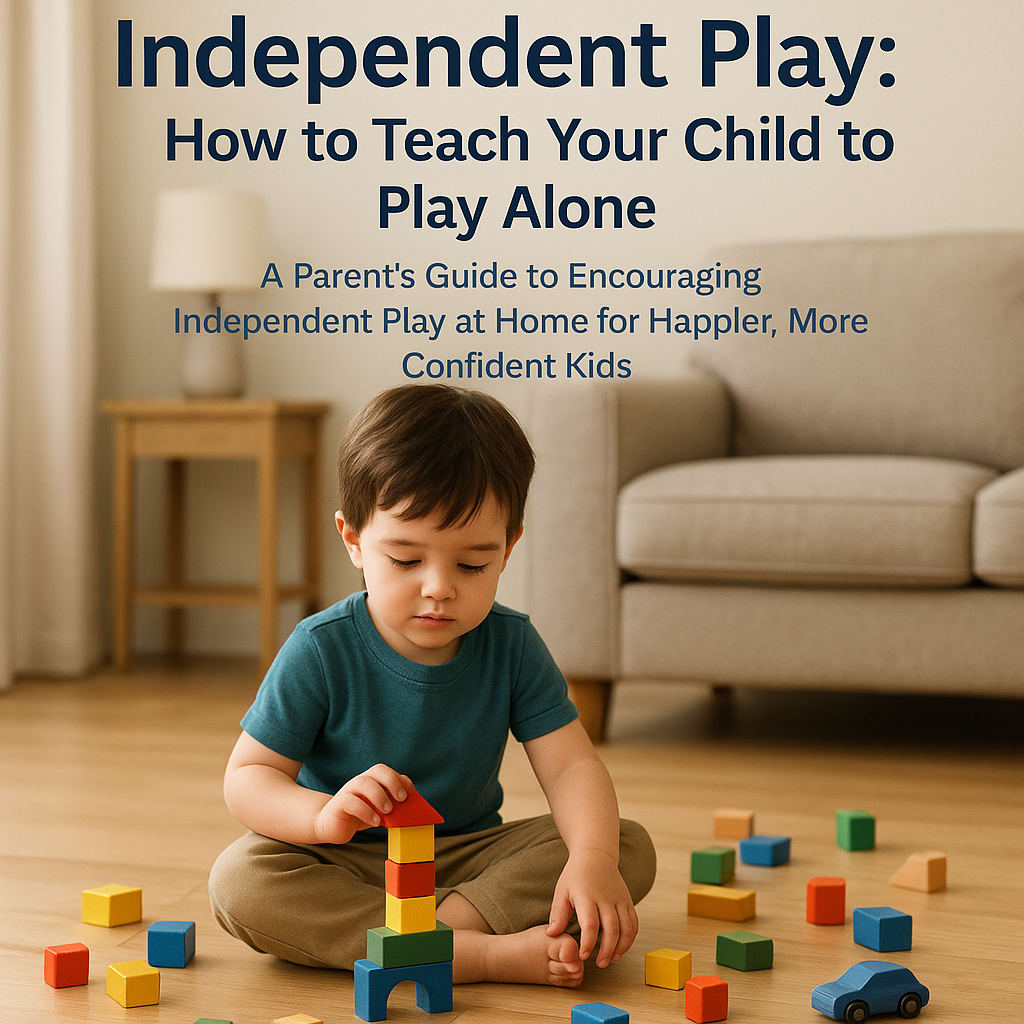
In today’s fast-paced, multitasking world, independent play is more than just a helpful parenting tool—it’s a developmental necessity. For parents working from home, managing household tasks, or simply needing a break, teaching children to play on their own can feel like a lifeline.
But beyond the convenience, independent play nurtures creativity, problem-solving skills, and emotional resilience in children.
This article offers a comprehensive guide to understanding, implementing, and nurturing independent play across different age groups, particularly focusing on toddlers and preschool-aged children.
What Is Independent Play?
Independent play refers to a child’s ability to play alone, without direct adult involvement or interaction. While the term might conjure images of isolation, in reality, it's a healthy and essential component of child development. It allows children to explore, imagine, and make decisions on their own terms, fostering a strong sense of autonomy.
Independent play doesn’t mean a child is unattended or ignored—it simply means they’re engaged in a self-directed activity while a caregiver is nearby or intermittently supervising.
Why Independent Play Is Important
Independent play offers a multitude of benefits that support a child’s growth and a parent’s sanity:
1. Boosts Creativity and Imagination
When children are left to their own devices, they naturally invent stories, scenarios, and worlds. This imaginative play forms the foundation of creativity and lateral thinking.
2. Encourages Problem Solving
Without constant guidance, children learn how to approach challenges, test solutions, and adapt their approach. These early problem-solving skills become critical life tools.
3. Develops Focus and Attention Span
Engaging in solitary play helps build a child’s ability to concentrate on a task over time—an essential skill for academic and professional success later in life.
4. Fosters Emotional Independence
Learning to manage small frustrations and self-soothe during play builds emotional resilience and reduces clinginess or anxiety during moments of separation.
5. Gives Parents Space
Perhaps the most immediate benefit for parents: independent play offers pockets of uninterrupted time to work, rest, or tend to other responsibilities without guilt.
When to Start Teaching Independent Play
It’s never too early to begin encouraging brief moments of solo play. Even infants can benefit from short stretches of tummy time or quiet exploration with age-appropriate toys.
By toddlerhood (around 12-36 months), children become naturally curious and capable of short independent play sessions. Preschoolers can usually engage in longer stretches, especially if independent play has been fostered early.
How to Teach Your Child to Play Alone
1. Create a Safe, Inviting Play Environment
Set up a child-proofed area that allows your child the freedom to explore. This could be a dedicated playroom, a corner of the living room, or a gated-off section filled with safe, stimulating toys. The space should feel cozy and accessible, with open-ended materials like building blocks, dolls, puzzles, or art supplies.
2. Start Small and Build Gradually
Don’t expect your child to entertain themselves for an hour right away. Begin with short sessions—5 to 10 minutes—and gradually increase the time as your child gets more comfortable. Celebrate small milestones and show enthusiasm for their efforts.
3. Use Parallel Play as a Bridge
If your child is reluctant, try sitting nearby and engaging in your own activity. For instance, read a book or answer emails while your child plays beside you. This builds comfort and gradually introduces the concept that they can enjoy themselves without constant interaction.
4. Rotate Toys to Maintain Interest
Children often become overwhelmed or bored when too many toys are available. Use toy rotation to keep the environment fresh and engaging. Introduce “forgotten” toys every few weeks to rekindle interest and excitement.
5. Encourage Open-Ended Activities
Choose toys and materials that don’t have a single use or solution. Items like wooden blocks, pretend play sets, kinetic sand, or dress-up clothes encourage creativity and prolonged engagement.
6. Avoid Constant Interruption
While it’s tempting to comment on everything your child is doing, stepping back and allowing uninterrupted play is key. Resist the urge to jump in unless they’re frustrated beyond their ability to cope. This helps them develop confidence in their own abilities.
7. Set Clear Expectations and Boundaries
Use simple language to explain that it's time for them to play on their own and that you’ll be nearby. You might say, “I’m going to do some work now, and you can play with your blocks. I’ll be back to check in soon.” This builds trust and sets a routine.
8. Praise Efforts, Not Just Results
When your child finishes a solo play session, acknowledge their independence. Say things like, “I saw how focused you were building that tower!” or “You did a great job playing by yourself.” This reinforces positive behavior without making it performance-based.
Age-Appropriate Ideas for Independent Play
Toddlers (1–3 years)
- Stacking blocks or cups
- Pretend play with stuffed animals
- Simple puzzles
- Drawing with crayons or washable markers
- Sensory bins with rice, water, or sand
Preschoolers (3–5 years)
- Dress-up and role play
- Building with LEGO or magnetic tiles
- Solo storytelling with picture books
- Art projects with minimal supervision
- Pretend cooking in a play kitchen
Common Challenges and How to Overcome Them
Clinginess
Children may initially resist being left to play alone. Consistency is key—gradually increase time apart and always follow through with check-ins to reassure them.
Boredom
Avoid this by offering diverse and open-ended play options. Let them feel bored occasionally—it often leads to bursts of creativity.
Overstimulation
If your child becomes overwhelmed by too many choices, scale back. Offer just a few well-loved toys at a time and observe what holds their attention best.
Screen Dependence
While educational shows and apps have a place, try to prioritize physical, imaginative play for independent time. Set tech boundaries and model balanced screen use yourself.
Independent Play and Work-From-Home Balance
For remote-working parents, independent play is a game-changer. Build play sessions into your workday routine, aligning them with times you need to focus. Schedule check-ins between meetings or tasks, and gradually increase the amount of solo play time.
You can also use visual timers, countdown clocks, or simple charts to help children understand when it’s playtime versus parent-time. This encourages structure and helps manage expectations.
Teaching your child to play alone is not about replacing parental involvement—it’s about empowering them to grow, explore, and develop inner resources.
Independent play doesn’t happen overnight, but with patience, consistency, and the right environment, it can become a rewarding habit that benefits both children and parents.
By fostering this skill early, you equip your child with a vital tool for lifelong learning—and give yourself the breathing room needed to thrive as a parent, professional, and person.
About the Creator
Richard Bailey
I am currently working on expanding my writing topics and exploring different areas and topics of writing. I have a personal history with a very severe form of treatment-resistant major depressive disorder.
Keep reading
More stories from Richard Bailey and writers in Families and other communities.
Screen Time Guidelines by Age: A Practical Parent's Guide
In today's digital world, managing screen time is one of the most common challenges for modern parents. With tablets, smartphones, smart TVs, and computers becoming increasingly accessible, it’s more important than ever to set appropriate boundaries around screen use.
By Richard Bailey8 months ago in Families
Wise~Guys
— Look Behind what's in Front of You ~ Make Good Choices — Hey, So how you Doin'..! Made~Men — Mobster Movies romanticise a distinctive, elegant appearance, impeccable attire style, along with the 'Families' expressive lingo. Making their 'Bones' gave them Panache — with vintage fedoras, tailored pin-striped suits, mirror-polished wing-tip shoes adorned with tassels; with their 'Gun Moll' gorgeous dates on their arms.
By Jay Kantor18 days ago in Families




Comments
There are no comments for this story
Be the first to respond and start the conversation.