
How to Parent Without Yelling: 7 Daily Habits That Change Everything
Break the Cycle, Build Connection: Simple Daily Habits That Help You Stay Calm, Present, and In Control—Without Raising Your Voice

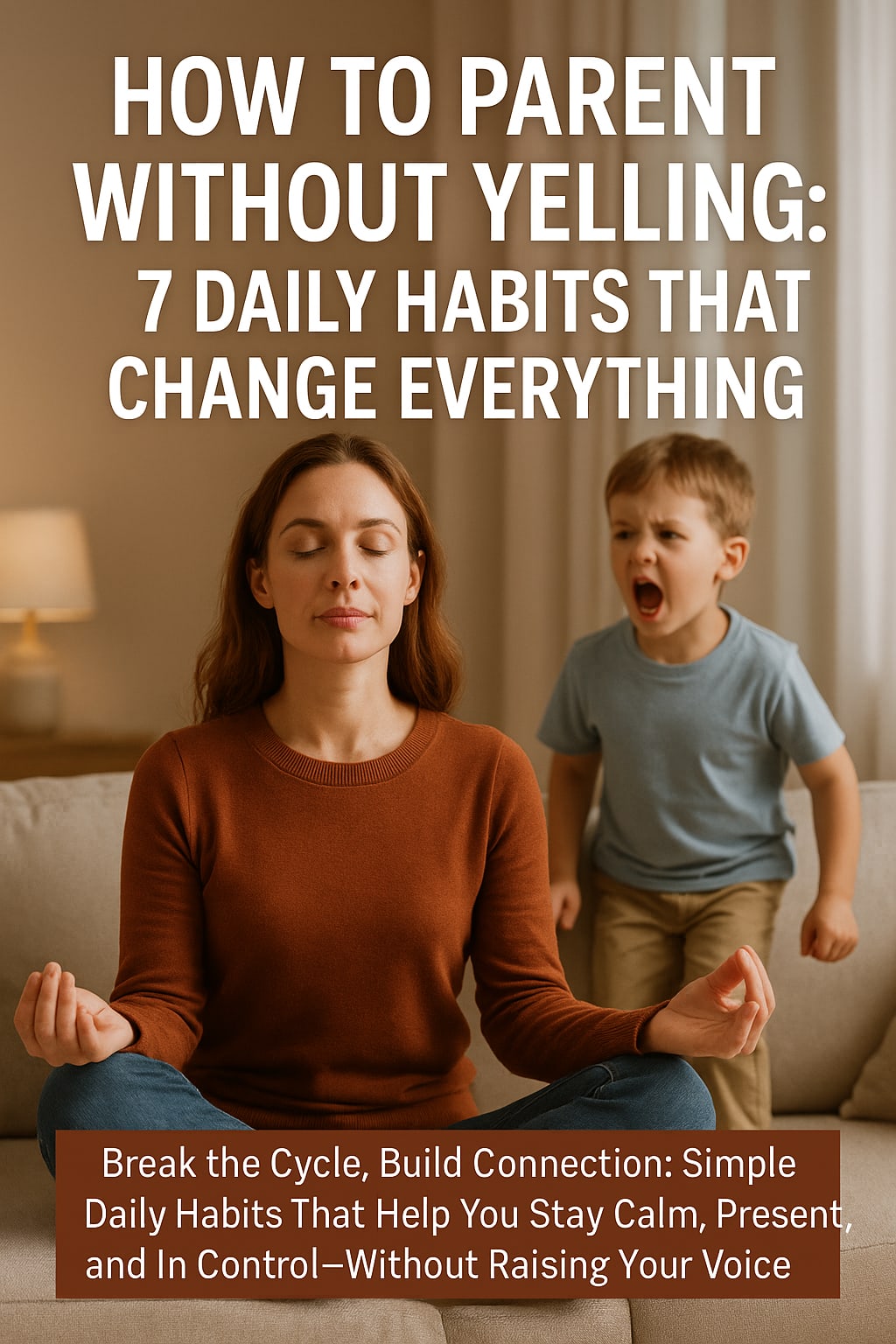
Yelling feels like control. But it’s not. It’s a short-lived release. A burst of emotion, often followed by guilt, confusion, and a shaken connection between you and your child. Most parents don’t want to yell. But stress, exhaustion, and the pressure to “get it right” make it feel impossible not to. The truth is, yelling isn’t the problem. It’s a signal—a red flag waving frantically, telling you something in your daily rhythm needs attention.
What if you could change that rhythm?
What if yelling didn’t have to be your go-to reaction?
What if parenting could feel calmer, more connected—and still firm?
It can. And it starts with small, consistent daily habits.
These aren’t magic tricks. They’re foundational. Subtle shifts that, practiced daily, reroute your emotional reactions and help you build a calmer home.
Here are 7 daily habits that can help you parent without yelling—starting today.
1. Start the Day With Intention (Not Reaction)
You open your eyes and the day is already pulling you in a hundred directions. A spilled cereal bowl, missing shoes, a toddler meltdown. It’s easy to be reactive when your brain hasn’t even caught up with your body yet.
Instead, take five quiet minutes before anyone else wakes up. No phone. No noise. Just you.
Ask yourself:
- What energy do I want to bring to my kids today?
- How do I want them to remember this morning?
This brief pause sets the tone. You’re not just surviving the morning chaos—you’re guiding it.
Start the day. Don’t let the day start you.
2. Name Your Triggers (So They Stop Controlling You)
We don’t yell because our kids are terrible. We yell because something inside us gets activated.
Maybe it’s the feeling of being ignored. Maybe it’s the mess. The noise. The disrespect. Or maybe it’s deeper—leftover patterns from how you were parented.
Whatever it is, get to know it.
Keep a journal. Write down when you yell, what happened right before, and how you felt. You’ll start to see patterns. Triggers. Emotional landmines.
Awareness creates space.
And space? That’s where choice lives.
3. Practice the Pause
Before your voice rises, try this: pause.
Just five seconds.
Breathe in through your nose. Exhale through your mouth.
This micro-moment interrupts the autopilot response. It slows the emotion train just enough for logic to hop on board.
Even better, pair it with a mantra:
- “I am safe. They are learning.”
- “Connection before correction.”
- “This isn’t an emergency.”
That pause doesn’t mean permissiveness. It means responding instead of reacting. And that difference? It’s everything.
4. Create Predictable Routines (Because Chaos Fuels Conflict)
Kids crave structure. Even the wildest ones.
Predictable routines reduce anxiety—for them and for you. Mornings, mealtimes, and bedtimes are common pressure points in parenting. When those are chaotic, yelling is more likely.
- Instead of chaos, create rhythm.
- A consistent bedtime routine signals winding down.
- A visual morning checklist helps kids take ownership.
- Meal planning reduces last-minute stress.
- Routines aren’t rigid—they’re reliable.
When kids know what’s coming, they feel safer. And when you feel less overwhelmed, you’re more equipped to stay calm.
5. Fill Your Own Cup First (Seriously)
It’s not selfish. It’s essential.
You cannot pour calm into your child if your own nervous system is fried. This isn’t about spa days and bubble baths (though, yes, do those too). It’s about daily regulation.
Ask yourself:
- Am I sleeping enough?
- Am I moving my body?
- Have I eaten something nourishing?
- Do I have one adult I can be real with?
When you’re depleted, every small misbehavior feels like an attack.
When you're grounded, you can see the big picture. You can see them.
Taking care of you is taking care of them.
6. Use Connection Before Correction
Yelling often comes from disconnection.
Your child isn’t listening. You feel invisible. The volume rises. But what if the answer isn’t louder commands—but deeper connection?
Try kneeling to eye level. Use their name. Touch their shoulder. Say something kind before correcting.
- “Hey bud, I see you’re upset.”
- “I know you don’t want to clean up. Let’s figure it out together.”
This doesn’t mean giving in. It means guiding from relationship—not dominance.
Connection opens ears. And hearts.
7. End the Day With Repair
No parent is perfect. Not even close. You will lose your temper. You will yell. You will mess up.
But what matters more than perfection is what happens next.
If you yell, own it.
Say:
- “I yelled earlier. I was feeling overwhelmed. That wasn’t okay, and I’m working on doing better.”
This teaches emotional accountability. It models humility. It repairs the rupture.
Kids don’t need flawless parents. They need present ones. Honest ones. Safe ones.
Repair isn’t a sign of failure. It’s a sign of strength.
This Is the Work That Changes Everything
Parenting without yelling isn’t about stuffing your anger or pretending you’re always calm. It’s about doing the work underneath. Recognizing that yelling isn’t the real problem—it’s the smoke, not the fire.
These habits? They take practice. Some days you’ll nail them. Other days, you’ll forget entirely.
That’s okay.
Change doesn’t come from perfection. It comes from repetition.
Every time you pause instead of yell…
Every time you connect instead of control…
Every time you repair instead of retreat…
You’re changing the story.
One day, one habit, one deep breath at a time.
About the Creator
Richard Bailey
I am currently working on expanding my writing topics and exploring different areas and topics of writing. I have a personal history with a very severe form of treatment-resistant major depressive disorder.
Keep reading
More stories from Richard Bailey and writers in Families and other communities.
Daily Routines That Actually Work for ADHD Kids
Routines and ADHD? At first glance, it sounds like a contradiction. The word “routine” suggests predictability and repetition. ADHD, on the other hand, often looks like chaos wrapped in curiosity. But here’s the truth: structure, when it’s done right, is a game-changer for kids with ADHD. It’s not about rigidity. It’s about creating a rhythm they can dance to.
By Richard Bailey10 months ago in Families
How to Fix Loose or Crooked Glasses Frames?
Eyeglasses are designed to improve your vision and make daily activities more comfortable. However, over time, glasses frames can become loose, bent, or misaligned. If your glasses constantly slide down your nose or feel uneven on your face, it may be a sign that your frames need adjustment or minor repair.
By Parham Optical5 days ago in Families




Comments (1)
Great