
Daily Routines That Actually Work for ADHD Kids
Simple, Structured Daily Routines That Help ADHD Kids Focus, Stay Calm, and Thrive at Home and School

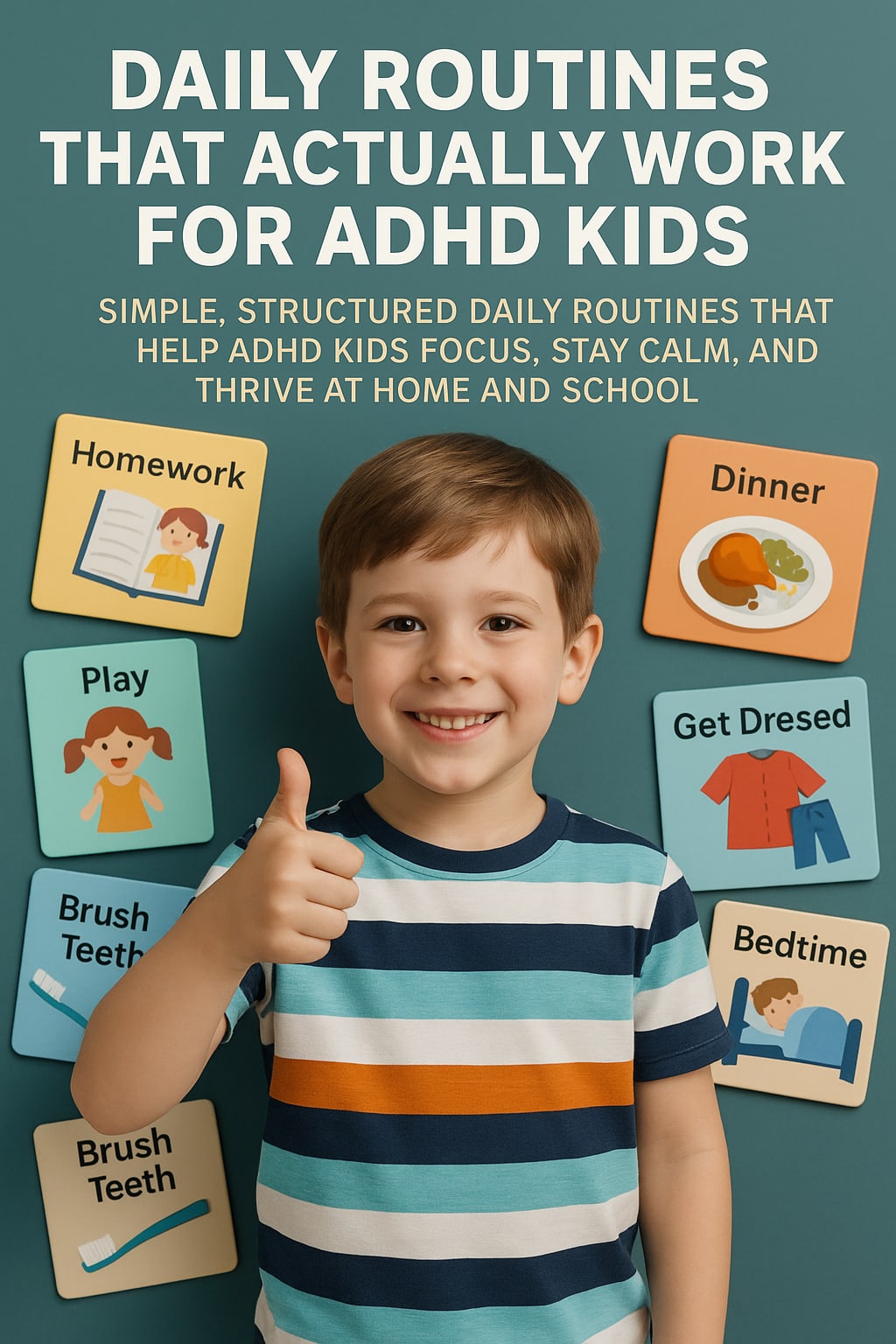
Routines and ADHD? At first glance, it sounds like a contradiction. The word “routine” suggests predictability and repetition. ADHD, on the other hand, often looks like chaos wrapped in curiosity. But here’s the truth: structure, when it’s done right, is a game-changer for kids with ADHD. It’s not about rigidity. It’s about creating a rhythm they can dance to.
So, what kind of daily routines actually work for ADHD kids? Let’s break it down.
Morning: Prime Time for Predictable Starts
The way the morning unfolds can define the rest of the day. For kids with ADHD, mornings should be clear, visual, and consistent—but not rushed.
Start with visual cues.
Rather than barking out tasks (“Brush your teeth! Put on your socks!”), create a visual schedule. Use images. Kids with ADHD are often visual learners. A laminated chart with checkboxes can become their go-to guide. It reduces dependency on parental prompts and builds independence.
Wake up earlier than you think you need to.
Not for stress, but for calm. Rushed mornings trigger meltdowns. A quiet breakfast, a moment to stretch, maybe even a fun “morning mission” like finding their favorite toy—these small things create a smoother launchpad.
Use micro-routines.
Think of them as routines within routines. Getting dressed becomes: grab clothes (laid out the night before), sit on the “dressing mat,” then do a silly dance when ready. It sounds small, but for ADHD brains, it turns a vague command into a set of doable steps.
School Prep: Get Out the Door Without the Drama
Transitions are hard for any child, but especially for those with ADHD. Abrupt shifts? Recipe for disaster.
Countdowns help.
“Five minutes till we leave,” then “three minutes,” then “grab your bag.” Use timers, alarms, even songs. Knowing what’s next reduces anxiety and resistance.
Create a launch pad.
Set up a specific area near the door with their backpack, shoes, jacket, and anything else they need. Same spot. Every day. No guesswork, no last-minute hunts.
And yes, reward the small wins. If they manage to get ready without constant reminders, praise it. Maybe even a sticker or a token if that works in your household. Motivation matters.
After School: The Crucial Transition Zone
This is where many routines break down. Kids are tired and overstimulated, and they need decompression.
Don’t jump straight into homework.
Give them a wind-down period. It can be 30 minutes of outside play, quiet reading, or sensory activities like swinging or using a fidget toy. This isn’t wasted time—it’s a mental reset.
Then shift into a structured “homework block.”
Make it short. 20–30 minutes. Use timers. Include breaks. If the task is long, break it into parts with small goals. ADHD brains respond to achievable milestones better than one big, looming assignment.
And always, always let them know what’s coming next. Even if it’s just, “We’ll start with reading, then take a snack break.”
Evening: Calm Is the Goal, Not Control
The end of the day should not be a power struggle. You want a calm descent, not a crash landing.
Dinner routines help anchor the evening.
Same time every night, when possible. Even setting the table can be part of the routine—give your child a specific job, and let them feel like part of the team.
Establish a wind-down ritual.
No screens at least 30–60 minutes before bed. Instead, choose predictable steps: bath or shower, PJs, teeth, storytime, and lights out. You can even make it a checklist, like in the morning.
Lighting matters. So does sound. Dim the lights gradually as bedtime approaches. Consider soft music or white noise to ease overstimulation.
And stick to a consistent bedtime—even on weekends. This helps regulate the body clock, which is often out of sync for kids with ADHD.
The Real Secret: Flexibility Inside Structure
Here’s the thing: routines shouldn’t feel like traps. They should feel like tracks. For ADHD kids, it’s not about forcing behavior into a mold. It’s about guiding energy and attention in ways that build confidence.
So be ready to pivot. Some days, everything will go smoothly. Other days, you’ll need to toss the schedule out the window and just connect.
That’s okay.
What matters is consistency over time, not perfection in the moment. ADHD parenting isn’t about control—it’s about partnership. When you design routines with your child, not just for them, you both win.
Think “Repeatable, Not Rigid”
Successful routines for ADHD kids are built on two core ideas: predictability and flexibility. Yes, those can coexist. Use tools like checklists, timers, and visual schedules—but also build in choices. Give them autonomy. Ask for input. Let them own part of their day.
And when things fall apart (because they will), take a breath.
Then try again tomorrow. That’s the rhythm that works.
About the Creator
Richard Bailey
I am currently working on expanding my writing topics and exploring different areas and topics of writing. I have a personal history with a very severe form of treatment-resistant major depressive disorder.
Keep reading
More stories from Richard Bailey and writers in Families and other communities.
Low-Stimulation Activities for Overwhelmed Toddlers: Gentle Ways to Calm and Engage
In today’s fast-paced, hyper-stimulating world, toddlers can easily become overwhelmed. Bright lights, loud sounds, crowded spaces, and constant activity may lead to meltdowns, irritability, or a sudden withdrawal. As a parent or caregiver, recognizing the signs of sensory overload is crucial. Equally important is knowing how to provide relief through calm, low-stimulation activities designed to soothe and reset.
By Richard Bailey9 months ago in Families




Comments
There are no comments for this story
Be the first to respond and start the conversation.