
How My Grandfather’s Diary Changed the Way I See the World
A forgotten journal, a quiet man, and the unexpected wisdom that reshaped my life.
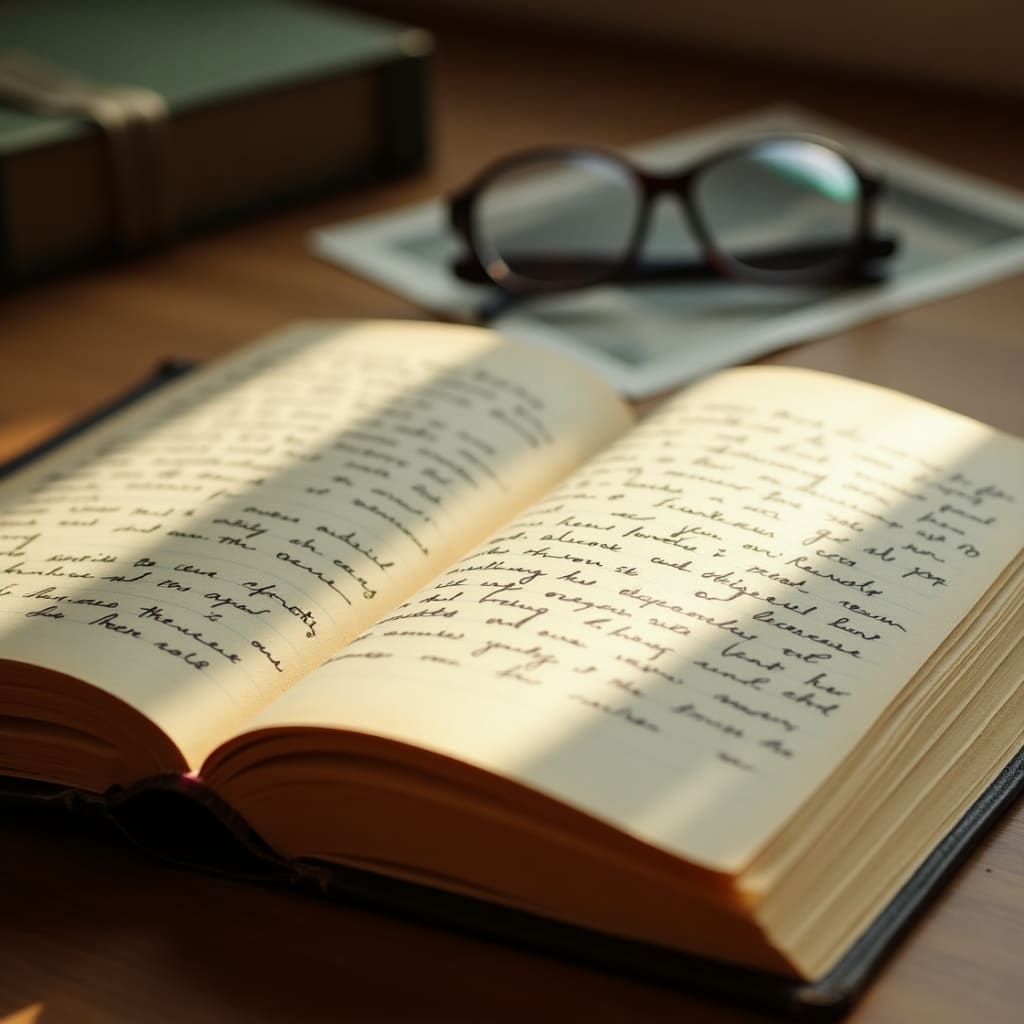
I found the diary by accident.
It was tucked away in an old tin box in my grandparents’ attic, buried beneath yellowed newspapers, a cracked pair of glasses, and a folded wool sweater that still carried the faint scent of my grandfather’s aftershave. The attic was dusty and dim, and I had only gone up there to find some family photos for a school project. What I found instead was a window into a world I never knew.
My grandfather, who we all called “Baba,” had passed away two years earlier. He was the quiet sort—kind, soft-spoken, always sipping tea and humming old songs. I never thought of him as someone who had much to say. But inside that old leather-bound book was a voice I had never heard before: sharp, passionate, and deeply thoughtful.
The first entry was dated June 12, 1957. I remember sitting cross-legged on the attic floor, flipping through page after page, completely transfixed. Baba had started the diary when he was just 18, writing in a careful, slanted script. He wrote about everything—from his dreams of becoming a teacher to the heartbreak of losing his older brother in a car accident. He wrote about politics, about love, about fears of war and hopes for peace. It was like discovering a whole other man behind the one I thought I knew.
What struck me most was how honest he was. In one entry, he wrote:
“Sometimes I feel like I’m standing still while the world spins around me. I want to do something that matters. I want to make someone proud—maybe my future grandchildren, if I’m lucky enough to have any.”
I read that line over and over again, heart pounding. Did he somehow write that for me?
Before that moment, I had always seen the world in narrow frames—present tense, digital snapshots, my life on fast forward. I never considered what life looked like through the eyes of someone who had lived it so slowly, so thoughtfully, one handwritten line at a time. Reading his words felt like slowing down to breathe in colors I hadn’t noticed before.
Baba’s entries weren’t always profound. Some were simple reflections on rainy days or the smell of fresh bread from the bakery down the street. But even those moments felt full. He saw magic in the mundane. He described a sunflower in such detail you could almost hear it blooming.
There were darker entries, too. Times when he felt hopeless or lost. Times he questioned his faith, his purpose. But there was always a return to light—a promise to keep going. That resilience stayed with me long after I closed the book.
The diary changed how I understood history. Baba wrote about major events—protests, elections, economic crashes—not with cold facts, but with emotion. I’d read about those moments in school, but his writing made me feel them. I began to realize that history isn’t just what happens on the news. It’s what happens in people’s hearts. It’s the fear in your chest when your town changes overnight. It’s the joy of your first vote. The heartbreak of watching something you believe in fall apart.
After reading the diary, I started asking my grandmother questions I had never thought to ask before. What was Baba like when he was young? Did he really want to be a teacher? Why didn’t he ever talk about his brother?
She smiled softly and said, “He carried a lot in silence.”
That stuck with me. So many people carry things they never speak of. So many stories are lost because no one thinks to write them down—or ask to hear them.
I began journaling myself. Not because I wanted anyone to find it, but because I realized the power of preserving thoughts. It became a place where I could process things without filters, without fear of judgment. In a way, I was continuing Baba’s legacy—not through grand achievements, but through reflection.
Eventually, I brought the diary downstairs and shared it with the rest of my family. We sat around the table reading aloud, laughing and crying. My father, who rarely shows emotion, wiped his eyes more than once. My younger brother, usually glued to his phone, sat quietly for the whole hour. For a moment, time slowed down for all of us.
We began telling more family stories after that. About my parents’ first apartment. About my aunt’s rebellious teenage years. About how my grandparents met in a library and shared one sandwich on their first date. Stories that had been floating around like dust in the air, suddenly grounded in words and memory.
That diary reminded me that the past isn’t gone—it’s layered beneath everything we are. My grandfather may no longer be here, but his voice lives on. In ink. In pages. In me.
The way I look at the world now is different. I notice things more. I ask deeper questions. I understand that behind every quiet person is a world waiting to be discovered.
And sometimes, when I’m alone, I take out the diary and read one entry, just to hear Baba’s voice again.
Because he wasn’t just writing for himself.
He was writing for me, too.
About the Creator
Reader insights
Outstanding
Excellent work. Looking forward to reading more!
Top insights
Eye opening
Niche topic & fresh perspectives
Heartfelt and relatable
The story invoked strong personal emotions
Compelling and original writing
Creative use of language & vocab
Easy to read and follow
Well-structured & engaging content
Excellent storytelling
Original narrative & well developed characters
Expert insights and opinions
Arguments were carefully researched and presented
Keep reading
More stories from Talha Maroof and writers in Families and other communities.
Wise~Guys
— Look Behind what's in Front of You ~ Make Good Choices — Hey, So how you Doin'..! Made~Men — Mobster Movies romanticise a distinctive, elegant appearance, impeccable attire style, along with the 'Families' expressive lingo. Making their 'Bones' gave them Panache — with vintage fedoras, tailored pin-striped suits, mirror-polished wing-tip shoes adorned with tassels; with their 'Gun Moll' gorgeous dates on their arms.
By Jay Kantor17 days ago in Families



Comments (5)
Now I want to ask my parents and grandparents about their lives. We miss so much by not asking. Thank you for the inspiration.
‘The past isn’t gone—it’s layered beneath everything we are.’ That line gave me chills. Absolutely stunning writing.
This story slowed me down—in the best way. I’ll never see old notebooks the same again.
Adding ‘find old family diary’ to my to-do list. This story was a gift, truly.
I didn’t expect to cry, but here I am. This story made me think of my own grandfather’s quiet strength. Thank you for reminding me that silence can hold so much.