
How Human Design Can Transform Communication with Children
Parenting and Spirituality


Your child doesn’t need fixing—just understanding…The challenges you face at home or in the classroom aren’t due to defiance, disinterest, or lack of discipline… but simply a mismatch in how you’re communicating with them?
In a world filled with parenting frameworks and educational systems designed for the average child, Human Design offers something radical:
A personalized, compassionate lens that reveals how each child naturally thinks, learns, and engages with others.
It’s not a trend. It’s a tool. And for many parents and teachers, it’s been the missing piece.
The Power of Feeling Seen
Every child is constantly communicating. Not just through words, but through energy, behavior, and emotional signals. When they feel misunderstood or forced into ways of being that don’t align with who they are, they begin to withdraw, act out, or lose trust.
Human Design gives us a new way to listen.
It allows us to meet each child as they are—not who we expect them to be. When we begin to speak in ways that resonate with their design, the difference is immediate. Children soften. They engage. They feel seen.
And once a child feels seen, they begin to listen back.
What Human Design Can Teach Us About Communication
Human Design is based on birth data and offers insight into a person’s energetic makeup. While it can get complex, the fundamentals are simple and incredibly useful—especially when it comes to communication.
Here are three transformative shifts that happen when parents and educators begin to engage with children through this lens:
1. We stop reacting—and start understanding.
Instead of labeling a child as “too quiet,” we begin to see a natural observer who needs space to process before they speak.
Instead of seeing a child as “bossy” or “disrespectful,” we recognize a Manifestor who is designed to initiate, not ask for permission.
Behavior becomes communication, not a problem to correct.
This shift alone can turn daily power struggles into deeper connection.
2. We communicate in ways they can actually receive.
Each child has a different energetic language. Some thrive with clear, direct communication. Others need gentle invitations. Some want time to reflect before responding, while others are more spontaneous.
Human Design gives us clues about how to time our conversations, how to frame requests, and how to offer feedback that lands.
It helps us tune into not just what we’re saying—but how we’re saying it.
3. We begin to honor the child, not the mold.
Traditional systems often reward conformity. But children aren’t built in identical rows. They come with different gifts, rhythms, and needs.
Human Design doesn’t offer a set of rules—it offers permission. Permission for the child to be who they already are. And permission for us, as adults, to stop forcing what doesn’t fit.
When we understand a child’s design, we can begin to create environments that nourish their individuality instead of suppressing it.
For the Parent or Teacher Who Wants to Do Better
You don’t need to master every part of Human Design to begin using it.
Start small. Learn your child’s Type (like Generator, Projector, Manifestor, MG or Reflector) and how they’re designed to make decisions. Learn their Profile—like Line 1, the Investigator, or Line 3, the Experimenter—and begin to observe how they naturally move through the world.
You’ll begin to see that what once looked like resistance is actually wisdom. That what once felt like chaos is often creativity waiting to be understood.
The more we speak in alignment with a child’s design, the less we need to shout. The more we listen through that lens, the more trust is built.
And trust, in any relationship, is everything.
Raising a Generation That Knows It’s Safe to Be Itself
Imagine what becomes possible when a child grows up never doubting that who they are is right.
That their natural way of learning, expressing, and making choices is valid.
That their parents and teachers are not trying to change them—but support them in becoming even more of themselves.
This is the true gift of Human Design. It’s not about parenting better. It’s about relating better. Teaching better. Listening better. And ultimately, loving better.
When we learn to speak to our children in the language of their design, we teach them the most important lesson of all: they are worthy of being heard just as they are.
About the Creator
Vicky Coach
Parenting | Human Design | Mindfulness
Keep reading
More stories from Vicky Coach and writers in Families and other communities.
The Surprising Parenting Tool That Helped Me Understand My Child Like Never Before
In the chaos of parenting, understanding a child's unique design can significantly enhance the parenting experience. By applying the principles of Human Design, parents can tailor their approaches to meet the innate needs and strengths of their children. This concept goes beyond traditional parenting methods, offering insights based on individual energy types and decision-making strategies.
By Vicky Coach7 months ago in Families
The king of pop Jackson Family Legacy (2009–2026)
Introduction For more than five decades, the Jackson family has been one of the most influential dynasties in entertainment history. From the rise of The Jackson 5 in the late 1960s to global solo careers, their cultural impact spans music, film, modeling, and philanthropy. Following the passing of Michael Jackson in 2009, the family entered a new era focused on preserving its legacy while embracing generational growth. As of 2026, the Jackson lineage spans four generations, with careers and public contributions continuing across the globe. First Generation: The Jackson Siblings Rebbie Jackson (b. 1950) Rebbie Jackson, the eldest of the siblings, has remained closely connected to family milestones while pursuing her music career. She has three children: Stacee Brown (b. 1971), Yashi Brown (b. 1973), and Austin Brown (b. 1985), and one grandchild, London Blue Salas (b. 2003). Rebbie has balanced public appearances with a largely private family life. Jackie Jackson (b. 1951) Jackie Jackson has maintained a presence in music and occasional public appearances while raising four children: Sigmund “Siggy” Jackson Jr. (b. 1977), Brandi Jackson (b. 1982), Jaylen Jackson (b. 1987), and River Jackson (b. 1992). He is also a grandfather to Jared Jackson (b. 2005), Kai-Ari Jackson (b. 2008), and Skyy Jackson (b. 2010), reflecting his continued role in supporting the family’s younger generations. Tito Jackson (1953–2024) Tito Jackson, who passed away in 2024, left behind a strong musical and familial legacy. His children include Taj Jackson (b. 1973), Taryll Jackson (b. 1975), TJ Jackson (b. 1978), and three younger children born between the 1980s and 1990s. Tito’s grandchildren include Royal Jackson (b. 2000), Bryce Connor Jackson (b. 2003), Dee Dee Jackson (b. 2005), Jordan “JoJo” Jackson (b. 2007), Adren Michael Jackson (b. 2010), and Rio Tito Joe Jackson (b. 2012). Tito’s influence continues through 3T and their extended families. Jermaine Jackson (b. 1954) Jermaine Jackson has one of the largest second-generation families in the Jackson lineage. His eight children are Jermaine Jackson Jr. (b. 1977), Autumn Jackson (b. 1978), Jaimy Jackson (b. 1987), Jeremy Jackson (b. 1996), Jourdynn Michael Jackson (b. 1998), Jaafar Jackson (b. 1996), Jermajesty Jackson (b. 2002), and Tahkyah Brings Plenty Jackson (b. 2008). Many of his children pursue acting, modeling, and music while focusing on education. Jaafar Jackson has gained attention for portraying his uncle Michael Jackson in the upcoming biographical film Michael, and Tahkyah Brings Plenty Jackson is active in acting, modeling, and activism, representing the family’s emerging fourth generation. La Toya Jackson (b. 1956) La Toya Jackson has remained engaged in media and television work. She has no children, but she continues to participate in public appearances and family events. Marlon Jackson (b. 1957) Marlon Jackson balances family life with nonprofit work and philanthropy. He has three children: Valencia Jackson (b. 1980), Brittany Jackson (b. 1982), and Marlon Jackson Jr. (b. 1984). His grandchildren include Noah Laniak (b. 2005), Sophia Laniak (b. 2007), Phoenix Sanchez (b. 2008), Savanna Bella Sanchez (b. 2010), and Summer Blue Sanchez (b. 2012). Randy Jackson (b. 1961) Randy Jackson maintains a private profile while raising three children: Genevieve Jackson (b. 1983), Steven Randall Jackson Jr. (b. 1985), and Stevanna Jackson (b. 1988). He continues to participate in family events while keeping much of his personal life out of the spotlight. Janet Jackson (b. 1966) Janet Jackson has balanced a highly successful global music career with motherhood. She has one child, Eissa Al Mana (b. 2017), and continues to influence music, acting, and advocacy projects worldwide. Michael Jackson (1958–2009) Michael Jackson’s children — Prince Michael Jackson (b. 1997), Paris-Michael Katherine Jackson (b. 1998), and Prince Michael Jackson II “Bigi” (b. 2002) — have gradually stepped into public life. They are involved in philanthropy, music, modeling, and film while maintaining privacy in their personal lives. The Third & Fourth Generations (2026) By 2026, the Jackson family spans over 20 children of the original siblings, dozens of grandchildren, and a growing fourth generation. The family’s influence continues across music, film, modeling, activism, and private business, maintaining recognition worldwide while nurturing the next generation of talent. The Jackson Family Today Seventeen years after Michael Jackson’s passing, the Jackson family remains a global cultural presence. While earlier decades were defined by intense media exposure, today’s family blends public careers with private development. Each sibling branch contributes to a multigenerational legacy, from Motown origins to modern film projects, demonstrating resilience, creativity, and unity across four generations.
By Allie Jackson 7 days ago in Families
The Silence at the Dinner Table
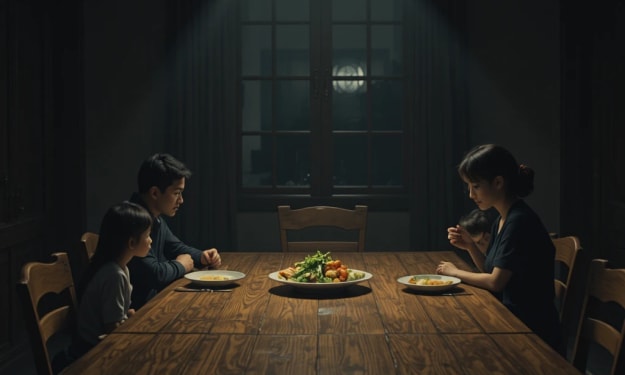
The Silence at the Dinner Table When Silence Speaks Louder Than Words The house was never truly quiet. The television hummed in the living room. The refrigerator rattled every few minutes. Cars passed outside, their headlights brushing across the curtains like wandering ghosts. But at 8:00 p.m. every evening, when the family gathered around the wooden dinner table, a different kind of silence filled the room — one that felt heavy enough to press against the chest.
By Truth words a day ago in Families
Who is your "Person"?
It's important to recognize that you cannot go through life as easily on your own. My name is Elizabeth and I'm a survivor of child abuse and horrific trauma. Healing from trauma is not a quick fix and recognizing that it will take time, is part of the struggle.
By Elizabeth Woods3 days ago in Psyche



Comments
There are no comments for this story
Be the first to respond and start the conversation.