
History & Mystery of Pongal Festival - Tamil Nadu | Sri Lanka
Festival Series

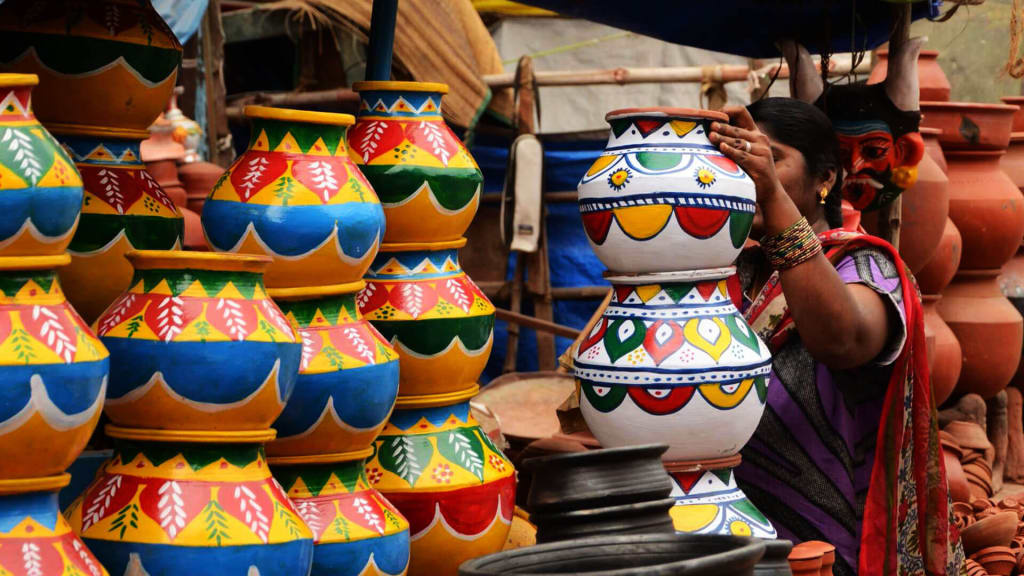
What is pongal celebration?
Pongal is a four-day harvest festival celebrated in the Indian state of Tamil Nadu, as well as in Sri Lanka, by the Tamil people. It is typically celebrated in the month of January, and marks the start of the sun's six-month-long journey northwards, known as the Uttarayana. Pongal is celebrated to give thanks to the sun, the earth, and the farm animals for the good harvest. The main day of the festival is called "Thai Pongal," and is a time for families to gather together, prepare traditional foods, and participate in various ceremonies and rituals.
1) Day 1 - Bhogi
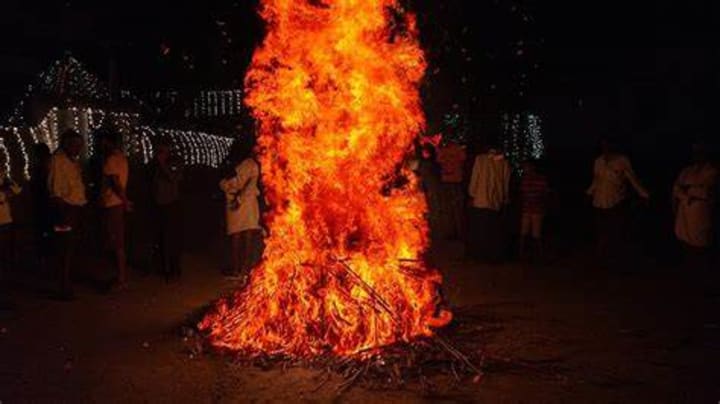
The first day of the Pongal celebration is called "Bhogi." On this day, people clean and decorate their homes, and also discard old and unused items. They light a bonfire in the evening and throw old clothes, utensils, and other household items into the fire, symbolizing the letting go of the old and welcoming the new. This day also marks the start of the Pongal festival.
2) Day 2 - Thai Pongal
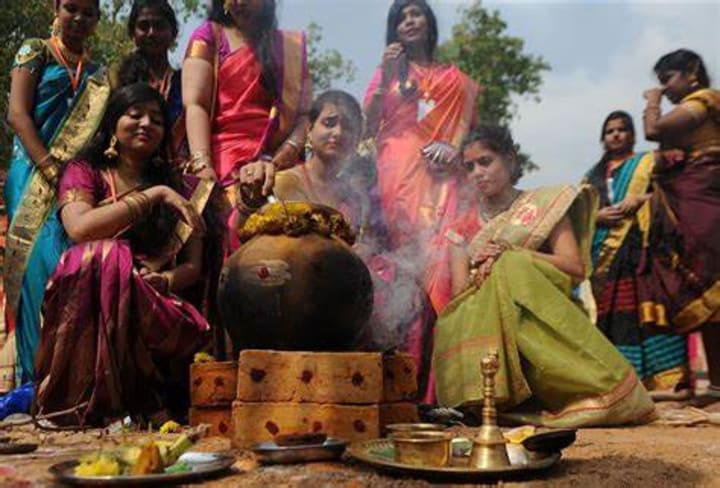
The second day of the Pongal celebration is called "Thai Pongal" or "Surya Pongal." This is considered the main day of the festival and is dedicated to Lord Surya, the Sun god. On this day, people prepare a traditional dish called "Pongal" made from rice, lentils, and milk, and offer it to Lord Surya as a symbol of gratitude for a good harvest. They also draw beautiful kolam(Rangoli) designs in front of their homes and decorate the entrance with mango and banana leaves. This day is also a time for families to gather together, exchange gifts, and participate in various ceremonies and rituals.
3) Day 3 - Mattu Pongal
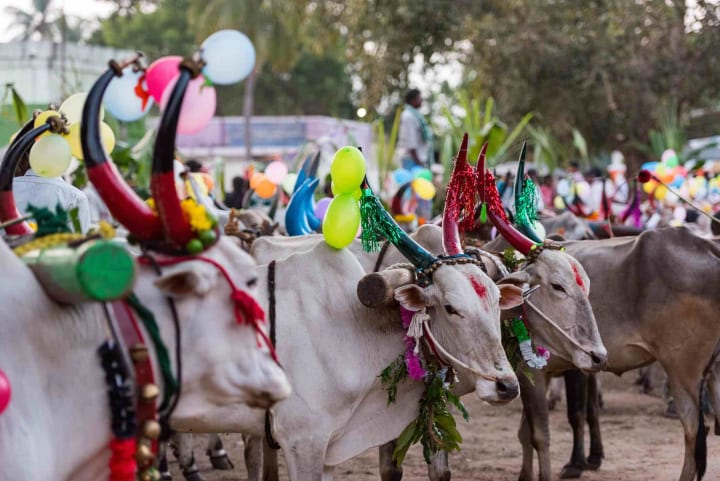
The third day of the Pongal celebration is called "Mattu Pongal" or "Kaanum Pongal." On this day, people pay homage to their cattle and other farm animals, which are considered an important part of the agricultural community. Cows and bulls are decorated with bells, beads and flowers and are honored, as they are considered to be an important source of wealth and prosperity. It is also a day for farmers to thank the cattle for their hard work and support throughout the year. People will prepare special dishes and feed their cattle, and also organize cattle races and bullfight in some areas, this day is also a day for families to meet and greet each other visiting relatives and friends.
4) Day 4 - Kaanum Pongal
The fourth day of the Pongal celebration is called "Kaanum Pongal" or "Uzhavar Thirunal." On this day, people visit friends and relatives, exchange gifts and sweets, and participate in community gatherings. It's a day for socializing and having a good time with loved ones. "Kaanum" means "to visit" and this day is dedicated to visiting and spending time with friends and family. Some people also go out to nearby tourist places and have a picnic with family and friends. This day marks the end of the Pongal festival and is a time for people to come together and celebrate the abundance and prosperity brought by the harvest.
Origin of Pongal
The origins of the Pongal festival can be traced back to ancient Hindu traditions. The word "Pongal" itself is derived from the Tamil word "pongu," which means "to boil" or "to overflow." The festival is celebrated to mark the end of the winter solstice and the start of the sun's northward journey, which is believed to bring prosperity and abundance. Pongal is a thanksgiving festival to the nature and gods for a good harvest.
In addition to the agricultural significance, Pongal also has religious significance, as it is dedicated to Lord Surya (the Sun god) and his consort Usha. It is also believed that the festival was first celebrated by the Tamils to thank Lord Shiva for saving them from a demon named Khar.
It is said that Pongal festival was celebrated from Sangam Era, which is around 300 BC.
Thanks for reading , lets see in another interesting festival series. Don't forgot to subscribe and like my article.
About the Creator
Keep reading
More stories from ATHIYAMAN M and writers in Families and other communities.
Top 7 Passive Income Part Time Jobs For Students- Online
1) Blogging Blogging is a popular way to earn passive income online. To start a blog, you'll need to choose a niche (topic) that you're passionate about, select a blogging platform (such as WordPress or Blogger), and create content that is interesting and valuable to your target audience.
By ATHIYAMAN M3 years ago in Education
Wise~Guys
— Look Behind what's in Front of You ~ Make Good Choices — Hey, So how you Doin'..! Made~Men — Mobster Movies romanticise a distinctive, elegant appearance, impeccable attire style, along with the 'Families' expressive lingo. Making their 'Bones' gave them Panache — with vintage fedoras, tailored pin-striped suits, mirror-polished wing-tip shoes adorned with tassels; with their 'Gun Moll' gorgeous dates on their arms.
By Jay Kantor19 days ago in Families




Comments
There are no comments for this story
Be the first to respond and start the conversation.