

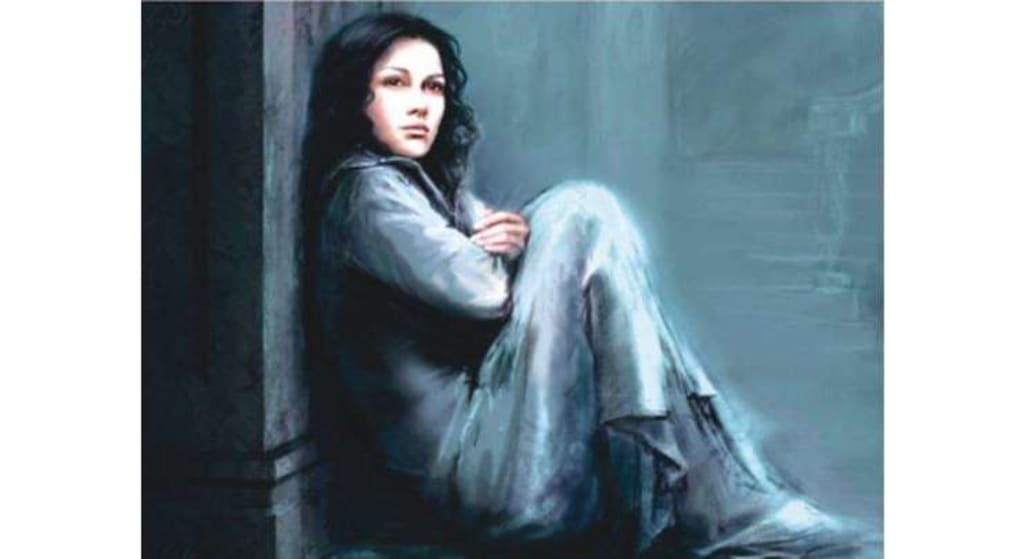
Father somehow managed to beg for two loaves of bread and some leftover food. That was enough to get us through the night. Soon after my marriage, I learned that I was going to become a mother.
Wednesday, 18 March 2020
Professor Shagufta Khaksar
The young girl kept talking. Over several meetings, I listened to her life story and felt a heavy burden on my heart and mind. I thought her story should be shared with readers, so I am narrating it in her own words.
My mother passed away while she was still young. My father began to see me as a burden. I had no brother, so I was married off to a middle-aged rickshaw driver. Those were the days when I should have been playing in the streets with my friends. When I learned that there would be cooked food and sweets and that I would get new clothes, I became very happy. For a few days, I ate to my fill with joy.
Poverty ruled my parents’ home. My father somehow managed to beg for two loaves of bread and leftover food, which was enough to pass the night.
Soon after marriage, I found out that I was expecting a child. Then my husband’s rickshaw broke down, and he had to stay home. As my need for food increased, I would pick out the freshest piece from broken bread. Some kind neighbors learned about our situation and began giving us food and milk. Whatever little money was saved from the rickshaw went toward paying the house rent. When the rent was not paid, the landlord threatened to throw our belongings out.
The whole neighborhood would gather. My suffering increased, and many times I thought about dying. My mind became numb thinking over and over how to escape this misery. I had not yet managed the burden of one child when a second daughter was born. She was adopted by a childless relative.
At night I would wake up, cry, and talk to myself until I fell asleep again, comforting myself by thinking that at least my daughter must be getting milk and living peacefully.
What kind of upbringing could I provide? I had no wisdom myself. I suppressed my maternal feelings. Hunger followed hunger. My days passed by begging and borrowing. Sometimes the rickshaw worked, sometimes it broke down again. I did not lose hope and continued to pray, but poverty and despair deepened.
Some people like you advised me that my in-laws lived in Karachi and that I should move there, where work would be available and my children would get milk and clothing. In Multan, how many charitable people could I keep telling that another lamp was about to be lit in my house?
Then, once again, I became pregnant.
After learning about her condition, my friends and I sat there thinking that no one had ever told her that many people could give her shelter and a place to live. But with this continuous increase in family size, who was responsible—the doctors, or she and her husband?
She began to cry. I did whatever I could, offered comfort, and others also advised her to practice family planning. She said, “I had heard that when a soul comes into this world, God also takes responsibility for its sustenance.”
“But whom should I hold responsible for my condition?” she asked.
She shared extremely painful things. Those who listened were left holding their hearts. Sleep does not come easily at night for sensitive people like us. Thoughts of all kinds arise—what to do, how to help. I did whatever I could, but she needed medicines, clothes, milk, and good food.
After thinking carefully, I told her that I would take her to a well-known leader, the President of the Ladies Club, Begum Farrukh Mukhtar Sahibah, who had a very compassionate heart. I suggested that she stay under her care for one or two years until her son grew older. There she would receive all kinds of shelter and support. Her husband could stay in a lodge, and some of my friends and relatives were also willing to help.
Suddenly her tears stopped, and her story ended. We thought that if there was a vacant servant’s quarter somewhere, we would arrange a place for her. She became completely silent, and we assumed she had agreed.
From that day until today, she has never come to the Ladies Park again. I only have her phone number. I pray to Allah Almighty that her problems become easier, but my heart remains restless for her.
Tell me—what should I do with this heartache?
About the Creator
Sudais Zakwan
Sudais Zakwan – Storyteller of Emotions
Sudais Zakwan is a passionate story writer known for crafting emotionally rich and thought-provoking stories that resonate with readers of all ages. With a unique voice and creative flair.
Keep reading
More stories from Sudais Zakwan and writers in Families and other communities.
Sister’s Effort
Amjad was still very young when his father passed away. His younger sister, Rani, depended on him and their mother. Their mother worked tirelessly in other people’s homes, doing household chores to earn enough to feed herself and her children. Despite the hardships, she had one strong wish: that Amjad would grow up to become a respected officer. She paid special attention to his education, often sacrificing her own comfort and rest to ensure he had every opportunity to succeed.
By Sudais Zakwan3 days ago in Families
Wise~Guys
— Look Behind what's in Front of You ~ Make Good Choices — Hey, So how you Doin'..! Made~Men — Mobster Movies romanticise a distinctive, elegant appearance, impeccable attire style, along with the 'Families' expressive lingo. Making their 'Bones' gave them Panache — with vintage fedoras, tailored pin-striped suits, mirror-polished wing-tip shoes adorned with tassels; with their 'Gun Moll' gorgeous dates on their arms.
By Jay Kantor27 days ago in Families
The Duelist
The rays of a dying red sun flashed against the onrushing blade. The grey beards say the key to dueling lies in size, speed, reach, righteous fury, whatever the person in front of them pays them to say. Matteo knew better than any it was none of these and had an undefeated record on these sands to prove it.
By Matthew J. Fromm2 days ago in Fiction




Comments
There are no comments for this story
Be the first to respond and start the conversation.