
Grandmother’s Final Wish — And the Letter She Never Gave Me
Sometimes, the things left unsaid matter the most.

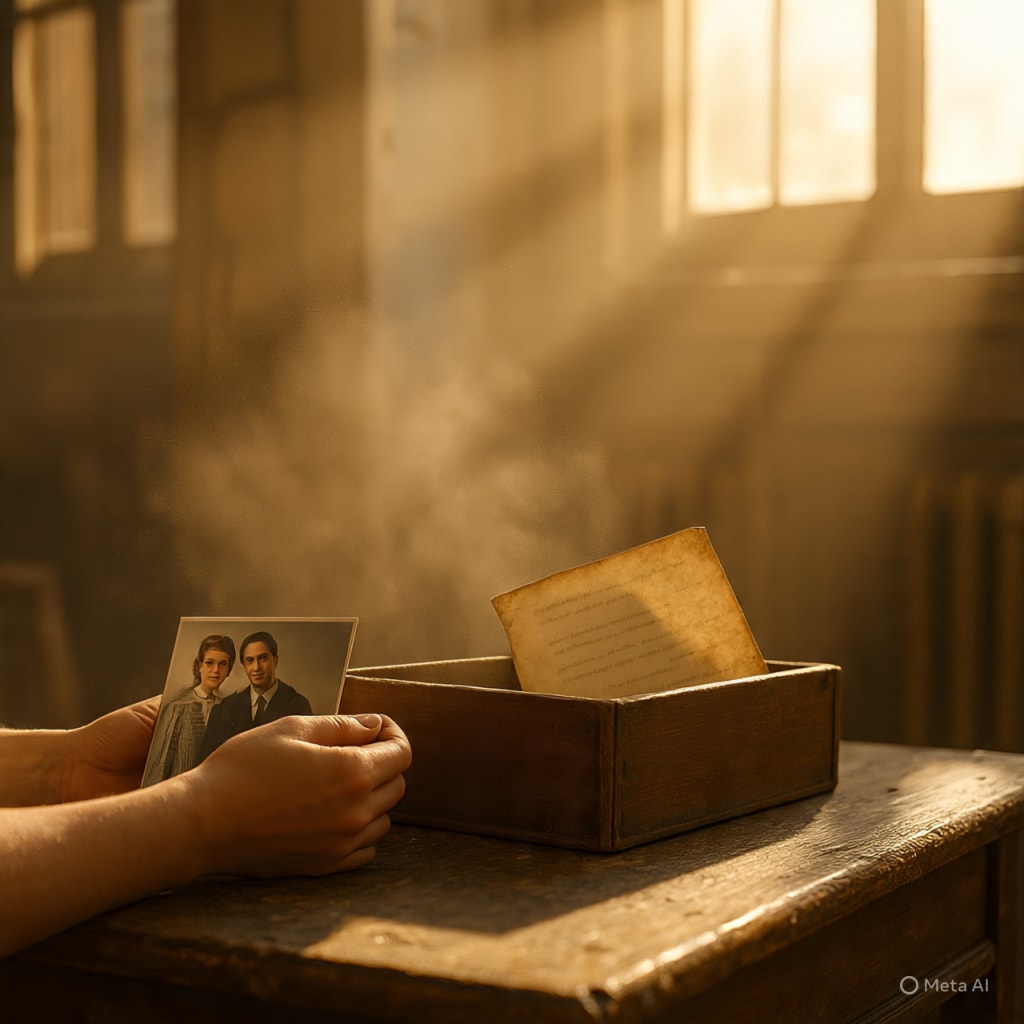
I remember the smell of her shawl — lavender, a hint of something earthy, and time. My grandmother had the kind of presence that filled a room quietly. She was never loud, never overly affectionate, but her love was undeniable, stitched into the tiny acts she performed daily: folding my clothes just right, remembering I liked my tea without sugar, whispering my name during prayer.
She was 87 when her health began to decline. At first, it was small things — forgetting the kettle on the stove, calling my cousin by my name. But then came the tremors, the hospital visits, the slow fading of her vibrant blue eyes. When the doctors said her time was near, I took leave from my job and stayed by her side.
We had always had a unique bond — I was her eldest grandchild, the one who used to sit on her lap and ask questions about stars, war, and the meaning of life. She never gave me full answers, only hints, like puzzles for me to solve on my own.
Two days before she passed, she grabbed my hand with more strength than I expected.
“There’s a letter,” she whispered, her breath shallow but determined. “In the wooden box. Don’t open it until after I’m gone.”
I asked her what it was about, but she only smiled and closed her eyes. That was the last conversation we ever had.
---
After her funeral, the house felt impossibly empty. Family members came and went, offering their condolences, reminiscing about her youth, the war, the sacrifices she made raising three children alone after my grandfather died. But I wasn’t listening. My mind kept returning to that wooden box.
It was in her bedroom, tucked away inside the bottom drawer, exactly where she said it would be. The box itself was nothing special — scratched, old, and sealed with a simple bronze latch. My hands trembled as I opened it.
Inside was a single envelope.
My name was written on it, in her delicate handwriting. The ink had smudged slightly with time. I held it to my chest for a moment before I tore it open.
And I read.
---
> My Dearest Child,
> If you are reading this, I am no longer in this world. But I am still with you — in your thoughts, your choices, your laughter.
> There is something I never told anyone, something I’ve kept for over sixty years. I want you to know it not because I want your sympathy, but because I trust you to understand.
> Before your grandfather, there was someone else.
> His name was Arjun. He was not a rich man, but he was kind, thoughtful, and knew how to play the flute in a way that made birds quiet. We met when I was nineteen. My father never approved — different family, different religion, different world. But I loved him deeply. We made plans to run away. We wanted to start a life somewhere nobody knew us.
> On the day we were supposed to leave, I waited at the train station for four hours. He never came.
> Two weeks later, I learned he had died in a communal riot. He was trying to protect a child when he was struck.
> I buried that love inside me. I married your grandfather, who was a good man in his own way, and I built a life — a strong life. But a part of me always belonged to that boy with the flute.
> I wrote to him every year on his birthday. I never sent the letters, of course, but I kept them. They are in the box beneath this one.
> You might wonder why I’m telling you this. It's because I see a lot of myself in you. You’re brave. You ask the questions others don’t. I want you to know that your heart is allowed to love freely, even if it hurts. Even if it defies logic.
> Don’t let the world cage your soul.
> And one more thing — take care of your mother. She’s stronger than she lets on, but she needs you.
> I love you. Always.
> — Grandmother.
---
I didn’t cry at her funeral. But I cried reading that letter. The tears came hard, breaking through years of questions I never asked, emotions I never voiced.
The second box held dozens of letters. Some short, some long. Some written with joy, others with aching sadness. They were all addressed to Arjun.
“I dreamed about you today. You were older. We were laughing.”
“Your favorite song played on the radio. I sat down and wept.”
“I told my granddaughter about the stars tonight. You would’ve loved her.”
The letters weren’t just about loss — they were about endurance. About memory. About how love doesn’t always die when a person does.
---
A week later, I found myself at the old train station she mentioned. The platform was different now — new tiles, vending machines, CCTV cameras. But something in the air felt ancient.
I sat on a bench and opened one of her unsent letters.
As I read it, I realized something important: love stories don’t always follow the rules. They don’t always have neat endings. Some stay incomplete, buried in memory, living on only through words no one ever hears.
But that doesn’t make them any less real.
---
Since then, I’ve started writing again — not to Arjun, but to my grandmother. I write about how my day went, what books I’m reading, the music I listen to. It helps me feel close to her.
And I’m fulfilling her last request — I’ve moved in with my mother. We make tea together every evening. She never asks why I stay. But I think she knows.
My grandmother’s story didn’t end in heartbreak. It ended in trust — trust that I would carry her truth forward.
And I will.
Always.
About the Creator
Muhammad Usama
Welcome 😊
Keep reading
More stories from Muhammad Usama and writers in Families and other communities.
Grandfather’s Final Wish: A Journey Back to Where It All Began
I always thought my grandfather would live forever. He was one of those people whose presence filled every room, whose laughter made even the bitterest tea taste sweet. His hands were always stained with earth from the garden, and his words always carried stories from a world that seemed older than time. But age, as it does, crept in silently. His memory started to blur, and his steps grew uncertain. And yet, his spirit never faded.
By Muhammad Usama6 months ago in Families
Wise~Guys
— Look Behind what's in Front of You ~ Make Good Choices — Hey, So how you Doin'..! Made~Men — Mobster Movies romanticise a distinctive, elegant appearance, impeccable attire style, along with the 'Families' expressive lingo. Making their 'Bones' gave them Panache — with vintage fedoras, tailored pin-striped suits, mirror-polished wing-tip shoes adorned with tassels; with their 'Gun Moll' gorgeous dates on their arms.
By Jay Kantor18 days ago in Families
Filial Piety: Appreciating the Cycle of Asian Justice
Filial Piety is the central part of a Confucian value system concerned with the need to produce beneficial patterns from children who are expected to care for their parents. According to Confucius, a variety of virtues are needed to maintain a strong society: filial piety, righteousness, love, loyalty, sincerity, justice, tranquility, moderation, and harmony.
By WILD WAYNE : The Dragon Kinga day ago in Families




Comments
There are no comments for this story
Be the first to respond and start the conversation.