
Gir National Park: The Last Stronghold of the Asiatic Lion in India
A Remarkable Conservation Story
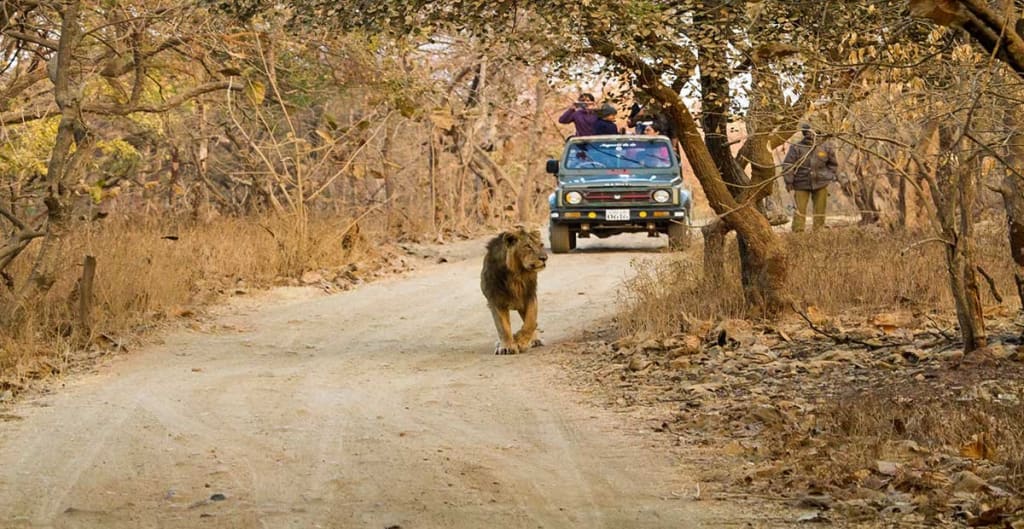
Tucked away in the rugged landscapes of Gujarat, Gir National Park holds a special place in the heart of India’s wildlife heritage. Unlike the more famous Bengal tiger reserves across the subcontinent, Gir is known for something even rarer—the Asiatic lion, a species that once roamed vast swathes of the Middle East and South Asia, now found only here.
As wildlife tourism in India continues to grow, Gir stands as a symbol of both ecological preservation and cultural coexistence. In this article, we explore what makes Gir National Park a must-visit for nature lovers, conservationists, and adventure seekers.
A Remarkable Conservation Story
Gir National Park, officially known as the Gir Forest National Park and Wildlife Sanctuary, was established in 1965 to protect the critically endangered Asiatic lion. By the early 20th century, the lion population in this region had dwindled to just a handful due to rampant hunting and habitat destruction.
Thanks to concerted efforts by the Indian government and local communities, the lion population has made a stunning recovery. Today, over 600 lions roam freely within and around the park, making it one of the greatest success stories of wildlife conservation in Asia.
More Than Just Lions
While lions are undoubtedly the stars of Gir, the park’s ecosystem is incredibly diverse. The landscape features a mix of dry deciduous forests, thorny scrubland, grasslands, and riverine belts. This varied topography supports a wide range of species.
You can find leopards, hyenas, jackals, marsh crocodiles, sambar deer, chital (spotted deer), nilgai, and even the elusive pangolin. For bird enthusiasts, Gir is a year-round paradise, home to over 300 species including the crested serpent eagle, Indian eagle owl, flameback woodpecker, and many migratory species during the winter.
Best Time to Visit Gir National Park
Gir is open to visitors from mid-October to mid-June each year. The cooler months from December to March are ideal, offering comfortable weather and good visibility for wildlife spotting. For those looking to maximize their chances of lion sightings, April and May—though hot—are considered excellent due to animals gathering around water sources.
The park remains closed during the monsoon season (mid-June to mid-October) for ecological regeneration and safety.
Safari Experience in Gir
A safari in Gir is a thrilling experience. Conducted in open 4x4 vehicles, each ride is accompanied by trained guides and forest department drivers who know the terrain and behavior of the animals intimately.
There are typically three safaris per day (early morning, mid-morning, and afternoon). While lion sightings are a highlight, the unpredictability of wildlife movement makes every safari unique. Visitors often report seeing herds of deer, langurs swinging through trees, or crocodiles sunbathing near water bodies.
To ensure a smooth and well-organized experience, it’s recommended to pre-book your safari online or through trusted wildlife tour operators. One such detailed travel guide and tour option can be found here.
Local Culture and Communities
Gir is also home to the Maldhari tribe, a pastoral community that has coexisted with the lions for generations. Their presence in the buffer zones of the park adds a cultural dimension to the safari experience. These communities raise livestock and often have traditional homes called "nesses" in forest clearings.
While tourism provides an important source of income for the locals, efforts are continuously made to balance human activity with the conservation needs of the forest.
How to Reach Gir National Park
Getting to Gir is relatively straightforward:
By Air: The closest airport is Rajkot, around 160 km away. Diu Airport is also an option for some travelers.
By Train: The nearest railway station is Junagadh, about 80 km from the park.
By Road: Gir is well-connected by road to major cities in Gujarat like Ahmedabad, Rajkot, and Veraval.
From your arrival point, taxis and buses are readily available to reach the park's entry gates.
Places to Stay Near Gir
Visitors can choose from a wide range of accommodations, including eco-lodges, resorts, and homestays, most of which are located near the Sinh Sadan Forest Lodge—the park’s main safari booking office.
Popular choices include:
The Fern Gir Forest Resort – A luxury stay with modern amenities.
Gir Jungle Lodge – Ideal for wildlife enthusiasts with guided nature walks.
Woods at Sasan – An eco-conscious retreat promoting mindful travel.
Nearby Attractions Worth Visiting
In addition to the safari, you can explore:
Devalia Safari Park (Gir Interpretation Zone) – A fenced area with higher chances of lion sightings.
Somnath Temple – One of the 12 Jyotirlingas of Lord Shiva, located about 70 km away.
Junagadh – A historic city at the base of the Girnar Hills, with forts and temples.
Responsible Travel Tips
As with any wildlife destination, being a responsible tourist helps preserve the fragile balance of the ecosystem. Here are a few tips:
Follow all park rules and listen to your guide.
Do not feed or provoke animals.
Avoid using flash photography.
Carry your trash back with you.
Respect local communities and their customs.
By traveling consciously, you contribute to the long-term protection of Gir’s unique biodiversity.
Final Thouhts
A visit to Gir National Park offers more than just a glimpse of rare wildlife. It’s a deep dive into a rich ecosystem that reflects the harmony between nature and humans. Whether you're on the trail of a lion, photographing birds at dawn, or listening to the stories of local tribes, Gir promises a travel experience that’s both wild and deeply human.
To explore tours, accommodations, and safari booking assistance, visit this comprehensive travel guide to Gir National Park.
About the Creator
Keep reading
More stories from Talib Khan and writers in Families and other communities.
Experience Comfort and Convenience at BedChambers' Studio Serviced Apartment in Vasant Kunj
Nestled in the upscale neighborhood of Vasant Kunj, New Delhi, the Studio Serviced Apartment by BedChambers offers a harmonious blend of luxury, comfort, and practicality. Whether you're a business traveler, a solo adventurer, or a couple seeking a serene retreat, this serviced apartment caters to all your needs with its thoughtfully designed amenities and prime location.
By Talib Khan8 months ago in Families
Wise~Guys
— Look Behind what's in Front of You ~ Make Good Choices — Hey, So how you Doin'..! Made~Men — Mobster Movies romanticise a distinctive, elegant appearance, impeccable attire style, along with the 'Families' expressive lingo. Making their 'Bones' gave them Panache — with vintage fedoras, tailored pin-striped suits, mirror-polished wing-tip shoes adorned with tassels; with their 'Gun Moll' gorgeous dates on their arms.
By Jay Kantor21 days ago in Families




Comments
There are no comments for this story
Be the first to respond and start the conversation.