
Gentle Parenting Scripts for Everyday Conflicts: What to Say and Why It Works
Real-Life Phrases to Navigate Toddler Tantrums, Power Struggles, and Everyday Challenges with Calm, Connection, and Confidence

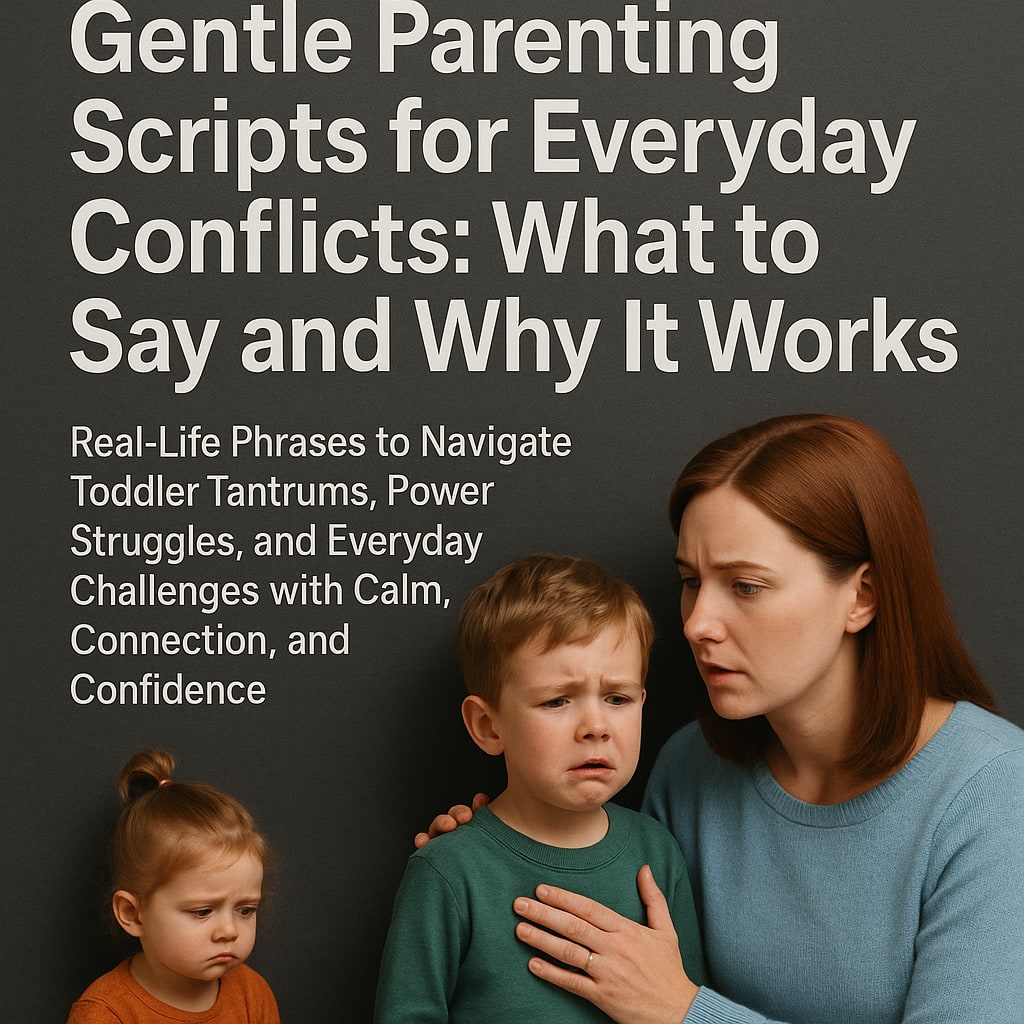
Gentle parenting is not a trend. It’s not about being soft or permissive, either. It’s a disciplined approach rooted in empathy, respect, connection, and consistency.
At its core, gentle parenting teaches children how to regulate themselves, not through fear or punishment, but through understanding, boundaries, and trust.
But what do you actually say in the heat of the moment?
In this article, we’ll break down everyday conflict situations most parents face and provide realistic, effective scripts you can use. These are more than just words.
They’re tools backed by psychology, communication theory, and child development research. And we'll explain why they work, so you can feel confident using them in real-time.
What Is Gentle Parenting, Really?
Before we dive into the scripts, let’s clarify what gentle parenting is—and what it isn’t.
Gentle parenting is built around four core principles:
Empathy
Respect
Understanding
Boundaries
It’s not permissiveness. It doesn’t mean children get everything they want. It means they’re guided, not controlled. It also means their emotional experiences are taken seriously, even when their behavior needs redirection.
This approach helps children develop internal motivation, secure attachments, and emotional intelligence, skills that last far beyond childhood.
Conflict #1: The Tantrum in the Grocery Store
The Situation: Your toddler is screaming because you said no to candy. Strangers are staring. You feel the pressure to end it now.
Typical Response: “Stop it right now or we’re leaving.”
Gentle Script:
“I see you’re really upset because you wanted the candy. It’s hard when we can’t have what we want. I’m here, and I’ll help you calm down.”
Why It Works:
This script acknowledges your child’s emotions (validation), sets a boundary (no candy), and offers connection (I’m here). The tantrum may not stop immediately, but it defuses escalation and models emotional regulation.
Over time, your child learns how to move through frustration without aggression or shutdown.
Conflict #2: The Morning Rush
The Situation: You’re already late. Your child won’t put on their shoes.
Typical Response: “If you don’t put on your shoes right now, you’re not getting screen time later!”
Gentle Script:
“We need to leave now, and we’re running behind. Would you like to put your shoes on yourself or have me help you? Either way, we have to move fast.”
Why It Works:
Instead of threats, this script offers a limited choice, empowering the child while keeping the boundary clear. You’re firm but respectful. Kids are more likely to cooperate when they feel they have agency, even in small ways.
Conflict #3: Hitting or Biting a Sibling
The Situation: Your child hits their sibling during a disagreement over a toy.
Typical Response: “No hitting! Go to your room!”
Gentle Script:
“I won’t let you hit. It’s okay to feel mad, but hurting isn’t okay. Let’s take a break and figure out what’s going on.”
Why It Works:
Children often act out physically when they don’t yet have the language or impulse control to express big feelings.
This response sets a non-negotiable boundary (“I won’t let you hit”), validates the feeling behind the behavior, and opens space for reflection. It also separates the child’s identity from their action, which is essential for healthy self-esteem.
Conflict #4: Refusal to Share
The Situation: Your child refuses to share a toy at a playdate.
Typical Response: “You need to share or I’m taking the toy away.”
Gentle Script:
“It looks like you’re not ready to share that toy right now. That’s okay. Let’s let your friend know when you’re done with it so they can have a turn next.”
Why It Works:
This approach respects your child’s ownership and autonomy, while still teaching patience and social skills. Forced sharing can lead to resentment, while timed turn-taking builds fairness and trust.
Conflict #5: Whining or Talking Back
The Situation: Your child whines or uses a disrespectful tone when asking for something.
Typical Response: “Don’t talk to me like that.”
Gentle Script:
“I want to help, but I need you to use a calm voice. Let’s try that again, and I’ll listen.”
Why It Works:
This script calmly calls attention to tone without shaming. It sets a standard, encourages a reset, and models respectful communication. Children internalize how to express needs clearly when they’re coached through it, not scolded for trying imperfectly.
Why Scripts Aren’t “One Size Fits All”
Scripts are scaffolding, not scripts in the theatrical sense. The point isn’t to memorize them word for word, but to internalize their structure and tone:
- Acknowledge the feeling
- State the boundary
- Offer guidance or connection
These steps activate the prefrontal cortex, even in young children. That’s the part of the brain responsible for empathy, reasoning, and impulse control, exactly what you’re trying to nurture.
What If It Doesn’t Work Right Away?
It probably won’t. Not the first time. Maybe not the tenth.
That’s okay.
Gentle parenting is a long game. It focuses on long-term growth over short-term obedience. It doesn’t always “work” in the moment because it’s not about control; it’s about the relationship. And relationships take time, repair, and repetition.
Children raised with connection and consistency learn to internalize boundaries, not because they’re afraid of punishment, but because they trust their caregivers and believe in their own self-worth.
The Power of the Parent’s Nervous System
One overlooked piece of gentle parenting? Your own regulation.
Children borrow the emotional tone of the adults around them. If you’re dysregulated, your child’s nervous system mirrors that instability. Scripts are helpful, but they won’t land if you’re yelling them.
Take a breath. Slow down. Speak gently. Even when you’re frustrated. Especially when you’re frustrated. That’s where the real change happens.
Why Gentle Parenting Scripts Matter
Words shape the emotional climate of your home. They build, or break, connections. Scripts help you pause, reflect, and respond with intention. They teach without shame. They guide without fear. And they turn conflict into a chance to build trust.
Gentle parenting isn’t about perfection. It’s about showing up, again and again, with empathy and firmness, even when it’s hard. Especially when it’s hard.
In a world that often confuses authority with control, choosing gentleness is a radical act.
And it starts with knowing what to say.
About the Creator
Richard Bailey
I am currently working on expanding my writing topics and exploring different areas and topics of writing. I have a personal history with a very severe form of treatment-resistant major depressive disorder.
Keep reading
More stories from Richard Bailey and writers in Families and other communities.
How to Parent Without Yelling: 7 Daily Habits That Change Everything
Yelling feels like control. But it’s not. It’s a short-lived release. A burst of emotion, often followed by guilt, confusion, and a shaken connection between you and your child. Most parents don’t want to yell. But stress, exhaustion, and the pressure to “get it right” make it feel impossible not to. The truth is, yelling isn’t the problem. It’s a signal—a red flag waving frantically, telling you something in your daily rhythm needs attention.
By Richard Bailey9 months ago in Families
The Family Portrait
I have a thing against confident men. Don’t get me wrong—I do not hate them. I am just amazed by their sheer arrogance. To look life in the face and turn it to stone, Medusa-like. To smile at a camera and not be fazed by the lights flashing millisecond by millisecond. To wear jewelry and not fear that it will slip from sweat on their wrists, their necks, or their fingers.
By Brian Kennedy2 days ago in Families




Comments
There are no comments for this story
Be the first to respond and start the conversation.