
Gaza’s Christian Community Prepares for Christmas Amid Ceasefire
Gaza’s Christian minority marks Christmas with faith and resilience, drawing strength from unity and compassion amid a fragile ceasefire.
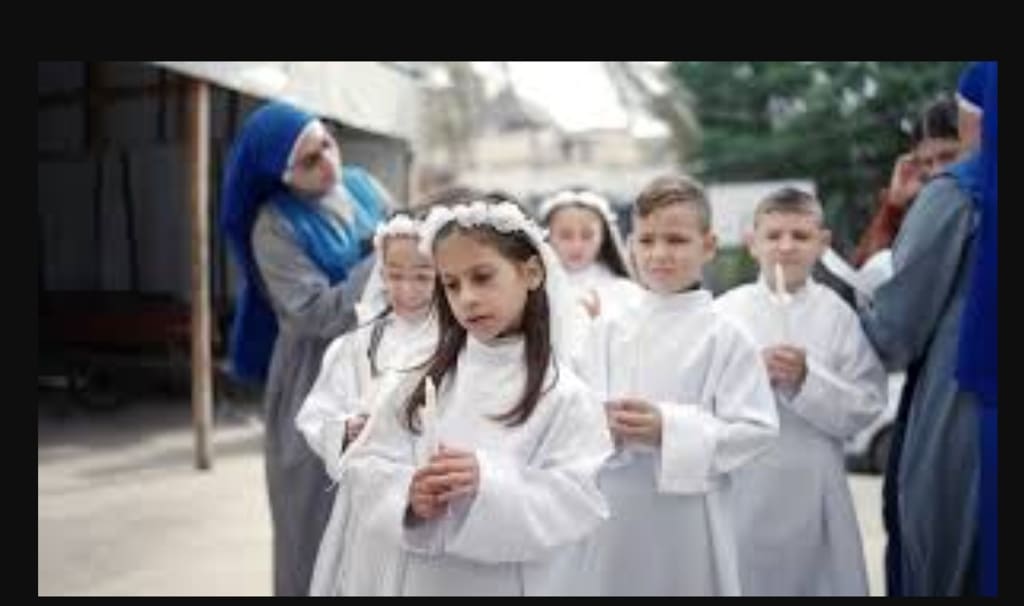
As December arrives in Gaza, the air carries a rare mixture of quiet anticipation and fragile relief. For Gaza’s small Christian community, Christmas preparations this year are unfolding against the backdrop of a ceasefire that has brought a temporary pause to months of violence. While uncertainty still looms, the truce has offered space for reflection, prayer, and modest celebration—elements that have long defined Christian life in the besieged enclave.
Gaza’s Christian population is one of the oldest in the world, tracing its roots back nearly two millennia. Today, however, it numbers fewer than 1,000 people in a territory of more than two million, making it a tiny minority. Most are Greek Orthodox, with smaller Catholic and Protestant communities centered around historic churches such as Saint Porphyrius Church and the Holy Family Catholic Church in Gaza City. Despite their small numbers, Christians have played an enduring role in Gaza’s social, educational, and charitable life.
This Christmas season is markedly different from those of recent years. The ceasefire has reduced the immediate threat of airstrikes and ground clashes, allowing families to emerge cautiously from weeks of fear and displacement. For Christian households, this means cleaning homes damaged by shockwaves, repairing broken windows, and preparing simple decorations—often handmade due to shortages of goods. Christmas trees, when available, are small and modest, adorned with reused ornaments and strings of lights saved from previous years.
Church leaders emphasize that Christmas in Gaza has never been about grandeur. “Our celebration has always been simple,” one local priest explained. “This year, simplicity carries even deeper meaning. It is about survival, faith, and hope.” Midnight Mass and Christmas Eve services are expected to take place, though with reduced attendance and heightened security concerns. Candles will replace elaborate lighting, and hymns will be sung softly, mindful of neighbors still traumatized by conflict.
The ceasefire has also allowed churches to resume limited humanitarian activities. Christian institutions in Gaza have long served people of all faiths, operating schools, clinics, and relief programs. In the days leading up to Christmas, volunteers are distributing food parcels, warm clothing, and basic medicines to families affected by the fighting. These acts of charity reflect the core message of the season: compassion and solidarity in times of hardship.
Yet, joy remains tempered by loss. Many Christian families, like their Muslim neighbors, are mourning loved ones killed during the violence. Homes, schools, and churches have not been spared from damage. Saint Porphyrius Church, one of the oldest active churches in the world, suffered structural harm earlier in the conflict, a painful reminder that even sacred spaces are vulnerable. For congregants, Christmas prayers this year include not only traditional hymns of peace but also pleas for healing and protection.
Children, often the most affected by war, are at the heart of Christmas preparations. Despite trauma, parents and church volunteers are striving to preserve a sense of normalcy. Small gatherings are being organized where children can receive modest gifts—usually donated toys or handmade items—and participate in nativity plays. These moments, though brief, provide emotional relief and a reminder that childhood joy can persist even in the harshest conditions.
The broader Christian world has turned its attention to Gaza this Christmas. Messages of solidarity from churches abroad, including in Europe and the Middle East, have reached local congregations. While travel restrictions prevent pilgrimages or large-scale international support, these messages carry symbolic weight. “Knowing that others remember us gives us strength,” said one parishioner. “It reminds us that we are not alone.”
Politically, the ceasefire remains fragile, and residents are acutely aware that it could collapse at any time. This uncertainty shapes the tone of Christmas observances. There are no large public celebrations or festive parades. Instead, gatherings are intimate, often confined to church courtyards or family homes. For Gaza’s Christians, Christmas is less about celebration and more about resilience—a quiet assertion of life and faith amid adversity.
Ultimately, Gaza’s Christian community prepares for Christmas with cautious hope. The ceasefire has opened a narrow window for worship, charity, and reflection, but the future remains unclear. Still, the essence of Christmas—peace, love, and renewal—resonates deeply in a place that has known so much suffering. In candlelit churches and humble homes, Gaza’s Christians will mark the birth of Christ not with extravagance, but with steadfast faith, praying that this season of calm may one day turn into lasting peace for all who call Gaza home.
About the Creator
Wise~Guys
— Look Behind what's in Front of You ~ Make Good Choices — Hey, So how you Doin'..! Made~Men — Mobster Movies romanticise a distinctive, elegant appearance, impeccable attire style, along with the 'Families' expressive lingo. Making their 'Bones' gave them Panache — with vintage fedoras, tailored pin-striped suits, mirror-polished wing-tip shoes adorned with tassels; with their 'Gun Moll' gorgeous dates on their arms.
By Jay Kantor18 days ago in Families
The Clever Old Woman
As far as the eye could see, a pea crop was spread across the land. In the surrounding fields, the harvest had already been completed, and in fact, a second crop had begun to grow. However, this particular field had not yet been harvested. Irfan was passing through this area for the first time. When he saw the fully grown crop, he decided to negotiate a deal with its owner.
By Sudais Zakwanabout 21 hours ago in Families



Comments
There are no comments for this story
Be the first to respond and start the conversation.