
"From Rivers to Empires: A Journey Through Early Human Civilizations"
"At the Dawn of History: Life in 3000 BCE"

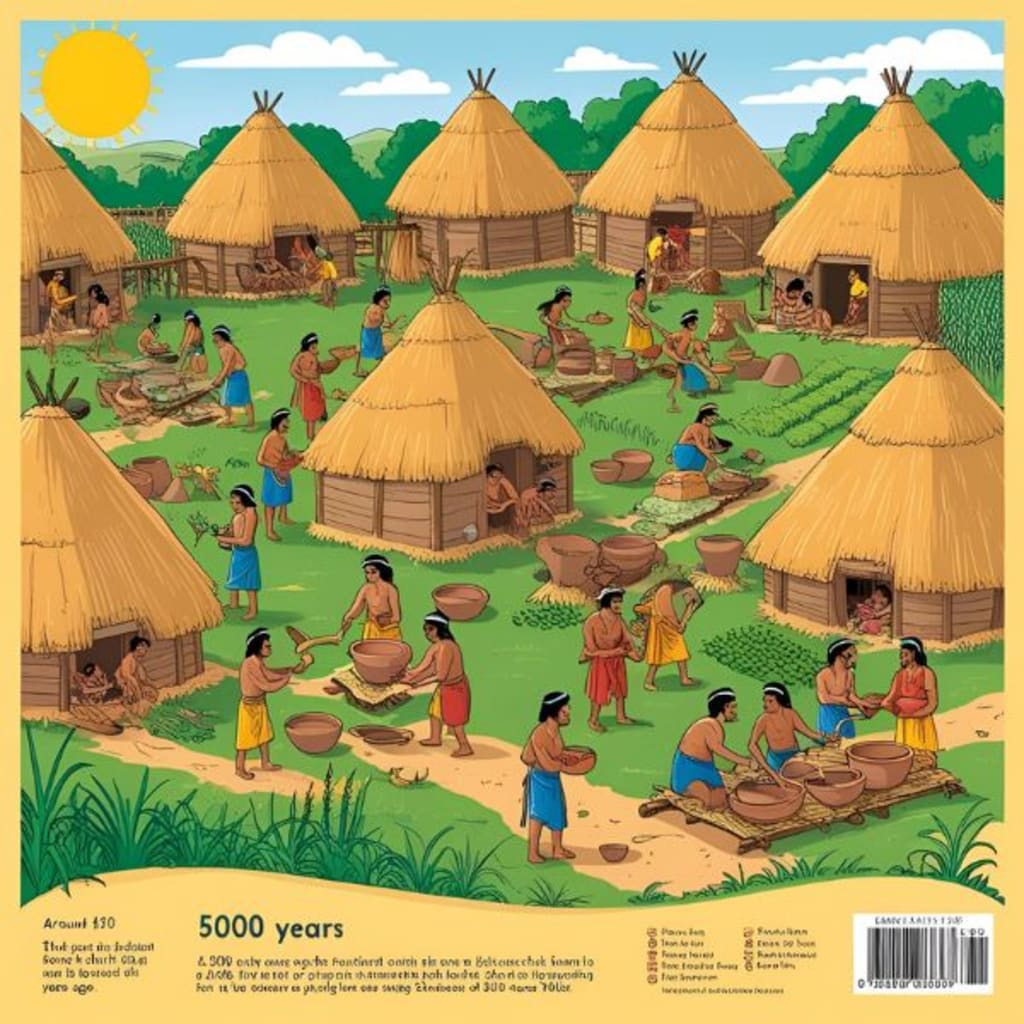
Around 5,000 years ago, humanity entered a transformative era marked by the rise of the world’s first civilizations. In Mesopotamia, the Sumerians built cities, developed cuneiform writing, and created literature like the Epic of Gilgamesh. Egypt unified under its first pharaoh and began building pyramids along the Nile. In the Indus Valley, advanced urban centers with plumbing and trade networks thrived, while early Chinese cultures like Longshan laid the groundwork for dynasties to come. Europe saw the construction of megaliths like Stonehenge, and in the Americas, Caral emerged as the earliest known city. Across regions, people developed farming, bronze tools, writing systems, and religious practices that shaped their societies. Despite differences, these ancient cultures shared a spirit of innovation and laid the foundations of the modern world. Their achievements in governance, technology, art, and belief systems continue to influence human civilization today.
About life around 5,000 years ago (circa 3000 BCE), covering different regions and themes including early civilizations, technology, culture, and daily life.
5000 Years Ago: The Dawn of Civilization
Five thousand years ago—around 3000 BCE—humanity stood on the threshold of profound transformation. This was a time when scattered tribes became organized societies, oral traditions began giving way to written records, and human ambition began shaping the world in ways that would echo through millennia. It was the dawn of civilization, a critical moment in history that laid the foundation for much of the modern world.
The Cradle of Civilization: Mesopotamia
In the region known as Mesopotamia—between the Tigris and Euphrates rivers in present-day Iraq—humans had already begun to build some of the first cities on Earth. This area is often called "the cradle of civilization" for good reason.
By 3000 BCE, the Sumerians, one of the earliest known civilizations, had established powerful city-states like Uruk, Ur, and Lagash. These cities were surrounded by protective walls and were often centered around a towering structure called a ziggurat, a temple built to honor the gods.
The Sumerians are also credited with creating one of the world’s first systems of writing: cuneiform. Pressed into clay tablets using a stylus, this writing system was initially used for record-keeping—like tracking grain or sheep—but it soon evolved to include laws, literature, and even poetry.
Perhaps the most famous Sumerian artifact is the Epic of Gilgamesh, one of the oldest known works of literature. Its tales of friendship, loss, and the search for immortality continue to resonate with readers today.
Ancient Egypt: The Rise of Pharaohs
Far to the west, along the Nile River, another great civilization was flourishing: Ancient Egypt. Around 3000 BCE, Egypt was unified under its first pharaoh, likely Narmer (also known as Menes). This marked the beginning of the Early Dynastic Period, when Egypt transitioned from separate regions into one powerful kingdom.
Egyptians believed their pharaohs were divine, intermediaries between the gods and the people. Their religion deeply influenced daily life and politics. In this era, they began constructing mastabas, early tomb structures that would evolve into the famous pyramids of the Old Kingdom.
The Nile River played a crucial role in Egyptian life. Its predictable floods provided fertile soil for agriculture, allowing the Egyptians to grow wheat, barley, and flax. Their irrigation systems were advanced for the time, and they developed calendars to help track the flooding cycles.
Hieroglyphic writing was also taking shape, combining pictorial symbols with phonetic elements. These symbols were etched into stone or written on papyrus, an early form of paper made from plant reeds.
The Indus Valley Civilization
To the east, in what is now Pakistan and northwest India, the Indus Valley Civilization was thriving. It was one of the most advanced urban cultures of the ancient world. Major cities like Harappa and Mohenjo-Daro were marvels of urban planning. They had straight streets, drainage systems, public baths, and even early forms of sanitation.
Unlike other civilizations, the Indus Valley people left behind few grand monuments or kings. Their writing system remains undeciphered, so much about their government and culture remains a mystery. But their uniformity in brick sizes and city layout suggests a high level of organization and central control.
They engaged in trade with Mesopotamia and likely with regions farther east. Artifacts like weights, jewelry, pottery, and toys show a society that was both practical and creative.
Early China: The Longshan Culture
In ancient China, the Longshan culture was flourishing along the Yellow River. While the famous dynasties like the Shang and Zhou would rise centuries later, the Longshan people were already showing signs of complex society.
They lived in walled towns, used pottery wheels, and practiced advanced farming techniques. Evidence of ritual burial practices and social stratification suggests that power and hierarchy were taking root.
The early Chinese also used oracle bones—turtle shells or animal bones that were heated until they cracked—to predict the future. This practice would become more prominent in the Shang Dynasty but had its roots in cultures like Longshan.
Europe and the Megalith Builders
While the first civilizations flourished in river valleys, prehistoric cultures in Europe were making their own marks—literally and figuratively. Around 3000 BCE, people in what is now Britain, France, and Scandinavia were constructing massive stone structures known as megaliths.
Perhaps the most famous is Stonehenge in England. Though it would not reach its final form for another thousand years, construction began around this time. These stone circles were likely used for astronomical observations, religious ceremonies, or both.
Across Europe, people lived in small farming villages. They cultivated crops like wheat and barley, raised animals, and traded tools, pottery, and food. They also honored their dead with burial mounds or dolmens, large stone tombs.
The Americas: Early Societies
In the Americas, civilizations were still in their formative stages. Around 3000 BCE, cultures in what is now Peru, such as the Norte Chico (Caral) civilization, began building large urban centers.
The city of Caral, often considered the oldest city in the Americas, featured temples, plazas, and even an early form of musical instrument: flutes made from bird bones. Interestingly, these people did not rely on ceramics or writing, yet they created a highly organized society.
In Mesoamerica, early agricultural communities were cultivating maize (corn), beans, and squash—plants that would become the foundation of future empires like the Maya and the Aztec.
Africa Beyond Egypt
While Egypt dominated the Nile, Sub-Saharan Africa had its own dynamic cultures. Around this time, communities in what is now Nigeria began experimenting with early forms of ironworking—potentially earlier than in Europe or Asia, though scholars debate the exact timeline.
Nomadic and semi-nomadic societies roamed the savannahs, herding cattle and practicing early forms of agriculture. Oral traditions and communal storytelling helped preserve knowledge and culture in the absence of writing systems.
Technology and Innovation
Despite their geographical separation, ancient peoples shared a common trait: innovation. Around 3000 BCE, the following technological advances were shaping human life:
• Metallurgy: The Bronze Age was beginning. By combining copper with tin, people made stronger tools and weapons. Bronze allowed for sharper blades, better armor, and more effective farming implements.
• The Wheel: Invented in Mesopotamia, the wheel revolutionized transport and trade. Carts and wagons made it easier to move goods and people across long distances.
• Sailing: Egyptians and Mesopotamians were developing early sailboats, allowing for travel along rivers and coasts. Maritime trade connected cultures across the Mediterranean and beyond.
• Textiles: Spinning and weaving techniques had advanced, and people were creating clothing from wool, flax, and other plant fibers.
• Agriculture: Irrigation systems, plows, and domesticated animals allowed for increased food production, supporting larger populations and urban growth.
Spiritual Life and Mythology
Religion was deeply embedded in daily life. Most ancient cultures were polytheistic, believing in multiple gods and goddesses who controlled the forces of nature. Temples were built not just as places of worship but as centers of economic and political power.
People also believed in life after death, as shown by burial practices. Tombs were often filled with items meant to accompany the deceased into the next world—jewelry, tools, food, and even pets.
Rituals, festivals, and sacrifices were common, and many societies developed calendars and cosmologies to understand the stars, seasons, and cycles of life.
Conclusion: The Foundation of Civilization
Five thousand years ago was not just a distant moment in the past—it was the spark that ignited the modern world. The foundations laid by the people of Mesopotamia, Egypt, the Indus Valley, China, and the Americas created patterns of life that still resonate today.
They built cities, developed language and art, pondered the heavens, and sought meaning in the mysteries of life. Though separated by continents and cultures, their stories are united by a shared human spirit—a spirit of curiosity, creativity, and connection.
About the Creator
Kazi Mirajul Islam
I am expert in digital Marketing .I am also E- book writer & story writer. I am committed to delivering high-quality content.Also create social media account like Facebook,twitter account ,Instagram ,you tube account create and mained.
Keep reading
More stories from Kazi Mirajul Islam and writers in Families and other communities.
Love, Laughter, and Loyalty: Quotes for Every Couple.
The collection of 50 boyfriend and girlfriend relationship quotes above beautifully captures the many shades of love — from sweet and romantic to playful and deep. These quotes reflect the magic of companionship, where two people not only love each other but also laugh together, support each other through tough times, and grow stronger as a team. Whether it’s the butterflies of new love, the comfort of being in someone’s arms, or the inside jokes that only the two of you understand, each quote speaks to a unique part of what makes a relationship special.
By Kazi Mirajul Islam9 months ago in Families
Wise~Guys
— Look Behind what's in Front of You ~ Make Good Choices — Hey, So how you Doin'..! Made~Men — Mobster Movies romanticise a distinctive, elegant appearance, impeccable attire style, along with the 'Families' expressive lingo. Making their 'Bones' gave them Panache — with vintage fedoras, tailored pin-striped suits, mirror-polished wing-tip shoes adorned with tassels; with their 'Gun Moll' gorgeous dates on their arms.
By Jay Kantor17 days ago in Families
Fordy and the Bandit Kitties
Once upon a time, there was a friendly little vehicle named Fordy. We meet Fordy on a very sleepy road, beneath a sky full of twinkly stars that seemed to whisper goodnight to anyone who passed beneath them. The moon hung low and round, lighting the road just enough to make everything feel safe and calm.
By The Schizophrenic Mom3 days ago in Families




Comments
There are no comments for this story
Be the first to respond and start the conversation.