
Embers of Memory
How a Dying Flame Rekindled a Life Once Lost to Time

Fires die out, sooner or later. It’s an unchanging law, a universal cycle. But sometimes, a fire is reborn.
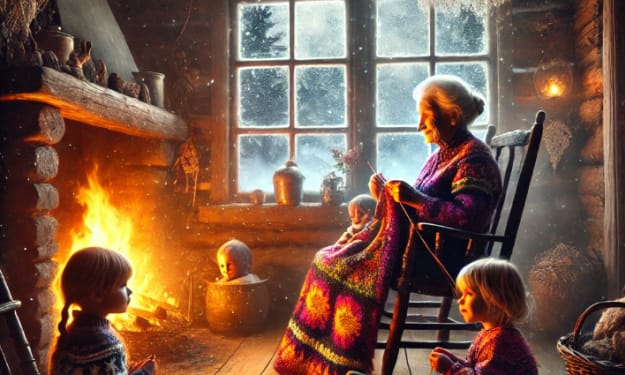
In a small village tucked among the snow-covered peaks of distant mountains, there lived an elderly woman named Agatha. She had always loved the quiet of her home at the edge of the forest, where the wind whispered secrets through the trees and the world felt far away. For years, the house had been filled with the warmth of a steady flame that burned in her stove. Since her husband Emile had passed two decades ago, she had relied on that fire, tending it every evening with carefully split logs, feeding it a rhythm of life that she had learned to cherish.
That night, however, something was wrong. The logs, though dry and well-seasoned, wouldn’t catch. The chimney, though clear, refused to let even a spark escape. Agatha sat before the stove, frowning as she poked at the stubborn wood, trying again and again to coax it into life.
Finally, she leaned back, her hands trembling. The fire had always been there for her, a steady companion through the years. But tonight, it seemed different. As she stared into the blackened stove, she muttered softly, more to herself than anything else, “You’re tired, too?”
And then, a voice—a voice she had never heard before, but one that seemed to come from deep within the fire—spoke, rough but gentle, as if it had been waiting to be heard.
“No, Agatha. I am simply empty.”
The old woman froze. She knew the flames spoke to her sometimes, in crackles and whispers, but this was something more. Something real. Agatha's heart pounded in her chest.
“Empty?” she whispered back, unsure if she was imagining things. “But… how?”
The fire responded, each word a flicker, a hiss, a low, smoldering burn.
“Since Emile left, you’ve given me no true warmth. Only logs, never memories.”
Her heart clenched. The voice was right. Over the years, she had fed the stove with the routine of life—wood, kindling, a spark of fire—but never with the warmth of the love that had once lived so vividly between her and Emile. She had been tending to the fire out of habit, not out of heart.
Agatha’s hands shook as she gazed at the stove, her thoughts turning inward. She closed her eyes, letting the memories flood her mind: Emile’s laughter, his gentle touch, the way they had danced in front of the fire, spinning around and around until they both collapsed with laughter. The nights spent telling stories by the flickering light, feeling the world outside slip away as they were wrapped in the warmth of each other’s company.
The fire was right. She had been feeding it, but it was not the same. The warmth was missing, the connection that once made it burn so brightly. Agatha nodded slowly, her voice barely a whisper.
“You’re right,” she said. “I’ve neglected you.”
For a moment, she stood still, her mind racing through the years. Then, with purpose, she crossed the room to a cabinet in the corner and pulled out an old, dusty notebook. It was one of the few things she had kept after Emile’s death—his collection of poems, written just for her. Each page held memories, words, and moments of their life together.
Gently, Agatha tore a page from the book. She held it close to her chest, then stepped forward and held it to the stove. The room felt still, waiting.
“This is a memory,” she whispered, pressing the paper to the flames.
The fire roared to life. It flared, a golden brilliance that filled the room with light and heat. The crackling of the flames was no longer hollow, but alive with purpose. Agatha smiled softly, her heart lightened by the warmth that now spread through the room. It wasn’t just the fire she had rekindled—it was something deeper, something that reached into the corners of her soul and breathed life back into the quiet emptiness that had lingered there.
From that night on, Agatha fed the fire more than just wood. Each evening, she gave it a piece of her past—an old photograph, a yellowed letter, a favorite book that had once been read aloud under the same roof. Each memory that passed into the flames seemed to bring a new strength to the fire, a fresh burst of light and heat that filled the house. It wasn’t just the fire that was burning—it was her, too. She found herself humming as she worked, her heart no longer heavy with grief. Instead, it felt lighter, as if the fire had reignited something that had long been dormant.
One morning, Agatha woke to find the stove cold. The fire had gone out during the night, but she no longer felt the chill that had once settled deep in her bones. The house, though still quiet, seemed full of life. A light breeze filtered in through the window, but it carried no bite of cold. It was as if the warmth that had filled the stove had found its way into her heart, into her spirit.
She opened the door to the outside world and stepped onto the snowy path that led to the village. The air was crisp, but she no longer needed the fire to stay warm. The memories, the love she had fed into the flames, had become a part of her. As she walked to the market, the sun shining gently on her face, she smiled. It was a small, content smile, but it was real. She had rediscovered a warmth that she thought had been lost forever.
The villagers noticed it too. Agatha’s step was lighter, her gaze brighter, and her laughter—once a distant echo—was now a sweet, inviting sound that welcomed others into her life. She had stories to share, memories to pass on, and a heart that no longer felt empty. The fire that had burned within her stove had reignited the fire within her soul.
And so, in that small village nestled among the snow-covered mountains, Agatha lived on—not just surviving, but living. The fire had burned again, not only in the stove, but in her heart. And that fire, she knew, would never die.
About the Creator
Keep reading
More stories from GoldenSpeech and writers in Families and other communities.
The Eternal Hearth
The wind howled relentlessly outside, its icy tendrils sweeping across the frozen landscape, leaving a trail of frost on the small cabin’s windows. The world outside was harsh, unforgiving, yet within the warmth of the cabin, a different kind of life unfolded. The hearth roared to life with a crackling fire, sending flickering shadows dancing across the room. It wasn’t merely the heat that filled the space—it was something far more profound, an almost sacred promise—a reminder of the unbreakable bonds that had been forged in the darkest, coldest hours of winter.
By GoldenSpeechabout a year ago in Families
Christmas Abroad: Celebrating the Holidays Without Family
I moved to South Korea in 2017. I was twenty-two years old and excited to start my career as an English Second Language Teacher. With a Bachelor's degree and six hundred dollars in my bank account, I set off for Busan.
By Kera Hollow30 days ago in Families


Comments
There are no comments for this story
Be the first to respond and start the conversation.