
Dowry Phenomenon
A Deep Dive into Dowry, Culture, and Domestic Violence

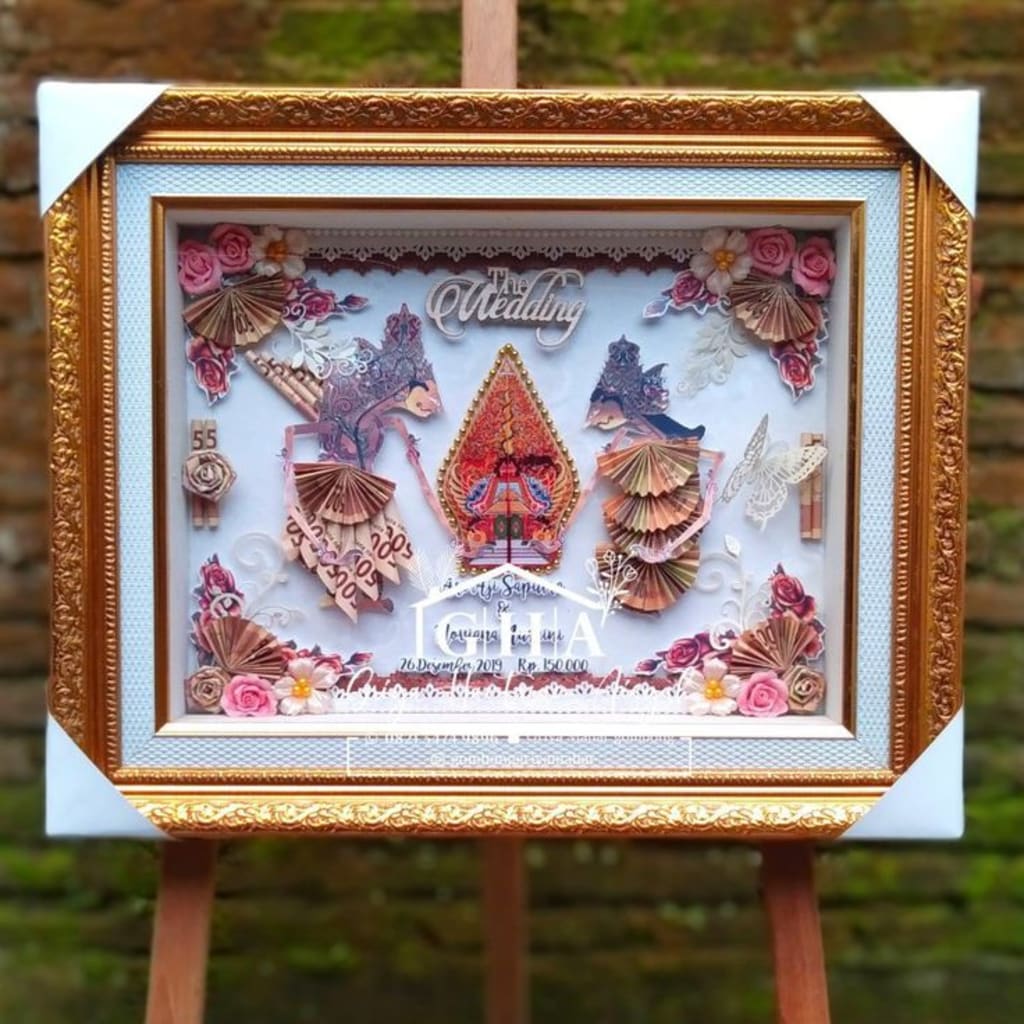
I was casually browsing Google, looking up cases of violence against women, when I stumbled upon a news headline that caught me off guard: "The Dowry Culture Leads Papua Men to Commit Domestic Violence." This instantly triggered memories of social phenomena I've witnessed in my own community. It turns out this issue isn't just local—it happens in other parts of the world where dowry or bride price becomes a source of domestic abuse against women.
Take India, for example. There, a woman and her baby were burned alive simply because she failed to meet the dowry demands set by her husband's family. In Tanzania, a teenage girl suffered domestic violence at the hands of her husband. Seeking refuge with her own family, she was instead turned away—because her husband had already paid the bride price, making her, in a sense, his property.
Even in Indonesia, this issue has been subtly highlighted in entertainment. A YouTube content creator group from East Nusa Tenggara, Kaboax Channel, tackled the topic of dowry in a comedic way, yet their message was clear: dowry remains a complicated issue in modern marriages.
Anthropological Perspective: Is Dowry a Transaction?
From an anthropological standpoint, dowry or bride price is often seen as a form of transactional compensation. Traditionally, the bride's family is considered to suffer a "loss" when their daughter gets married—losing a helping hand in household a contributor to family income, and even fertility within the family group. In this sense, dowry serves as a "payment" for that loss. This is why, in many cultures, a married woman takes her husband's surname, symbolizing her transfer to another family unit.
Dowry has long been a requirement in marriage ceremonies across Eastern cultures. Historical records even mention it in the Hammurabi Code (circa 1792 BC), which stated:
- If a man has given a dowry to a bride but then marries another woman, he forfeits any claim to the dowry he already paid. However, if the bride's father refuses the marriage, the man is entitled to a full refund.
- If a wife dies without bearing a son, her father must compensate the husband, deducting the amount of the dowry initially given.
Interestingly, the Hammurabi Code does not specify the amount of dowry, implying that its value was a matter of negotiation between families, beyond external influence.
Religious Perspectives: A Divine Mandate or Cultural Tradition?
Christianity and Dowry: A Cultural Norm, Not a Commandment
In Christianity, dowry is not a religious obligation, but it has been widely practiced in various biblical societies. The Bible does not command or forbid dowry; instead, it acknowledges it as part of the cultural norms of the time. Several biblical stories illustrate the practice of dowry:
1. Abram in Egypt (Genesis 12:15-16)
When Abram and Sarai entered Egypt, Abram introduced Sarai as his sister out of fear. Pharaoh, desiring Sarai, gave Abram livestock, male and female slaves, and other wealth—a form of dowry in ancient times.
2. Rebekah and Isaac (Genesis 24:53)
Isaac’s servant gave gold, silver, and fine garments to Rebekah and her family before she had even met Isaac—demonstrating that dowry could precede marriage negotiations.
3. Jacob and Laban (Genesis 29:27)
Unlike other biblical figures, Jacob worked 14 years as a form of dowry to marry Rachel, showing that labor could also serve as a bride price.
4. Dinah and Shechem (Genesis 34:15-16)
Shechem, after violating Dinah, sought to marry her. In response, Dinah’s brothers demanded that all Shechemite men be circumcised—a demand that may have been considered a form of dowry payment.
5. Legal Requirement for Compensation (Exodus 22:16-17)
If a man slept with a virgin, he was required to marry her and pay a dowry—even if her father refused the marriage.
From these passages, it’s clear that dowry was a cultural tradition rather than a divine commandment. The New Testament never mentions dowry, shifting its focus instead to the responsibilities of husbands and wives in marriage.
Islam and Dowry: A Sacred Obligation
Unlike Christianity, Islam explicitly requires a dowry (mahr) to be given by the groom to the bride. However, it is not a purchase price but a gift of goodwill. This is clearly stated in Surah An-Nisa:4:
"And give the women their dowries as a gift. But if they willingly remit part of it to you, then enjoy it in satisfaction and ease."
Islam does not specify a fixed amount for dowry—it should be within the groom’s financial means and should honor the dignity of the bride. Payment can be immediate (mu’ajjal) or deferred (muaajjal), meaning it can be settled over time.
Cultural Views: How Different Societies Define Dowry
- Tanzania: A bride price of 10-20 cows is required, depending on the woman’s educational background.
- Middle East: Jewelry is the standard form of dowry, and using religious artifacts is strictly forbidden.
- India: Unlike most traditions, dowry here is paid by the bride’s family—often including livestock, money, cars, or even houses. Families of grooms sometimes demand excessively high dowries, burdening the bride’s family.
- Eastern Indonesia: Dowry, known as belis, is a must. Payments vary from betel nut (traditional currency), livestock, money, bronze gongs, land, and even elephants' tusks in certain cultures.
Should Brides Repay the Dowry?
In many cultures, there is no requirement for a bride to "repay" her dowry. For instance, in Sumba, belis is seen as a form of honor, not a purchase—it symbolizes the bond between families. In Sikka, dowry evolved from betel nut to elephant tusks, introduced by King Agnes Da Silva to protect women from being treated as disposable property. This also indirectly discouraged polygamy, aligning with Catholic teachings on monogamy.
Ultimately, dowry should never be used as justification for domestic abuse, enslavement, or oppression. Tradition, at its core, exists to uphold human dignity, not to commodify it. A wife’s role in managing a household, bearing children, and standing by her husband already far exceeds any dowry value.
So why do some men feel justified in mistreating the very women they have "paid for?" Is this not a distortion of cultural values?
Final Thoughts: Rethinking Dowry in Modern Marriage
Dowry should be based on mutual agreement and willingness, not an unreasonable burden that strains a marriage from the start. When dowry prices become excessively high, they create economic pressure and potential conflicts, increasing the risk of domestic violence.
At its best, dowry is meant to honor women, not enslave them. Perhaps it's time to reflect: Are we upholding the true values of our traditions, or have they been twisted into tools of oppression?
About the Creator
Defrida
Writing is how I create my own universe of thought. Without it, I'd vanish into the swirling depths of a black hole.




Comments
There are no comments for this story
Be the first to respond and start the conversation.