
Digital or In-Person? Why You Need Both to Monitor Your Child Effectively?
Balancing Technology and Personal Connection for Comprehensive Child Supervision

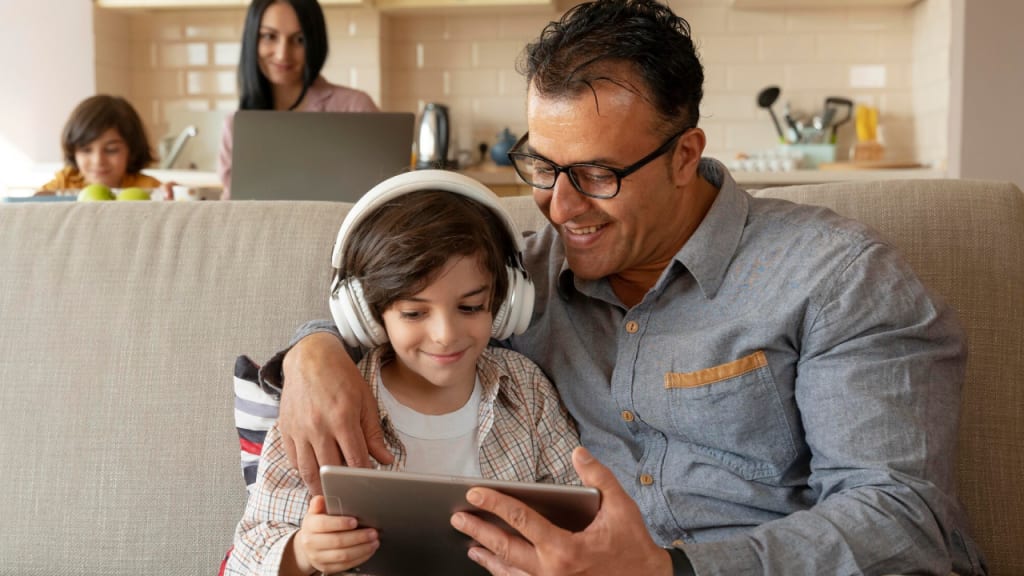
A parent's first instinct is to protect their children from all kinds of physical and emotional harm. When my kids were younger, I never imagined needing to impose so many restrictions to ensure their online safety. I didn’t think twice about letting them watch nursery rhymes or episodes of whatever kids' show was popular on YouTube, unaware of the effects of prolonged screen time.
Now that they're adolescents, I find them unable to function without a screen in their faces, which also raises concerns about their online safety. I have read numerous articles and studies to understand their digital habits better. Ironically, they turn to the internet to solve related issues.
Research suggests limiting screen time to 30 minutes to combat overuse. While that’s one part of the problem, my bigger concern is knowing what people do online and whether it’s safe.
When I was growing up, my parents would sit me down and express their concerns, discussing what was and wasn’t appropriate for me. I do the same with my children, discussing school, their friends, and their activities. But as they get older, they share less and less.
I still try to guide them, but a voice in my head keeps asking, “Is in-person conversation enough? Should I be doing more? What if they stop sharing altogether?” I also wonder about the number of apps they use and whether I know them all.
As a mother of two preteens, I’ve done extensive research on this topic, and here’s my perspective on how to approach it.
Parental Monitoring Then vs. Now
When I was growing up, we didn’t have access to cell phones and advanced technology. We were responsible for informing our parents about our daily encounters and getting their permission if we were going out with friends.
Interacting with parents was not as big of an issue as today when children are more concerned about privacy.
Our parents' safety measures included asking us where we were going, having us give phone numbers and a way to contact them, and keeping us away from harm. At that time, monitoring was mainly physical and confined to spaces parents could oversee or inquire about. We also felt a sense of responsibility and took heed of our parents' warnings.
Today, however, the scenario is vastly different.
Parents, including me, are more worried about where their children are on the internet, and they actually want them to go out with friends. Online gaming, using social media networks, and sharing media with friends are top activities of teens, and you have to watch out for them and talk to your children about these things.
Kids today spend more time at home and online than ever before. Though you might think they’re safe within the confines of their own home, you would be mistaken. The online world is dangerous in ways we could have never imagined.
As parents, we must realize that the same physical parental oversight methods our parents used on us are no longer viable. We have to evolve our methodologies to include the digital world.
What Do I Do for In-Person Monitoring?
My go-to strategy is interacting with children like I am their friend. This is not as easy as it sounds. 50% of parents struggle to converse with their children. When my children started going to school, they would tell me everything. Now, I must be creative to know what is happening in their lives.
If you ask directly what is happening, the response you get is nothing, which is ok and nothing to be offended by. However, you need some good answers for a better understanding, so here is what I do:
● Indirect questioning: Instead of directly asking what’s happening, start by bringing up something they’ve previously mentioned to spark a conversation.
● Talk about their interests: Discuss the music and shows they like, even if their choices don’t always align with your preferences. Remember, you must be nonjudgemental and supportive so they can open up without hesitation.
● Know their school life and friends: Learn about their experiences and friends to delve deeper into their thoughts and emotions. Don’t dismiss any of their feelings so they don’t feel you don’t understand them.
● Handle mistakes with care: If they make a mistake, sit down and talk to them calmly to guide them through it.
Although various technological methods exist to understand what your child is doing online, you can not pass in-person monitoring.
The Role of In-Person Monitoring in Your Child’s Life
In-person monitoring is the direct connection you have with your child. It provides them with a safe space to share their thoughts and views. It creates a foundation of trust and safety, as children see that you are involved in their lives on a tangible level. Being physically present in some regions of my children's lives remains crucial. Here is how it helped me.
Emotional Connection and Bonding
Children thrive when they feel a strong emotional bond with their parents. In-person monitoring allows you to be physically present in your child’s life, showing them they are loved and supported.
Mistakes and their consequences are inevitable. Knowing that your parents understand builds trust and emotional security. This bond is critical for a child’s development and creates a solid foundation for open communication.
Behavioral Insight
When you spend time with your child, you can observe their body language, moods, and reactions to different situations. These nonverbal cues can provide valuable insights into how they are feeling and what they may be going through. Being physically present allowed me to pick up on these subtleties and address concerns before they escalated.
Providing Guidance
In-person monitoring also plays a significant role in teaching children how to navigate various situations. Most of the time, children seek guidance; however, they hesitate. In-person monitoring provides them with the opportunity to get answers and navigate through tricky situations.
Why Did I Feel the Need for Digital Monitoring?
The content on the internet is deeply concerning. I make a conscious effort to avoid anything that might expose me to adult or violent content on my social media feed. However, with social media algorithms being so unpredictable, you can never be completely certain what you’ll come across when you open your feed.
While most platforms do filter out explicit images, there are still many posts filled with inappropriate language or harmful content, including people engaging in behaviors that could negatively impact a child’s mind.
About six months ago, I came across some horrifying images related to a brutal murder, and I still haven’t fully recovered from the shock.
So when my eldest asked for a phone, those images came flooding back, and I felt a wave of fear. My biggest concern was what they might encounter online. How would their developing brain process it if they saw something like that? The internet is filled with so much brutality, and if it can damage an adult’s mental state, how could a child possibly handle it?
Initially, privacy concerns and the need to allow children to learn on their own came to mind; however, the risk was too significant. So, I opted for digital monitoring, deciding to be careful about privacy and only use the app for monitoring.
It is essential to understand that digital monitoring is necessary not because you don’t trust your children but because of the sheer scale of potential threats they were exposed to online. It is not about snooping but about ensuring their online safety and well-being.
How to Choose Your Digital Monitoring Software?
Choosing a digital monitoring app is not as easy as one may think. You must consider various aspects before deciding the best one for you. The best approach is to list all your concerns, check multiple reviews about the different apps, and then choose the one that most fulfills your needs.
While many solutions, such as Qustodio, Bark, and even Kaspersky, appealed to me, they all had a fatal flaw that would make parental monitoring useless. It was the fact that my kids could uninstall each of these apps. You will find out the hard way like I did, that your kids are much more technically savvy than you are, so you have to find something they can’t hack their way out of.
Eventually, I chose the XNSPY parental monitoring app. One of the main reasons I picked it was that the app hid itself on the phone after installation. This meant that it would monitor my kids, and they would not be alerted of its presence.
The app has helped with all the monitoring issues, including my children's physical safety - which I’ll get into shortly. I talked to their customer representative, who helped me with everything, including compatibility check, installation, and app operation.
Your needs as a parent might differ - but I’ve outlined what you should generally look for in your monitoring solutions:
A. Comprehensive Monitoring
Comprehensive monitoring includes everything on the internet, including browsing history, call logs, text messages, installed app monitoring, and social media monitoring.
Two significant features to seek are geofencing and keylogger. Geofencing allows you to get alerts if your children exit the predefined area. The keylogger feature shows what your child is typing on their phone, including comments, messages, and search queries.
Also, check for basic controls to help you manage screen time, content, and apps on your child’s phone.
Comprehensive monitoring provides complete security online and offline, taking most of your stress about safety issues.
B. Ease of Use
While tech-savvy parents may enjoy complex software, most need something straightforward.
Choose a user-friendly platform that doesn’t require extensive tech knowledge. The more intuitive it is, the more likely you will use it regularly. The best way to check if the app provides an easy experience is to look for a ‘Demo’ on its website.
This demo will give you a pretty good idea of ease of use. Through my trial and error, I learned that an app looking pretty doesn’t really mean it is easier to use, so keep that in mind.
C. Privacy Considerations
The privacy of your child’s data should be part of your research. Choose a monitoring tool that respects your child’s privacy while giving you the necessary data.
You may not need to read every single message, but understanding their general online behavior patterns can help you intervene when necessary.
D. Notifications and Alerts
One of the best digital monitoring features is real-time alerts. This option keeps you worry-free the most. For example, you cannot always check your child’s location, so it is good to get a notification when necessary.
Similarly, receiving instant notifications can be a lifesaver if your child encounters inappropriate content or uses words that can lead to potential physical or mental danger.
E. Customization
The more your child grows, the less you need to monitor them. Good monitoring software should allow you to customize it to monitor the specific apps or activities you find most concerning and adjust settings as your child grows.
How Digital Monitoring Helped
Once implemented, digital monitoring became an invaluable tool in my parenting toolkit. Here's how it helped me monitor my children effectively. As a reminder, I used XNSPY and will reference its features in relation to my experience with the app.
1. Enhanced Communication
Contrary to what I had initially feared, using digital monitoring didn’t create a rift between my children and me. Instead, it opened up conversations.
When I noticed a sudden increase in time spent on a particular app or overall, we discussed why it was so engaging. These conversations gave me insight into their world and allowed me to offer guidance without being overly controlling.
2. Immediate Watchlist Alerts
Watchlist Alerts helped with the continuous stress and worry that children may be engaging with content that can harm them. I didn’t have to go through all the messages and would receive a notification that an inappropriate word was being received.
In such cases, I could discuss it immediately, and we discussed how to handle such situations in the future.
3. Balanced Freedom with Safety
Digital monitoring allows you to give your children more freedom while ensuring their safety. You mostly leave them with their choices and only get involved when absolutely necessary.
Thanks to the software's real-time alerts and comprehensive reporting, you do not need to hover constantly because you know you can step in when the kids need you.
4. Learning Their Digital Habits
As parents, your digital habits are entirely different from your children's. It takes time to adjust to your child’s digital pattern. Monitoring apps provide in-depth data, but it is essential to view it objectively and not criticize your child on everything.
Use the monitoring app insights to educate yourself about your child’s digital habits and gather the data to analyze their overall behavior. It can assist you in identifying patterns that can help you understand their interests and concerns and adjust your family’s digital boundaries accordingly.
Why Do You Need Both to Monitor Your Child Effectively?
Both in-person and digital monitoring are necessary to create a safe and healthy online and offline environment for your child. If you acquire a digital monitoring tool, you cannot stop talking to your children about their day. The balance between in-person and digital monitoring is essential. Here's why:
I. Complementary Benefits
In-person monitoring allows you to stay emotionally and socially connected with your child, allowing you to understand their concerns, needs, and how the content they consume affects them.
On the other hand, digital monitoring provides you with the insight needed to oversee your child's interactions with friends and content. Combining them gives you complete command over any situation that may come your child’s way.
II. Contextual Monitoring
If you focus solely on digital monitoring, you miss the cues that can only be seen in person, such as subtle shifts in behavior or emotional changes that might signal a problem.
In-person monitoring allows you to notice when something feels "off." Conversely, if you rely only on in-person monitoring, you risk missing the hidden dangers of the online world.
III. Building Trust and Openness
For safety, obtaining consent from your child before using a digital monitoring app is best. Talk to your child openly about your point of view and define your boundaries.
It shows that you’re interested in controlling their lives and guiding and supporting them in all aspects of their development. This gesture clears a path for them; they are likelier to come to you for their problems.
IV. Addressing Today’s Complex Risks
Sometimes, the risks are too significant, and no matter how hard you try, your children may hesitate to bring up the subject. With digital monitoring, you can get those insights and address them yourself in a way that doesn’t feel like an intrusion of privacy.
Today's risks include cyberbullying, exposure to inappropriate content, and interactions with strangers online. In all these cases, it is difficult for children to talk about it openly, so you need digital monitoring to understand the situation.
Balancing Both Monitoring Techniques
Finding the right balance between in-person and digital monitoring takes effort. The key is avoiding being overly intrusive while ensuring your child stays safe.
One of the best strategies is having open conversations with your children about the need for online and offline monitoring. Explain to your child that it’s not about spying but ensuring their safety in both worlds.
Additionally, set clear boundaries for both forms of monitoring. For example, you can ask about their friends or activities when they leave the house but don’t hover.
Similarly, with digital monitoring, focus on high-risk apps or activities but allow them to have private conversations unless there's an immediate concern.
As children grow, their needs for autonomy and privacy increase. Effective parenting means adjusting your monitoring strategies accordingly. For effective results, shift the balance as your children grow older.
Conclusion
Relying on either in-person or digital monitoring alone isn't enough. Each method has its strengths and weaknesses, but together, they form a comprehensive safety net that helps you monitor your child effectively.
Personally, after getting XNSPY, I have experienced a significant change in my relationship with my children. I am cautious with the various information I receive from the app and don’t discuss it unless necessary. Otherwise, I enjoy content discussion in person.
In summary, by incorporating both techniques, you can ensure your child grows up in a safe environment. Whether playing in the backyard or navigating the vast online world, the goal is to protect them, guide them, and help them develop the skills to make safe decisions, no matter where they are.
About the Creator
Consuel Green
Consuel Green is a versatile writer specializing in fashion, technology, apps, cybersecurity, and health. Her insights blend style and substance, delivering engaging content across diverse topics.
Keep reading
More stories from Consuel Green and writers in Families and other communities.
How to Track My Daughter's iPhone Location: 4 Proven Ways
In the growing digital age, parents have little say when their teens ask for a personal phone. After all, the Gen Z kids are digital natives surrounded by technology and gadgets more than anything else.
By Consuel Greenabout a year ago in Families
Wise~Guys
— Look Behind what's in Front of You ~ Make Good Choices — Hey, So how you Doin'..! Made~Men — Mobster Movies romanticise a distinctive, elegant appearance, impeccable attire style, along with the 'Families' expressive lingo. Making their 'Bones' gave them Panache — with vintage fedoras, tailored pin-striped suits, mirror-polished wing-tip shoes adorned with tassels; with their 'Gun Moll' gorgeous dates on their arms.
By Jay Kantor24 days ago in Families
Respecting Elders
Nini was a beautiful and intelligent little girl, but she had a very quick temper. She would argue and get angry over small matters. Her elder sister, Suzy, would gently advise her, saying, “You should respect elders, Nini. Don’t get angry unnecessarily, because such behavior is never appropriate.” However, Nini would listen with one ear and let it go out the other.
By Sudais Zakwan2 days ago in Families




Comments
There are no comments for this story
Be the first to respond and start the conversation.