
Char Dham Yatra
A Spiritual Journey to the Sacred Abodes of Uttarakhand
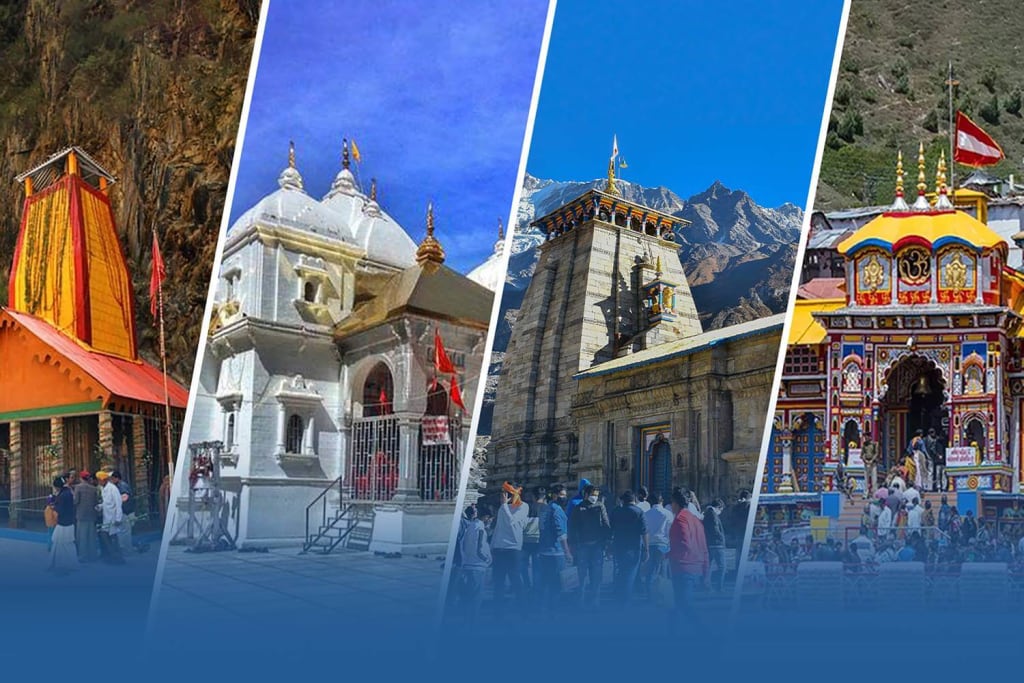
The Char Dham Yatra in Uttarakhand is one of the most revered pilgrimages in Hinduism, taking devotees to four sacred shrines nestled in the majestic Himalayas: Yamunotri, Gangotri, Kedarnath, and Badrinath. This spiritual journey is believed to cleanse sins, grant salvation (Moksha), and bring devotees closer to the divine.
Undertaken between April/May to October/November (before winter snow closes the routes), the yatra covers breathtaking landscapes, challenging terrains, and deeply spiritual experiences. Whether you're a devout pilgrim or a nature lover, the Char Dham Yatra is a transformative adventure.
1. Yamunotri: The Source of the Yamuna River
Significance
Yamunotri is the first stop in the Char Dham circuit, dedicated to Goddess Yamuna. According to Hindu mythology, bathing in the Yamuna’s holy waters protects from untimely death.
Key Attractions
Yamunotri Temple: Built in the 19th century by Maharani Guleria of Jaipur, the temple houses a black marble idol of Yamuna.
Surya Kund: A hot water spring where pilgrims cook rice and potatoes as prasad.
Divya Shila: A rock pillar worshipped before entering the temple.
How to Reach
Nearest Town: Hanuman Chatti (13 km) or Janki Chatti (6 km).
Trek: A 6 km trek from Janki Chatti (ponies/palkis available).
2. Gangotri: The Origin of the Ganges
Significance
Gangotri, the birthplace of River Ganga, is where Goddess Ganga descended to Earth after King Bhagirath’s penance. The sacred waters are believed to purify the soul.
Key Attractions
Gangotri Temple: Built by Amar Singh Thapa in the 18th century, the temple overlooks the Bhagirathi River.
Bhagirath Shila: The rock where King Bhagirath meditated.
Gaumukh Glacier: The actual source of the Ganges (19 km trek from Gangotri).
How to Reach
Nearest Town: Uttarkashi (100 km).
Road: Accessible via Rishikesh-Uttarkashi-Gangotri route.
3. Kedarnath: The Abode of Lord Shiva
Significance
Kedarnath, one of the 12 Jyotirlingas, is where Lord Shiva absolved the Pandavas from the sin of killing their kin in the Mahabharata.
Key Attractions
Kedarnath Temple: A majestic stone temple surrounded by snow-clad peaks.
Bhairavnath Temple: Protector of Kedarnath in winters.
Vasuki Tal: A high-altitude glacial lake (8 km trek).
How to Reach
Nearest Town: Gaurikund (16 km trek starting point).
Helicopter Services: Available from Phata, Guptkashi, and Sirsi.
4. Badrinath: The Sacred Vishnu Shrine
Significance
Badrinath, dedicated to Lord Vishnu, is part of both Char Dham and Chota Char Dham. It’s believed that Adi Shankaracharya established the temple in the 8th century.
Key Attractions
Badrinath Temple: Features a black stone idol of Lord Badri (Vishnu).
Tapt Kund: A natural hot spring for ritual baths.
Mana Village: India’s last village before Tibet, near Vyas Gufa.
Neelkanth Peak: A stunning backdrop to the temple.
How to Reach
Nearest Town: Joshimath (44 km).
Road: Well-connected via Rishikesh-Joshimath-Badrinath route.
Best Time to Visit
May to June: Pleasant weather, ideal for pilgrimage.
September to October: Post-monsoon clarity, fewer crowds.
Avoid July-August: Heavy rains cause landslides.
Travel Tips for Char Dham Yatra
✔ Medical Check-up: High altitude requires fitness.
✔ Pack Warm Clothes: Nights are freezing even in summer.
✔ Book Accommodation Early: Dharamshalas and hotels fill quickly.
✔ Carry Cash: Limited ATMs in remote areas.
✔ Respect Local Customs: Follow temple rituals and dress modestly.
Conclusion
The Char Dham Yatra is not just a pilgrimage but a journey of faith, endurance, and divine connection. Each destination offers a unique spiritual experience amidst the awe-inspiring Himalayas. Whether you seek blessings, adventure, or inner peace, this sacred yatra will leave an everlasting impression on your soul.
The Char Dham Yatra is not merely a pilgrimage—it is a profound spiritual odyssey that tests your endurance, deepens your faith, and leaves an indelible mark on your soul. As you journey through the sacred abodes of Yamunotri, Gangotri, Kedarnath, and Badrinath, you don’t just traverse the rugged Himalayan terrain; you embark on an inward voyage of self-discovery and divine connection.
A Journey of Faith and Surrender
Each of the four Dhams holds a unique significance in Hindu mythology, representing different aspects of the divine:
Yamunotri teaches purity, as the holy Yamuna washes away sins.
Gangotri symbolizes devotion, where the Ganges descended through King Bhagirath’s penance.
Kedarnath embodies penance, where Shiva absolved the Pandavas’ guilt.
Badrinath represents salvation, as Vishnu meditated here for humanity’s welfare.
Walking these paths, you join centuries of seekers who have braved the mountains in search of blessings, redemption, and inner peace.
A Test of Physical and Mental Strength
The yatra is as much a physical challenge as it is a spiritual one. The steep treks, unpredictable weather, and high altitudes demand resilience. Yet, with every step, pilgrims find strength they didn’t know they had—pushed forward by faith and the collective energy of fellow devotees.
Har Har Mahadev! Jai Badri Vishal!
About the Creator
Footloose
I am a travel content write and an Indian travel blogger.


Comments
There are no comments for this story
Be the first to respond and start the conversation.