
Before They Were My Parents
The day the monolithic figures of "Mom" and "Dad" shattered into a million vulnerable, human pieces.
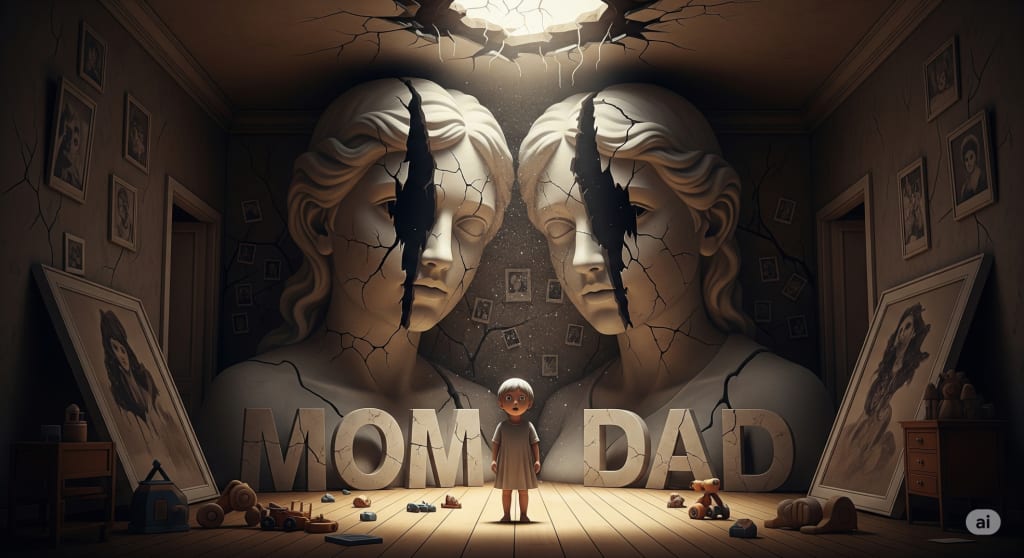
For eighteen years, my parents were not people. They were forces. Unwavering pillars of responsibility, the architects of my childhood, the providers of every need before I even knew I had it. They were the sun and moon in my small universe, their movements predictable, their roles absolute. Mom was the gentle hand that bandaged scraped knees and baked cookies that smelled of warmth and home. Dad was the steady voice that guided me through math problems and the silent strength that fixed anything that was broken, from a leaky faucet to my shattered confidence after a Little League strikeout. They were simply… Mom and Dad. Two halves of a perfect, impenetrable whole.

Their lives, as I perceived them, revolved entirely around us – my sister and me. Every decision, every weekend plan, every sacrifice seemed effortlessly woven into the fabric of our family life. Their joys were our achievements, their worries our scraped elbows and looming exams. I never considered their individual aspirations, their private disappointments, or the quiet battles they might have been fighting when I was safely tucked in bed, dreaming oblivious dreams.
The shift began subtly, like the almost imperceptible tremor before a major earthquake. It wasn't one grand revelation, but a series of small cracks appearing in the seemingly unyielding foundation of my perception.

I remember overhearing a hushed phone conversation between my mother and her own mother, a conversation punctuated by long silences and a tone I'd never heard from her before – a weary sadness. She spoke of unfulfilled dreams, of paths not taken, of a yearning for something more than the endless cycle of laundry, grocery shopping, and school pickups. It was a fleeting glimpse behind the "Mom" facade, and it left me strangely unsettled.

Then there was the time I saw my father cry. It was after his own father, my Grandpa Joe, passed away. Dad, the stoic, unflappable man who taught me how to tie a tie and change a tire, stood by the window, his shoulders shaking silently, tears tracing paths down his weathered cheeks. In that moment, he wasn't just my dad; he was a son grieving the loss of his father, a man vulnerable in his pain. The image was so stark, so contrary to everything I had built my understanding of him upon, that it felt like a glitch in the matrix of my childhood.
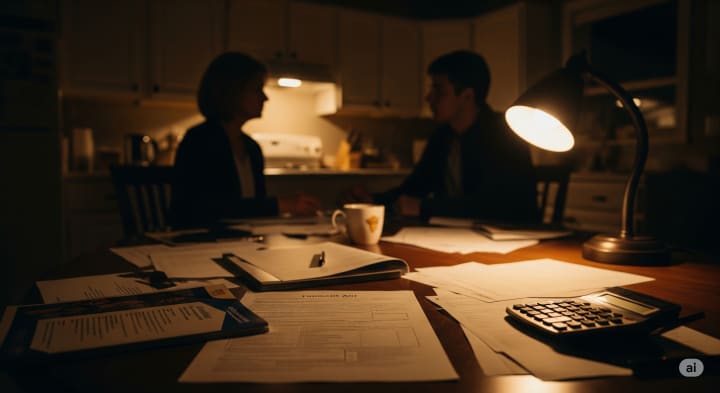
As I grew older, my world expanded beyond the confines of our home. College applications loomed, and suddenly, my parents weren't just there to sign forms and offer vague encouragement. I saw the anxiety in their eyes, the late-night discussions in hushed tones about finances, about whether they had done enough to prepare me for the world. Their concerns weren't just about me getting into a good school; they were about their own anxieties as parents facing the daunting prospect of their child leaving the nest.
One particularly poignant evening, I came home late from studying with friends. The house was unusually quiet. I found Mom in the living room, not her usual bustling self, but curled up on the sofa with a worn photograph album. As I sat beside her, she pointed to a black and white picture of a young woman with bright, hopeful eyes – her younger self. She spoke of her dreams of becoming a photographer, dreams that had been gently put aside, not with bitterness, but with a quiet resignation that resonated deep within me.
Later that week, I stumbled upon a box of old journals in the attic. My father's handwriting, surprisingly delicate, filled the pages. He wrote of his own youthful ambitions, his passion for literature, a dream of writing a novel that had never quite materialized amidst the demands of providing for his family. It was a revelation. My dad, the pragmatic engineer, had once harbored a secret world of artistic longing.
These weren't isolated incidents; they were a gradual unveiling. Each overheard conversation, each fleeting expression of worry or sadness, each glimpse into their past chipped away at the monolithic figures I had created in my mind. They weren't just Mom and Dad. They were Maria and David. They had hopes and fears, triumphs and disappointments, just like me, just like everyone.
The realization wasn't earth-shattering in a dramatic sense, but it was profoundly moving. It fostered a new kind of empathy within me. I started to see them not just as my parents, but as individuals navigating their own complex lives, making sacrifices and compromises I had never been aware of.
The "cracks" in the foundation of my childhood perception didn't weaken it; they strengthened it. They allowed light and air to permeate the structure, revealing the intricate human connections that held us together. Mom was still the warm baker, but now I knew she also carried the quiet ache of unpursued dreams. Dad was still the steady handyman, but now I understood the silent strength forged in the face of personal disappointments.
The day I truly realized my parents were people wasn't a single day at all. It was a slow, unfolding awareness, a gentle dismantling of childhood idealism to reveal the beautiful, messy, and profoundly human reality of the two individuals who had given me everything. And in that realization, I found a deeper, more meaningful love and respect for them, not just as my parents, but as the remarkable people they truly are.
About the Creator
Keep reading
More stories from Kaleem Ullah and writers in Families and other communities.
The Digital Mirage: How Pornography Rewires Our Brains, Erodes Our Confidence, and How to Reclaim Your Life
In the vast landscape of the internet, pornography has become a titan. Its websites attract more visitors than Netflix, Amazon, and Twitter combined, often dismissed as a harmless form of entertainment or a normal part of modern sexuality. But behind this veneer of normalcy, a growing body of scientific research reveals a much darker picture. While "pornography addiction" is not yet an official diagnosis in psychiatry's main diagnostic manual, the World Health Organization has recently added "Compulsive Sexual Behavior Disorder" to its own manual, a condition largely driven by problematic pornography use. This acknowledges a clinical reality: for many, pornography use evolves into a compulsive behavior with devastating consequences.
By Kaleem Ullah7 months ago in Psyche
Wise~Guys
— Look Behind what's in Front of You ~ Make Good Choices — Hey, So how you Doin'..! Made~Men — Mobster Movies romanticise a distinctive, elegant appearance, impeccable attire style, along with the 'Families' expressive lingo. Making their 'Bones' gave them Panache — with vintage fedoras, tailored pin-striped suits, mirror-polished wing-tip shoes adorned with tassels; with their 'Gun Moll' gorgeous dates on their arms.
By Jay Kantor20 days ago in Families
The Lost Mind
I stand by the door, staring at Reema Aunty taking care of my Dadi**. Dadi can’t bathe herself anymore, Reema Aunty bathes her. Right now, she is combing Dadi’s hair, her once beautiful long hair is now short and full of white strands. Dadi peeps over and smiles, her eyes crinkling at the corners.
By Poonam Desai5 days ago in Families




Comments
There are no comments for this story
Be the first to respond and start the conversation.