
‘Ayali’ Television series Review: An emotional, gripping tale that takes on the patriarchy
Voice against the socio-religious factors that males use to oppress women, you wish the series had a better screenplay and a longer runtime to fully realize its potential.

Director: Muthu Kumar
Cast: Abi Nakshatra, Anumol, Singampuli, Lingaa
An animated segment that recounts the fable of how the village of Veerapannai came to be opens the eight-part series. According to a tale, after a young girl from the village of Pannaiyur ran off with a man from a nearby village, the locals suffered the wrath of their god, Ayali, which caused them to move the entire village to a new location in the Pudukottai district, which became known as Veerapannai. They resolved to force all village girls to get married the moment they reach puberty after constructing a temple for Ayali in the new village. In 1990, we observe how this practise is abused to subjugate women. Now, it is written in the kaalachaaram and kattupaadu that females who reach puberty are not allowed to enter the Ayali temple or attend school. They have their education and their religion taken away from them, and they are married off. The males of the village, who adhere to their local MLA (Singampuli) and his son, place the uttermost importance on safeguarding this sanctimonious practise, controlling their women, and maintaining the purity of the caste (Lingaa, in a very promising role).
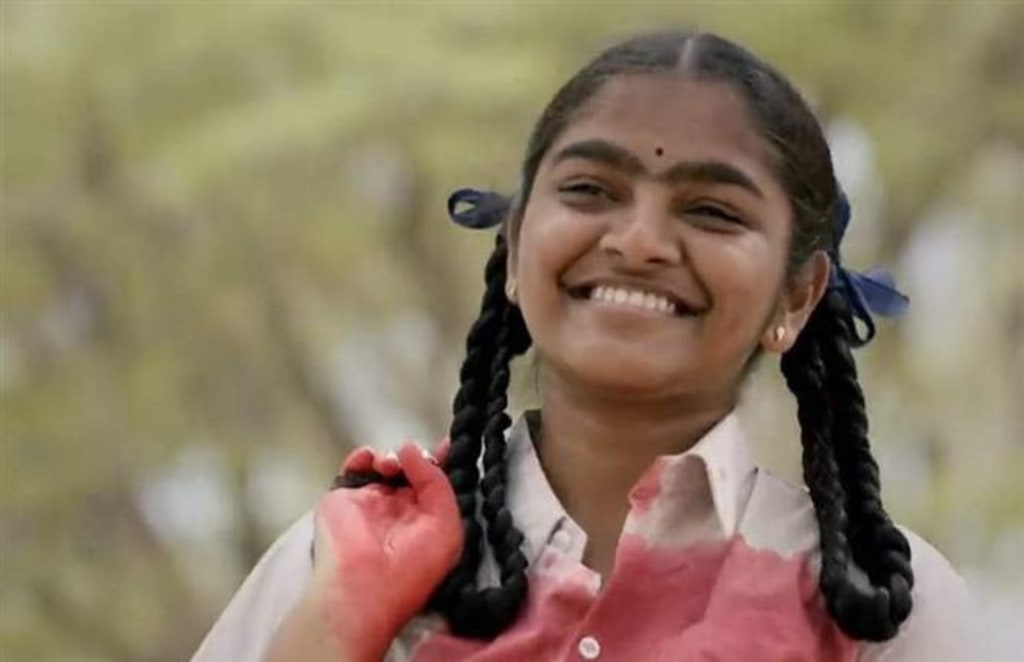
Our main character, Thamizh (Abi Natchatra), is a young ninth-grader who challenges the absurdity of these customs. Thamizh wants to be a doctor, but she feels fear as she watches each of her peers get married off, only to suffer later. She therefore comes up with a plan to keep her dreams alive when she reaches puberty — she hides it from absolutely everyone. The first few episodes focus heavily on Thamizh carrying out her scheme and becoming the only girl in the village to enrol in tenth grade.
There are plenty of challenges in her path. For instance, the youth of the village are expected to visit the Ayali temple and make prayers during the full moon festival. However, according to a long-held belief, girls who have reached puberty shouldn't go inside the sanctuary. If they do, either the god would kill them on the following full moon day or the villagers would shave her head and isolate her from the community. What would a 14-year-old girl do in this situation if she had to hide her period marks from even her mother? Thamizh faces increasing peril with each new challenge, and we join her in acknowledging both her modest and significant accomplishments. Interestingly, few books have questioned the traditions that are still practised.
Ayali is developed through its emotional rhythms, and it has sufficient depth and excitement to keep you interested. A beautiful tale about a daughter and a mother, and how women are compelled to band together when pressed to the limit, is at the heart of all the drama. The constant lump in our throat tightens in a number of heartbreaking situations, such as when we realise that for some, a simple bus trip to a nearby town was a once-in-a-lifetime chance or when a father finally understands what true love is. Or when a side story depicts two elderly stepwives who are typically at odds with one another enjoying a pleasant time together. Or in the tale of Thamizh's pals who are compelled to wed.
Director Muthu makes use of the lengthy structure to create a number of these subplots with enough characters to emphasise the main idea. Everything else works in the story's favour, with the exception of a few subpar comedy songs intended to add some humour. Ayali is set in a fascinating world, and it's also interesting how the warm colour tones of the visuals not only establish the time period of the story but also go well with the scorching emotional tone.
But the show required a fresh screenplay and improved handling. We are requested to wait a little bit too long for the rewards, even when we can see what is in store for us at a specific point. Many characters, including the one Lingaa portrays, end up feeling underdeveloped despite beginning out with promise. Another drawback is the lacklustre conclusion, which ought to have been equally impactful.
About the Creator
Dhivya
I love to Write.. but sometimes i stuck to start or what to write.. I’d like to hear from you, feel free to comment below and give likes, Share my Post, and Subscribe..
Thank you..
Wise~Guys
— Look Behind what's in Front of You ~ Make Good Choices — Hey, So how you Doin'..! Made~Men — Mobster Movies romanticise a distinctive, elegant appearance, impeccable attire style, along with the 'Families' expressive lingo. Making their 'Bones' gave them Panache — with vintage fedoras, tailored pin-striped suits, mirror-polished wing-tip shoes adorned with tassels; with their 'Gun Moll' gorgeous dates on their arms.
By Jay Kantor19 days ago in Families




Comments
There are no comments for this story
Be the first to respond and start the conversation.