
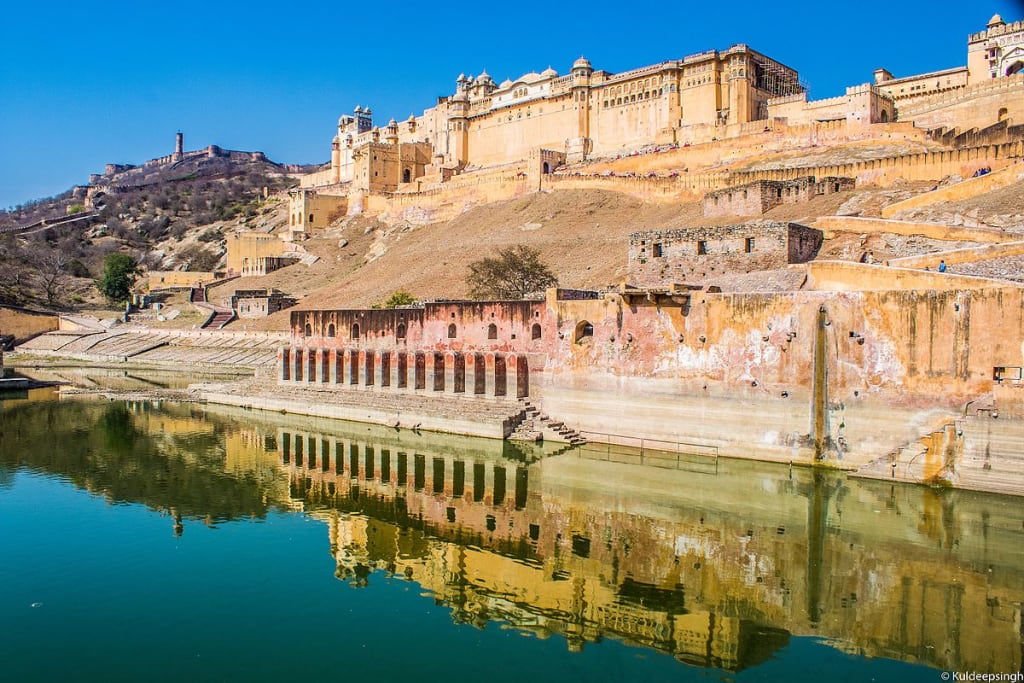
The Amber Fort, situated in the outskirts of Jaipur, Rajasthan, India, stands as a magnificent testament to the rich history, architectural excellence, and royal heritage of the region. This imposing fort, also known as Amer Fort, is a masterpiece of Rajput architecture, exuding grandeur, charm, and historical significance. With its impressive ramparts, majestic palaces, and intricate carvings, the Amber Fort continues to captivate visitors from around the world, offering a glimpse into the opulent lifestyles of the Rajput rulers. This essay aims to provide a comprehensive exploration of the Amber Fort, delving into its historical background, architectural features, cultural significance, and enduring allure.
Historical Background:
The foundation of the Amber Fort dates back to the 16th century, when it was initiated by Raja Man Singh I, a trusted general in the court of Mughal Emperor Akbar. However, subsequent rulers of the Kachwaha Rajput dynasty, particularly Raja Jai Singh I and Sawai Jai Singh II, made significant additions and enhancements to the fort, contributing to its present-day splendor. The fort's strategic location, nestled on a hill overlooking Maota Lake, provided natural defenses and a breathtaking backdrop, making it an ideal setting for the ruling dynasty's seat of power.
Architecture:
The Amber Fort exemplifies the finest elements of Rajput and Mughal architectural styles, showcasing a harmonious blend of Hindu and Islamic influences. The fort's imposing walls and ramparts, constructed from pale yellow and pink sandstone, create a striking visual impact, especially when illuminated by the warm hues of the setting sun. As visitors meander through the fort's imposing gates and courtyards, they encounter a series of palaces, each a testament to the craftsmanship and artistic prowess of the era.
Among the prominent structures within the Amber Fort is the Diwan-i-Aam, or Hall of Public Audience, where the ruler would engage with his subjects and address matters of governance. The Diwan-i-Khas, or Hall of Private Audience, is adorned with intricate mirror work and delicate frescoes, echoing the opulence of the Rajput courts. The Sheesh Mahal, or Palace of Mirrors, is another highlight, featuring walls and ceilings embellished with thousands of mirror pieces that shimmer and reflect light, creating a mesmerizing effect.
The fort's architectural grandeur extends to its sprawling gardens, pavilions, and temples, such as the Kesar Kyari, a Mughal-style garden laid out in a star-shaped pattern, and the Shila Devi Temple, dedicated to the goddess of the Kachwaha rulers. The detailed carvings, ornate lattice work, and elaborate frescoes adorning the fort's interiors bear testimony to the skill and artistry of the artisans who contributed to its construction.
Cultural Significance:
The Amber Fort holds profound cultural significance, serving as a living testament to the valor, grandeur, and refined tastes of the Rajput rulers. Its association with the Kachwaha dynasty, particularly during the reign of Raja Man Singh I, Raja Jai Singh I, and Sawai Jai Singh II, underscores its historical importance in the annals of Rajasthan's royal heritage. The fort's architecture, with its fusion of Hindu and Islamic elements, reflects the cultural syncretism that characterized the region's history, encompassing a rich tapestry of traditions, beliefs, and artistic expressions.
The Amber Fort's enduring allure extends to its annual celebration of the festival of Diwali, during which the entire fort is illuminated with thousands of earthen lamps, creating a mesmerizing spectacle that attracts visitors and locals alike. The fort's cultural vibrancy is further highlighted by the enthralling sound and light show, which recounts the history of the fort and the valorous deeds of its erstwhile rulers, offering an immersive experience for visitors seeking to delve into its storied past.
Beyond its architectural splendor, the Amber Fort continues to serve as an enduring symbol of Rajasthan's vibrant cultural heritage, inviting visitors to immerse themselves in the grandeur and romance of a bygone era. The intricate frescoes, mirrored walls, and landscaped gardens within the fort provide a glimpse into the refined tastes, artistic inclinations, and regal lifestyles of the Rajput rulers, offering a rich tapestry of historical and cultural experiences.
Enduring Allure:
The Amber Fort's enduring allure lies not only in its architectural magnificence but also in its ability to transport visitors to a bygone era, evoking a sense of wonder and reverence. The fort's panoramic vistas of the surrounding Aravalli hills and Maota Lake, especially from the vantage point of the Ganesh Pol, or Ganesh Gate, provide a breathtaking backdrop that lingers in the memory of all who visit.
The fort's enduring allure extends to its association with the legendary Sheesh Mahal, which has captured the imagination of artists, poets, and filmmakers over the centuries, and stands as a quintessential symbol of the fort's legacy. The Sheesh Mahal's intricately crafted mirrors, embedded within its walls and ceilings, create a mesmerizing interplay of light and reflections, casting the visitor into a world of ethereal beauty and enchantment.
Visitors to the Amber Fort can also partake in elephant rides, an iconic experience that harks back to the regal traditions of the Kachwaha rulers. The sight of lavishly caparisoned elephants, making their stately ascent to the fort's main entrance, adds a sense of grandeur and nostalgia to the visitor's experience, further enhancing the fort's enduring allure.
In conclusion, the Amber Fort stands as a captivating embodiment of Rajasthan's royal heritage, architectural splendor, and cultural legacy. Its impressive ramparts, opulent palaces, and timeless charm continue to draw visitors from across the globe, offering an immersive journey into the treasured history and grandeur of the Rajput dynasties. As a living testament to Rajasthan's fabled past, the Amber Fort remains an iconic jewel in the crown of India's cultural heritage, inviting all who visit to revel in its timeless allure and grandeur.
If you are live in jodhpur and you want to visit Jaipur city then, let me recommend you the best taxi service in jodhpur named as jodhpur cab service. Jodhpur Cab Service provides there customer best services by their chauffeur.
Jaisalmer Fort
Rising majestically from the heart of the Thar Desert in the Indian state of Rajasthan, the Jaisalmer Fort stands as an architectural marvel and a timeless symbol of the region's rich history, cultural heritage, and unparalleled grandeur. Also known as the "Golden Fort" due to its distinct honey-golden hue, this imposing citadel has captivated the imagination of travelers and historians alike, serving as a living testament to the valorous history of the Rajput rulers and the architectural brilliance of their era. This essay embarks on a comprehensive exploration of the Jaisalmer Fort, delving into its historical lineage, architectural features, cultural significance, and enduring allure, offering a panoramic understanding of this legendary stronghold.
Historical Legacy:
The origins of the Jaisalmer Fort can be traced back to the 12th century, when it was established by Rawal Jaisal, the founder of the city of Jaisalmer. Perched on the Trikuta Hill, the fort was strategically positioned to serve as a formidable bastion against external invasions, and its sturdy sandstone walls and watchtowers are a testimony to the fort's military significance. Over the centuries, successive rulers, particularly in the 16th and 17th centuries, made substantial additions and enhancements to the fort, further augmenting its architectural grandeur and fortifying its defenses. The fort's strategic location along the ancient Silk Route added to its economic and cultural importance, fostering trade and exchanges with distant lands, and contributing to its cosmopolitan legacy.
Architectural Grandeur:
The Jaisalmer Fort stands as an archetype of Rajput military architecture, characterized by its towering ramparts, imposing gates, and intricately carved sandstone structures. The fort's distinctive honey-golden hue is attributed to the use of locally quarried yellow sandstone, which takes on an ethereal glow when illuminated by the rays of the sun. The fort's imposing walls, stretching over 3 kilometers and punctuated by 99 bastions, house a labyrinth of narrow alleys, elaborately carved Jain temples, intricately adorned havelis (mansions), and palatial complexes. The Raj Mahal (Royal Palace), with its ornate balconies, delicately carved sandstone screens, and opulent chambers, offers a glimpse into the luxurious lifestyles of the erstwhile rulers, while the Jain temples, notably the Surya Temple and the Chandraprabhu Temple, showcase intricate carvings and architectural finesse, reflecting the religious and artistic fervor of the era. The fort's architectural grandeur is further accentuated by its reservoirs, granaries, and the iconically named Tazia Tower, each bearing witness to the fort's multifaceted role as a military outpost, royal residence, and thriving urban center.
Cultural Legacy:
The Jaisalmer Fort encapsulates a vibrant tapestry of cultural traditions, artistic expressions, and historical legacies, each resonating through its hallowed corridors and time-worn precincts. The fort's association with the Bhati Rajputs, who held sway over the region for centuries, underscores its historical Cultural and Historical Significance:
Jaisalmer Fort stands as a living testament to the valor, resilience, and cultural legacy of the Rajput rulers and the city of Jaisalmer. Its walls have withstood centuries of tumultuous history, symbolizing the unwavering spirit of the region's inhabitants. The fort's association with the Bhati Rajput dynasty, particularly under the reign of Rawal Jaisal, underscores its historical importance and its enduring symbol of Rajasthan's grandeur. The fort's architectural splendor, with its towering walls, imposing gates, and intricately carved sandstone structures, reflects the artistic prowess, and strategic vision of its builders, offering an immersive journey into the rich tapestry of Rajasthan's royal heritage.
Jaisalmer Fort continues to serve as a vibrant hub of cultural activities, with its narrow lanes and alleys housing a plethora of handicraft shops, vibrant bazaars, and traditional havelis, offering visitors a glimpse into the region's artistic traditions and time-honored crafts. The fort's cultural vibrancy comes to life during the annual Desert Festival, which showcases the region's folk dances, music, and traditional arts, further underlining the fort's role as a custodian of Rajasthan's deeply cherished cultural heritage.
Enduring Allure:
Jaisalmer Fort's enduring allure lies not only in its architectural magnificence but also in its ability to transport visitors to a bygone era, evoking a sense of wonder and reverence. The fort's panoramic vistas of the surrounding Thar Desert, especially from the vantage points of the Raj Mahal and the Jain temples, provide a breathtaking backdrop that lingers in the memory of all who visit.
The fort's enduring allure extends to its association with the lavish havelis and temples within its precincts, including the intricately carved Patwon Ki Haveli, Salim Singh Ki Haveli, and the Jain temples, which serve as a testament to the region's artistic heritage and religious traditions. The fort's enduring allure is further heightened by the enthralling sound and light show, which reenacts the history of the fort and the valorous deeds of its erstwhile rulers, offering an immersive experience for visitors seeking to delve into its storied past.
Visitors to Jaisalmer Fort can also partake in camel safaris, an iconic experience that harks back to the region's nomadic traditions and the romantic allure of the desert. The sight of caravans of camels, making their leisurely sojourn through the arid landscape, provides a glimpse into the timeless traditions and natural beauty of the Thar Desert, further enhancing the fort's enduring allure.
In conclusion, Jaisalmer Fort stands as a captivating embodiment of the Rajasthan's royal heritage, architectural splendor, and cultural legacy. Its imposing walls, opulent havelis, and timeless charm continue to draw visitors from across the globe, offering an immersive journey into the treasured history and grandeur of the Rajput dynasties. As a living testament to Rajasthan's fabled past, Jaisalmer Fort remains an iconic jewel in the crown of India's cultural heritage, inviting all who visit to revel in its timeless allure and grandeur.
If you are live in jodhpur and you want to visit Jaisalmer city then, let me recommend you the best taxi service in jodhpur named as jodhpur cab service. Jodhpur Cab Service provides there customer best services by their chauffeur.
About the Creator
Keep reading
More stories from ravish kumar and writers in Families and other communities.
The Monsoon Palace: Unraveling the Mystique of Sajjangarh Fort
Nestled amidst the Aravalli Range, the majestic Sajjangarh Fort, also revered as the "Monsoon Palace," stands as an architectural marvel and a testament to the rich heritage of Rajasthan. Embraced in an aura of mystique and regal grandeur, this iconic fortification has captured the imagination of travelers and history enthusiasts alike. Join us on a journey as we unravel the enigmatic allure and the captivating history behind the moniker "Monsoon Palace" that has lent an aura of timeless charm to the illustrious Sajjangarh Fort.
By ravish kumar2 years ago in Families
Wise~Guys
— Look Behind what's in Front of You ~ Make Good Choices — Hey, So how you Doin'..! Made~Men — Mobster Movies romanticise a distinctive, elegant appearance, impeccable attire style, along with the 'Families' expressive lingo. Making their 'Bones' gave them Panache — with vintage fedoras, tailored pin-striped suits, mirror-polished wing-tip shoes adorned with tassels; with their 'Gun Moll' gorgeous dates on their arms.
By Jay Kantor20 days ago in Families
Forever Mommy
You are placing bricks, one on top of the other, oblivious to the couples pressing their noses to the glass that separates them from you. The room on this side of the glass has many more like you, in all shapes, sizes, colours, and ethnicity scattered on tables, chairs and mats, playing and laughing unaware of the fate that awaits you on the other side of the glass. The couples on the other side are seated in a waiting room awaiting their turn to view from the glass and choose their prospective offspring. It’s a thrift store of the unwanted and used.
By Poonam Desai4 days ago in Families
Smart phones, Humans and Aliens.
WARNING. I will be tapping into one of your favorite creative tensions: The absurdity of humans worshipping their glowing rectangles as if they were tiny oracles. There’s something deliciously poetic about that contradiction, and it lends itself beautifully to an instructive proviso.
By Novel Allen4 days ago in Poets



Comments
There are no comments for this story
Be the first to respond and start the conversation.