
A Modern Day Carolyn
through a contemporary lens today


This is dedicated to those academics and clinicians stuck in rigidity and haven't adapted to using creativity in their research or practice
A Modern Day Carolyn
Anthony P. Martello
Pepperdine University
Bowenian Lens
During the 1980s transitions were occurring in family dynamics. Pioneers like Augustus Y. Napier, Ph. D and Carl A. Whitaker, MD., were utilizing new family systems techniques that sprang from Freud and his psychoanalytic theories but with modern-day sophistication. Similar to unpeeling an acerbic onion layer upon layer, these pioneers strived for savory over-acidic during their holistic approaches with weeks and weeks of family therapy. For this paper, I will use a Bowenian lens to examine Carolyn, a character from Napier's book, The Family Crucible. I chose not to use my own family because I am very familiar with the underlying concepts already and want to challenge myself with our current reading of The Family Crucible as I find it fascinating and very insightful.
Let us begin with Carolyn and her enmeshed family of origin. The first concept we can apply to Carolyn is the process of differentiation of individuals in families. Because Carolyn grew up trying to please her mother mostly, she had a slow rate of differentiation from her nuclear family. This slow development carried over into the marriage with David as demonstrated by her complete and self-sacrificial dedication to her husband and his time demanding job as a lawyer. It should be no surprise that after years of trying to please her mother, she transitioned into the role of a wife trying to please her husband and his family. As many housewives did, she raised the children while David was at the office buried under piles of paperwork. If you consider how long lawyers are at work (let’s just hypothetically assume 10 hours per day and even some weekends), you can understand how the marriage may cool off or get stuck in a boring rut of daily routine. Carolyn is left to clean the house, support the children, get them to school, care for them on sick days, etc. She represents the typical housewife in the 80s and before that spent all of their time and energy caring for children. I would even argue that this job is twice as demanding mentally and physically than her husband's job as a lawyer.
With little practice differentiating from her mother and family of origin, Carolyn was not sure how to find herself and her interests to separate from caring for family members. Their marriage became routine and cold and problems sprung in the form of triangles or scapegoats using their children unconsciously. How was she even capable of seeing the possibility of these traps if she didn’t have any space or free time to care for herself. It is unrealistic to expect a pre-80s housewife to do all these household chores, care for the emotional needs of her children and find nurture herself along the way, oh, and not to mention, couples-time for her husband. Another concept or problem that develops in many families is triangulation or transference of tension onto the other family members where individuals team up against the others. The power of triangles is so strong that sometimes it takes 2-3 rounds of therapy on breaking them before the parents realize their weaknesses and gaps in authority.
I find it interesting to wonder what the modern-day Carolyn would look like today. Would her traps be as strong? Maybe a girlfriend would have enlightened her earlier in her marriage about self-care and empowering herself. The pre-80s wife had fewer options to find job opportunities and support raising children. Today, wives have more employment options and childcare support at their fingertips. Today, employers and bosses are more flexible with the men to leave work and go home to care for children while their wives have a part-time or full-time job as well. During Carolyn's time, this wasn't the case and she had limited options to finder herself for creative space and wonder. Next, we will explore some Bowenian interventions that will help the pre-80s Carolyn catch up to the modern-day Carolyn. With the wife and mother being the central point of pain and conflict, we will take the approach of helping Carolyn to find freedom and happiness with the hopeful side effect of growing closer to her husband in the process. Of course, David, the husband is contributing to the marital conflict as well and his relationship with his mother is part of the intergenerational effect that he carries forth into his marriage with Carolyn. He may subconsciously be keeping Carolyn in mothering mode like his mother did when he grew up. She was very involved in his daily life as a child. Here we see a magnetic pull of David and Carolyn toward each other and their respective levels of childhood differentiation matching up. Carolyn, trying to break away subconsciously from a controlling mother and David, fearing abandonment, wanting to permanently fix his wife to his home. They match up in slow or premature differentiation from their early years. Although this is not a perfect fit and it never really is for anyone it can be adjusted by Bowenian therapy to facilitate each spouse continued differentiation from the family so they may find a healthy balance of independence and interconnectedness.
What are we to do as therapists to facilitate differentiation and break up the problematic triangles in families? Some goals for therapeutic intervention are:
• Increase differentiation of David and Carolyn to increase their coping skills to manage their anxiety, separate couples' issues from child issues, and be available for the emotional well-being of the family
• Therapists are used as a health triangle to educate the couple on managing their anxiety and distance and closeness balance effectively
• Examine the power differential and gender expectation differences and adjust to balance the workload and opportunity for Carolyn and David
• Examine the multigenerational dyads and relationships of David and Carolyn in their family or origin (example: both mothers and fathers)
Intervention 1: Construct a genogram and have each member in the family participate so they may discuss the relationships and how they became triangulated and out of distance-closeness balance and propose new ideas.
Building off these interactions, encourage David to compromise with his boss or arrange family days to spend time with his wife to nurture the relationship. Also, create family days to interact with the family as a whole. Encourage couples to meet in the middle with compromise and exploration of each other's interests.
Intervention 2: Practice “I statements” for more defined differentiation and role play with each member to increase differentiation. Also, write letters and share in a family roundtable of gratitude and appreciation of one another.
As therapy evolves for the Brice’s, I would encourage exercises to open David and Carolyn up with goal making their marriage more of an experience in living vs a trap manufactured by societies’ rules on how a marriage should be (leftover remnants from their families of origin with rigid rules). This concept of individuation resonates with me as it did with the psychotherapists in The Family Crucible:
"We invited them to live life as it is, not as they thought it should be, and to risk the confusion, the terror, the passion, the fury that exists under the surface of all our tame, planned existences" (Napier & Whitaker, 1978). If some of these treatment goals could be reached along with freeing up Brice's rigid sense of rules and marriage, they would have a better chance of transforming their union into one of improved happiness and satisfaction. To conclude, by lowering familial anxiety, increasing individuation, and creating space for vulnerability, Carolyn and her family now have a chance to live a modern-day life of freedom and experience!
Satir Lens
While Bowenian dynamics may have more of a psychoanalytical approach, Virginia Satir demonstrates more of an egalitarian form of communication through the use of family sculpting and congruency. Considering the assumption that individuals innately desire growth in a family and also that individuals are equal and have roles that are independent of identity, therapy becomes a living process of change. According to Satir’s Communication Approach, “roles and status are distinct from identity” (Satir, Banmen, Gerber & Gomori, 1991). Through the reading in her communications book and several asynchronous videos given to us in class, Satir demonstrates this actual living and dynamic process of disrupting defensive stances and poking at change, inviting it to happen. Change becomes a new stranger, invited by Satir, to interact with the family, making them uncomfortable enough to evoke a positive transformation to occur for the growth of the individual and enhancement of the family unit.
Let us examine Carolyn through a Satir lens. In contrast to a Bowenian therapeutic setting where the family may sit arranged in their pattern, Satir identifies early on the defensive stances of the family members and rearranges the sculpting of the family to draw out power imbalances. For example, Carolyn may present in a blamer stance with a pointed finger at Claudia, her teenage daughter. Unlike David Bowen, who may let them sort it out over time, Virginia Satir would position mother and daughter in an even and balanced playing field right there in front of the whole family. Similarly, this dyadic interaction may present itself with Carolyn and her husband as well. Satir would take another opportunity to adjust this imbalanced couples positioning as well, to facilitate congruency in the couple’s relationship. These adjustments in the positioning of the family members allow for the development of the self-worth of each family member.
Mr. Brice, Carolyn’s husband presents with a super reasonable stance, illustrating a rigid, overly logical point of view of the family and its problems. This couple’s combination of a super reasonable husband and a blaming wife doesn’t leave any room at all for intimacy or freedom of expression as a couple and even as parents. Satir must poke at the couple’s imprisonment as a change agent, (foreign, of course) or a disruptive force that may invite freedom in to give it a chance to break the couple out of a frozen marriage. When Satir does her work, she thaws the ice by warming up each individual with a series of questions-poking at entrapment and laughing at it in the face. She repositions the couple and allows them to look eye to eye at each other with the hope of free expression and melting of the ice. As the surface breaks and the couples open up, more congruent communication flows and the couple slowly reconnects. This is how her therapy may look different from Bowenian family dynamics. Satir expedites the power imbalances “right here in the present moment,” whereas Bowen may take a bit of time and psychoanalyze each individual in a whole family setting. Integrating both theories may be most helpful as they have their strengths in approach. For example, Mr. Brice may benefit from more male-dominated psychoanalysis to pull out some unconscious perceptions of women and mothers and their roles in the family. After exploring some of his rigid perceptions of mothers and wives, he may benefit from experiencing a power session with Satir and the potential equalizing effects with his wife.
Satir’s power of communication is demonstrated further as one can see the individual family members develop a sense of self-esteem as they interact in her therapy. Naturally, when each member strengthens their persona, the whole family benefits by growing positively. As mentioned earlier, the role of the therapist is to disrupt the status quo with thought-provoking questions that guide the members toward more congruent communication.
Some goals for the family may be:
• More direct and equal communication of Carolyn and David Brice and with children
• Develop self-worth & self-esteem through practicing congruent communication
• Measure the growth of the family unit by having improvement discussions periodically
• Model direct communication in dyads by the use of role-playing and metaphors
• Discuss family events and chronology to learn about the effects and adjustments that can be made
Therapeutic Treatment
Interventions
Intervention 1: Family sculpting techniques: Position family to equalize power imbalances. The first example is to position Carolyn and Claudia in and even manner and explore the tension and conflict. This can bring out more direct and congruent communication to invite healing into the relationship. The second example is to position husband and wife eye to eye for the desired connection of change and freedom of expression. This invites a positive change agent allowing for the potential of release and intimacy.
Intervention 2: Modeling: Demonstrate to each family member the appropriate communication stances, utilizing congruency and apply metaphors for vivid understanding. Explore the energy and mandala metaphors and apply to the transformation of negative stress energy to open, positive communication, Satir style, which can be applied first with the Carolyn-Claudia drama, next with the Carolyn-David drama, and finally, holistically as a family unit. Actively role-play and interact dynamically interwoven in the family fabric, coaching each dyad and family as a whole.
Treatment can be once weekly or bi-weekly depending on the severity of the situation at hand. Sessions may be measured for familial growth and strategies discussed to determine the direction that is best for the health of the family.
Sociocultural Attunement
What are the sociocultural issues with the Brice family and how do Bowenian and Satir theory apply? As discussed earlier in both theoretical sections, the rigid gender roles of husband and wife cemented developmental problems early in their marriage that led to the psychopathology in communication by the family members. Carolyn lived in an emotional prison of loneliness and inflexibility whereas David trapped himself in an over logical, stoic role of playing provider and protector. Because the couple subscribed to the male dominated pre-1980s social philosophy, they found it extremely difficult to adapt and evolve creatively. Prior to therapy, no family members were open to change in order to develop into something new and exciting.
It would take a year in a half to heat the family crucible necessary to melt the rigid gender roles and allow the mixing of new elements into the relationship-Carolyn, to be able to express herself freely and pursue personal interests, and David to flex emotionally and engage with his wife and children. If Carolyn were to enter therapy today for the same problem presented in the 1980s, this is how each experiential therapist may proceed:
Satir would proceed with her use of self-her warmth, intuition, and authenticity which was sometimes referred to as magic (McDowell, Knudson-Martin & Burmudez, 2017). She would demonstrate the fact that the most powerful factor in therapy is the experiential and therapeutic relationship. Whitaker on the other hand, who utilized Bowenian therapy, would make playful, even absurd interventions that symbolized what was going on in the family/and create temporary chaos to help the family reorganize without symptoms (McDowell, Knudson-Martin & Burmudez, 2017). We can be assured that Carolyn would stand a high chance of freeing herself with therapy from either one of these experiential therapists. Today, however, I would argue that to be socially attuned and appropriate, Carolyn would most likely benefit from a Satir therapy approach. Whitaker may be too brash or harsh for the sensitive types and may rule himself out today with some women if he were not to adapt to the modern-day egalitarian approach of family therapy. Personally, I will integrate some of Whitaker’s playfulness and slight craziness with the warmth and appropriate nature of Satir communication styles to develop my skills as a family counselor in the future.
References
McDowell, T., Knudson-Martin, C., & Bermudez, J. M. (2017). Socioculturally attuned family therapy: Guidelines for equitable theory and practice. New York, NY. Routledge.
Napier, A. Y., & Whitaker, C. (1988). The Family crucible. New York: NY. Harper Perennial.
Satir, V., Banmen, J., Gerber, J., & Gomori, M. (1991). The Satir model: Family therapy and beyond. Palo Alto, CA: Science & Behavior Books.
About the Creator
Tony Martello
Tony Martello, author of The Seamount Stories, grew up surfing the waves of Hawaii and California-experiences that pulse through his vivid, ocean-inspired storytelling. Join him on exciting adventures that inspire, entertain, and enlighten.
Keep reading
More stories from Tony Martello and writers in Families and other communities.
Sidelined Youth
While taking a class on trauma in children, my professor said more than once, “there is no hierarchy for trauma.” This accepted truth applies to both physical and psychological abuse. This research paper will focus more on an unexpected form of psychological abuse-the emotional neglect of children among the privileged.
By Tony Martello2 years ago in Families
Holiday Cooking Traditions: Classic Festive Recipes That Bring Families Together
The joy of celebrations often begins in the kitchen, where holiday cooking traditions turn simple meals into meaningful family moments. During festive seasons, many homes fill with the smell of roasted food, baked desserts, and warm spices. These smells create a feeling of comfort that people remember long after the holiday ends. Families gather around the kitchen table to prepare dishes that have been enjoyed for many years. Parents guide children through simple tasks, such as mixing ingredients or setting the table. Grandparents often share stories about how certain recipes became part of family celebrations. The process of cooking together builds stronger family bonds. Every dish prepared carries a memory of laughter, teamwork, and shared effort. Many people look forward to these cooking moments as much as the meal itself. Holiday cooking also reminds people to slow down and enjoy time with loved ones. Through these traditions, food becomes more than a meal, becoming a celebration of togetherness.
By Kevin Knaselabout 10 hours ago in Families
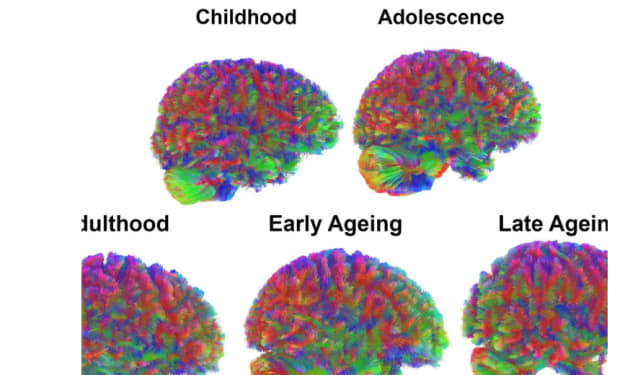
The "most crucial" ages for human brain growth, maturity, intelligence, and general ability are four.
From the time of our birth until the very end of our lives, our brains undergo gradual changes. These shifts influence how we learn, think, remember, and react to the world. They might be gradual at times or abrupt at others.
By Francis Dami2 days ago in Families
From ad men to mad men
It's after 2am in the morning when a local police patrol vehicle in Northern New Jersey spots a figure costumed as Quasimodo, The Hunchback of Notre Dame, proceeding southbound on the sidewalk along Lydecker Street. Though the hunchback’s costume stuffing offers added insulation, it's January, and friggin’ freezing. Carefully, the officers slow down, gently question the subject, and offer him a ride home.
By David W. Maury5 days ago in Humor


Comments
There are no comments for this story
Be the first to respond and start the conversation.