
A Festive Celebration of Harvest and Culture in Tamil Nadu
Overview of Pongal and its significance
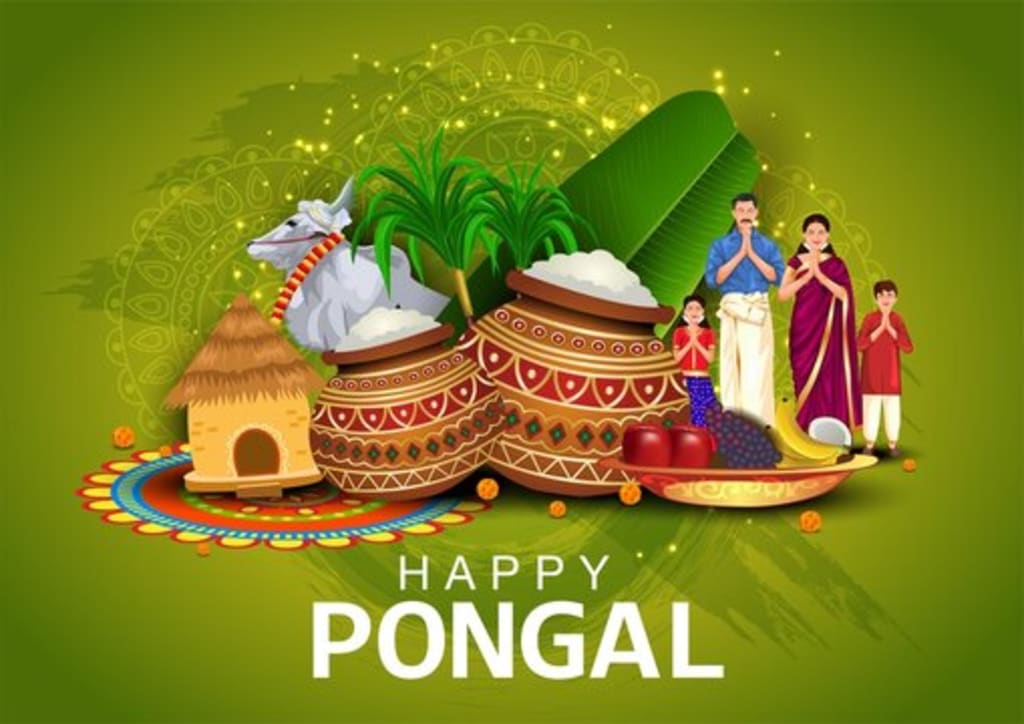
Introduction: A Look into the Joyful Festival of Pongal
Pongal, oh boy, what a celebration! This four-day harvest festival taking place in the South Indian state of Tamil Nadu during the Tamil month of Thai (January-February) is a time for families and communities to come together and give thanks for the bountiful harvest.
But it's not just about the delicious food and new clothes (although, let's be real, those are pretty great too). Pongal is also a time to honor the Hindu gods Lord Surya, Lord Ganesha, and Lord Krishna. Lord Surya, who is the god of the sun, is seen as the main source of energy for all living things on earth, and the festival is a way to show gratitude for his warmth and light.
It's a time to let go of the old and embrace the new, by cleaning and decorating homes and burning old possessions. It's a time to celebrate cows and bulls, which are considered sacred animals in Hinduism and participate in traditional bull-taming sports like Jallikattu. And it's a time for forgiveness and reunion with family and friends.
Pongal is a true reflection of the cultural and social values of the Tamil people, and it's no surprise that it's gaining popularity outside of Tamil Nadu and India. It's a celebration of the richness and diversity of Indian culture, and a festival that brings joy to all who celebrate it.
Day 1: Bhogi - A Fresh Start to the Festival
Bhogi, the first day of Pongal, is all about cleaning and letting go of the old to make way for the new. It's a day to tidy up and decorate homes, and to burn old possessions as a symbol of starting anew. It's a day to refresh and renew, both physically and mentally.
Day 2: Surya Pongal - Giving Thanks to the Sun God
Surya Pongal, the second day of the festival, is dedicated to the worship of Lord Surya, the god of the sun. This is the day where families come together to prepare the traditional sweet dish "Pongal", made of rice, lentils and jaggery, as an offering to Lord Surya. It's a day of gratitude, as we give thanks for the warmth and light provided by the sun, and the bountiful harvest it brings.
Day 3: Mattu Pongal - Honoring the Sacred Cows and Bulls
Mattu Pongal, the third day of the festival, is all about cows and bulls. These sacred animals are decorated and worshipped, and traditional bull-taming sports like Jallikattu are held. It's a day to honor the hardworking animals that have been an integral part of the farming community, and a day to embrace the cultural tradition.
Day 4: Kaanum Pongal - A Day of Reunion and Forgiveness
Kaanum Pongal, the final day of the festival, is a day for families and friends to come together, exchange sweets, savories and greetings, and to forgive and forget any past grudges. It's a day of unity, as we come together to celebrate the end of the festival and the new beginnings that it brings.
Conclusion: Pongal - A Festive Celebration of Unity and Diversity
Pongal is a festival that brings together the community and celebrates the unity and diversity of India. It's a time to give thanks for the bountiful harvest, honor the gods, embrace cultural tradition and to come together with loved ones. It's a time to let go of the old and embrace the new, and to renew our spirit. The festival has gained recognition and popularity beyond Tamil Nadu and India, showcasing the richness and diversity of Indian culture to the world. Pongal is a festival that brings joy, happiness and a sense of belonging to all who celebrate it.
About the Creator
Keep reading
More stories from manoj perumal and writers in Families and other communities.
Understanding Artificial Intelligence (AI)
Artificial Intelligence (AI) is a branch of computer science that aims to create machines and software that can perform tasks that would typically require human intelligence to accomplish. These tasks can include things such as understanding natural language, recognising images and speech, making decisions, and problem-solving. AI is a rapidly advancing field that uses techniques such as machine learning, deep learning, and neural networks to create systems that can learn, adapt, and improve over time. Some examples of AI include virtual personal assistants like Siri and Alexa, self-driving cars, and healthcare systems that can diagnose diseases. AI has the potential to revolutionize many industries, but it also raises important ethical questions about its impact on jobs, privacy, and security.
By manoj perumal3 years ago in Futurism
Wise~Guys
— Look Behind what's in Front of You ~ Make Good Choices — Hey, So how you Doin'..! Made~Men — Mobster Movies romanticise a distinctive, elegant appearance, impeccable attire style, along with the 'Families' expressive lingo. Making their 'Bones' gave them Panache — with vintage fedoras, tailored pin-striped suits, mirror-polished wing-tip shoes adorned with tassels; with their 'Gun Moll' gorgeous dates on their arms.
By Jay Kantor19 days ago in Families




Comments
There are no comments for this story
Be the first to respond and start the conversation.