
Your Guide to Medical Imaging
What to Expect and Why It Matters
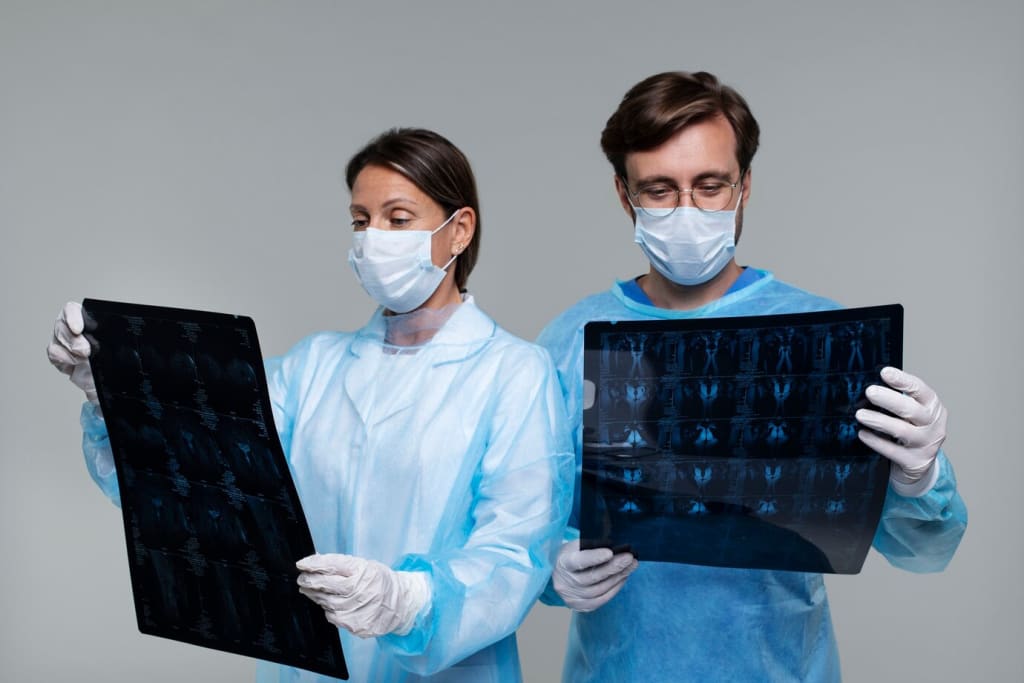
When a doctor recommends a scan or imaging test, it’s normal to feel unsure or even a little anxious. Should you be concerned? Is one type of scan better than another? What’s the difference between an X-ray, an MRI, a CT scan, and an ultrasound?
At NDC Diagnostic Centre, we hear these questions often, and the good news is, once you understand the basics, it all starts to make sense.
Let’s walk through the most common types of medical imaging, how they work, and why your doctor might suggest one over the other.
What Is an X-Ray?
X-rays are one of the oldest and most commonly used imaging tools in medicine. They work by passing a small amount of radiation through the body to create an image of your internal structures.
Common Uses for X-Rays:
• Detecting bone fractures or breaks
• Identifying chest infections like pneumonia
• Examining joints and the spine
• Dental imaging
• Spotting tumors or abnormal growths
X-rays are especially effective for viewing dense materials like bone. So if you injure your arm or leg, an X-ray is usually the first scan you’ll receive.
Pros:
• Quick and painless
• Affordable
• Widely available
Things to Keep in Mind:
• Involves a small dose of radiation
• Less effective for viewing soft tissues
At NDC Diagnostic Centre, we use advanced digital X-ray machines that reduce radiation exposure and produce clearer images more quickly.
What Is a CT Scan?
A CT scan (short for Computed Tomography) is like a more detailed, 3D version of an X-ray. It takes multiple X-ray images from various angles and combines them into a cross-sectional view of your body.
CT Scans Are Commonly Used For:
• Detecting internal bleeding
• Diagnosing complex fractures
• Identifying tumors
• Evaluating potential cancers
• Investigating head trauma
CT scans offer detailed views of both bones and soft tissues, giving doctors a comprehensive picture of what's going on inside.
Pros:
• Highly detailed images
• Can assess different types of tissues at once
Things to Keep in Mind:
• Uses more radiation than an X-ray
• Slightly higher cost
What Is an MRI?
MRI stands for Magnetic Resonance Imaging. Unlike X-rays or CT scans, MRIs don’t use any radiation. Instead, they rely on powerful magnets and radio waves to create very detailed images of internal organs and tissues.
MRIs Are Ideal For:
• Brain and spinal cord imaging
• Viewing muscles, tendons, and ligaments
• Detecting nerve damage
• Diagnosing and monitoring tumors
If your doctor needs a closer look at soft tissues or the nervous system, an MRI is often the best option.
Pros:
• No exposure to radiation
• Exceptional detail, especially for soft tissues
Things to Keep in Mind:
• The scan takes longer
• You’ll need to remain still during the procedure
• Not suitable if you have certain metal implants (e.g., pacemakers)
What Is an Ultrasound?
Ultrasound uses high-frequency sound waves to create real-time images of your body. It’s most well-known for monitoring pregnancies, but it’s also useful in many other areas.
Common Uses for Ultrasound:
• Monitoring fetal development during pregnancy
• Checking organs like the liver, kidneys, and gallbladder
• Assisting in guided procedures like biopsies
• Evaluating blood flow through veins and arteries
Ultrasound is completely safe and radiation-free, making it ideal for people of all ages.
Pros:
• Safe for everyone, including unborn babies
• Live, real-time imaging
• No radiation involved
Things to Keep in Mind:
• Not as detailed as MRI or CT
• Not effective for imaging air-filled areas like the lungs
Why Choose NDC Diagnostic Centre?
At NDC Diagnostic Centre, we offer a comprehensive range of imaging services including digital X-rays, ultrasounds, CT scans, and MRIs all in one convenient location. Our experienced team is committed to providing fast, accurate results in a comfortable, stress-free environment.
Whether you're visiting for a routine check-up or following up on a doctor’s referral, we’re here to support you every step of the way with clarity, compassion, and care.
About the Creator
Keep reading
More stories from singhaiudhyog and writers in Education and other communities.
Common Myths About Hair Transplants
Losing hair is more than just a cosmetic issue; it can quietly chip away at your confidence. And while hair transplants have become a proven solution for hair restoration, there’s still a cloud of confusion surrounding them.
By singhaiudhyog10 months ago in Education
Winning the Deal: Sports-Inspired Strategies That Can Transform Lending Negotiations
Strategy is a powerful element in both sports and business. Baseball and football, two of the most strategy-driven sports in the world, demonstrate how preparation, teamwork, and smart decision-making can determine the outcome of a competition. Coaches carefully analyze opponents, players study patterns, and teams constantly adjust their tactics during a game. These same principles can be applied to financial negotiations, particularly in the lending industry.
By James Cretellaabout 23 hours ago in Education
Education Reform for the 21st Century
Friends, have you ever watched a bright teenager like Priya in Mumbai sit through another day of rote memorization, her eyes dimming as high-stakes exams sucked the joy out of learning? She once told me she loved science but felt trapped in a system built for another century. That moment hit me hard because Priya’s story echoes across continents. In our world of rapid AI growth, climate crises, and shifting job markets, education must evolve from industrial-era factories into vibrant spaces of discovery. Research from UNESCO, OECD’s PISA, and the World Economic Forum shows the gap is widening, yet reform offers real hope. Together, we can build systems that prepare every child for the skills of the 21st century.
By Arjun. S. Gaikwad4 days ago in Education




Comments
There are no comments for this story
Be the first to respond and start the conversation.