
You Uploaded Your Data to an AI Tool — Now It’s Not Yours Anymore
What you upload to AI tools may no longer belong to you—here’s how your data is being harvested, reused, and exposed to the dark web without your knowledge.
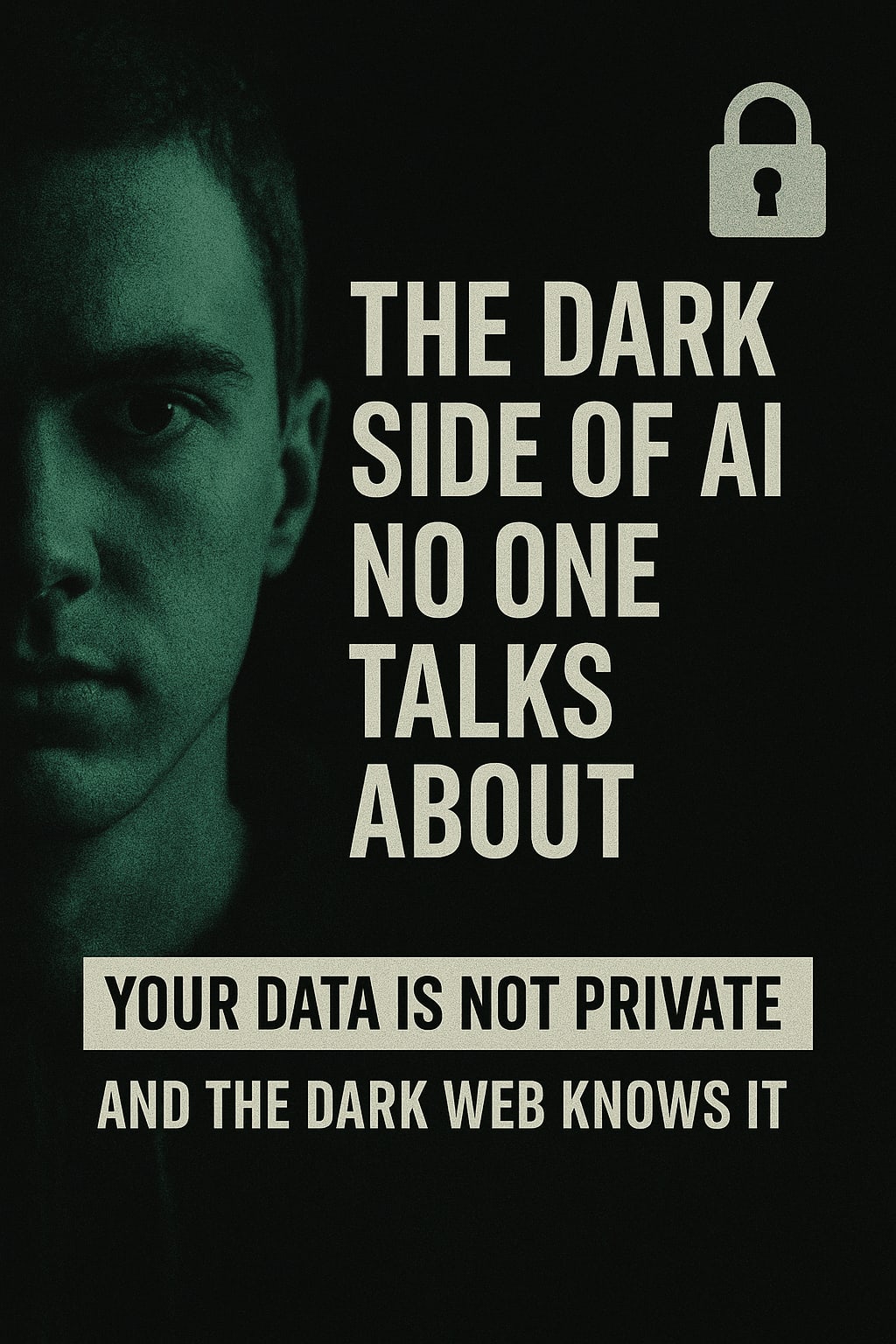
What if I told you that the files, texts, and voice recordings you’re casually uploading to AI tools like ChatGPT, MidJourney, or Replika… don’t fully belong to you anymore?
While Gen Z and Millennials embrace AI for everything from content creation to therapy, very few understand what really happens to their data. Beneath the polished UI and productivity gains lies a digital trap door that’s quietly opening — one that leads directly to data exploitation, privacy breaches, and even the dark web.
The Illusion of Privacy in AI Tools
Every time you upload a photo, type a prompt, or record your voice into an AI system, you’re training their model. That’s not a conspiracy theory — it’s written right into the Terms of Service, usually buried deep in the legal jargon.
What You’re Actually Agreeing To
“You grant us a non-exclusive, worldwide, royalty-free license to use, store, reproduce, and modify the content you provide for the purpose of improving our services.”
Sound familiar? Most AI platforms — yes, even your favorite ones — reserve the right to use your data however they see fit.
When You Use AI, You Become the Product
Big Tech companies aren’t giving away AI tools for free out of kindness. They’re harvesting massive datasets to:
Train future AI models
Sell insights to advertisers
Fine-tune algorithms for enterprise clients
In some cases, share datasets with government agencies
Your face, voice, and words can be monetized repeatedly — without further consent.
Leaked Data and the Shadow Market: A Real Threat
The Dark Web is thriving on what you upload to AI tools. In 2023 alone:
A leaked ChatGPT history exposed private business plans, emails, and medical data
Voice cloning tools were linked to scam calls impersonating real people
Artists discovered their artwork, fed into AI tools without permission, was being sold as NFTs by anonymous accounts
Your prompts aren’t disappearing into a black box. They’re stored, scraped, and sometimes even sold.
Case Study: The MidJourney Loophole
MidJourney, a popular AI art generator, allows users to create images based on text prompts. But once the image is generated, anyone can download and reuse it — even commercially.
Many Gen Z designers thought they were building private portfolios — until they found their AI-generated concepts being sold on T-shirts they never approved.
Worse, the prompts they used (which might have included personal references) were scraped by bots and replicated endlessly across AI image libraries.
Can the Government See My Data? Yes — Sometimes Instantly
AI companies, especially those based in the U.S., often comply with data requests from law enforcement. Under laws like the Patriot Act and CLOUD Act, authorities can access:
Chat logs
Uploaded documents
Interaction history
Audio or video clips
If flagged for suspicion (even wrongly), your data may be reviewed by both AI moderators and human analysts.
Gen Z: Digital Natives, Digital Targets
While Gen Z leads in AI adoption, they also face the highest risk of long-term consequences.
Top Data Risks for Gen Z Using AI:
Action: Uploading selfies to AI art filters
Risk: Facial recognition data stored & reused
Action: Using ChatGPT for journaling or mental health venting
Risk: Emotional data used to train empathy bots
Action: Feeding resumes into job-scoring AI tools
Risk: Personal info harvested, reused, even sold
Action: Voice samples for AI voiceovers
Risk: Can be cloned & used in phone scams
From AI Tools to the Dark Web: How the Pipeline Works
Data is uploaded — Text, voice, photo, or video
Stored by the platform — Often permanently unless you request deletion
Used for training — Your data shapes future versions of the AI
Breaches or scraping — Weak points exploited by hackers
Sold or leaked — Now your voice is a deepfake, or your image is an AI model in a dating app you never joined
This invisible chain reaction has real-world consequences — from identity theft to losing job opportunities based on AI-judged online behavior.
The “Dark Web AI Datasets” Are Real
Cybersecurity experts confirm a disturbing trend: entire datasets of AI input/output logs are surfacing on dark web forums.
These include:
Corporate secrets typed into ChatGPT
Teenagers’ conversations with AI bots
Voice data from fake “make me sing like Ariana” apps
Intimate photos fed into AI stylizers
Hackers aren’t just after passwords anymore — they want your digital self.
How to Protect Yourself While Still Using AI
You don’t have to abandon the tools — but you do need to be intentional and guarded.
✅ Do’s:
Read the Terms of Service
Use AI tools in incognito/private browsing modes
Avoid entering real names, addresses, or account info
Use temp emails when signing up
Request data deletion where allowed (like OpenAI’s form)
❌ Don’ts:
Don’t treat AI tools like private diaries
Don’t assume your chats are confidential
Don’t reuse AI-generated content without checking copyright implications
We Asked the AI: “Do You Own My Data?” Here’s What It Said
When we asked ChatGPT if it owns the data we provide, it said:
“As an AI developed by OpenAI, I do not have ownership or memory of individual user data after a session ends. However, your data may be used to improve model performance.”
Translation: It doesn’t remember you, but someone else probably does — and they’re profiting from it.
Final Word: You’re Feeding the Beast
Using AI tools is like tossing a coin into a well you can’t see the bottom of. Your data doesn’t just disappear — it becomes part of something bigger, and not always for your benefit.
As Gen Z and Millennials continue to build the future of work, creativity, and communication with AI, they must also ask:
At what cost are we trading privacy for convenience?
About the Creator
Keep reading
More stories from Ridhima Gandhi and writers in Education and other communities.
Latest and Most Useful Tools in 2025: Easy Guide to AI, Productivity, and Creativity
In 2025, technology is changing the way we live and work faster than ever. There are many amazing tools powered by artificial intelligence (AI) that help us write, create art, manage tasks, work together, and even code — all in simpler, smarter ways. Whether you’re a student, a business owner, or just someone curious about tech, this guide will explain the best tools you can use today — in simple, easy-to-understand language.
By Ridhima Gandhi6 months ago in Education
What causes cavities
When a team of archaeologists recently came across some 15,000-year-old human remains, they made an interesting discovery. The teeth of those ancient humans were riddled with holes. Their cavities were caused by the same thing that still plagues us today: specific tiny microbes that live in our mouths.
By Munesh Yadav3 days ago in Education
How Business Coaching Helps Founders Scale With Clarity and Control
Business coaching assists founders to scale since hustle and reactivity are substituted with structure, systems and strategic leadership. Strategic coaching provides clarity in the marketing, operations, leadership, and decision-making roles of the business, eliminating the need to use the owner as the bottleneck, instead enabling the business to expand without havoc, burnout, or firefighting.
By Alice Adams7 days ago in Education



Comments
There are no comments for this story
Be the first to respond and start the conversation.