
1. How will be the worldwide trend for population growth of industrialized countries of the world in the future? The population is declining.
2. What will be the future population growth trends for developing countries in the future? These developing countries will have population growth
1. What will be the worldwide trend for population growth of industrialized countries of the world in the future? The population is declining.
2. What will be the future population growth trends for developing countries in the future? These developing countries will have population growth
3. What are some of the societal/cultural reasons why Indian families often desire multiple male offspring? How do you think these influences population growth rate trends in India?
The males in the family will be the “head” of the family because there seem to have more value so the population will go up since there more desirable
4. Describe India’s age structure.
The age demographic is 50% under the age of 25 and the other 50% is over 60
5. How have educational and vocational programs for Indian women influenced birth rate and infant mortality?
They were taught to have kids (boys) so this influenced them to increase there birth rate.
6. How have India’s population growth trends influenced access water and food production?
These factors didn’t have much impact because there population didn’t increase population growth since these resources were limited if anything this would result in decrease.
7. Why is the “2 child rule” so important in terms of global population and its impacts? There trying to lower the population
8. Describe some of the population growth characteristics of Japan. There’s a decline since people are reducing the amount of kids they have
9. What is a “parasite single”?
Young adults who live with there parents and have other aspirations instead of getting married and having kids.
10. How do you think the increase of education and employment opportunities for women have influenced reproductive patterns in Japan? This change there dynamics and they focus more on work and pursuing more things than just giving birth.
11. How has the relative proportion of older Japanese changed over the last 20 years? What implications might that have for elderly people in Japan? During the time only one source of income was needed but that’s not the case anymore.
12. Describe the immigration and employment trends for the U.S and Japan. The US allowed immigrants which increase the trend in population and the Japan restricted so they didn’t receive external population growth.
13. Describe the birth rate of sub-Saharan Africa, and some of its implications. They have a high birth rate because the average family is size is 6 children.
14. Describe how death rates and life expectancy has changed in Kenya over the last decade in particular. There are trying to limit the birth rate because the death rate is decreasing and the birth rate is increasing
15. How does the use of birth control compare in the developed vs. developing countries? How would this affect HIV transmission? birth control in developed countries has a lowered percentage of HIV positive compared to than developing countries.
16. What is the concept of demographic transition? The demographic starts to change where the “kids” are larger in numbers compared to the adults and senior citizens.
17. Given that we live in an affluent country, do you think we have an ethical responsibility to help fund programs that will stabilize population growth in developing countries, and encourage sustainability of species and resources globally? Why or why not?
I say we do because no country is truly independent we all get some type of help from other countries so we should allow some type of help.
About the Creator
Keep reading
More stories from Tayveon White and writers in Education and other communities.
The Lesson of the Kaibab
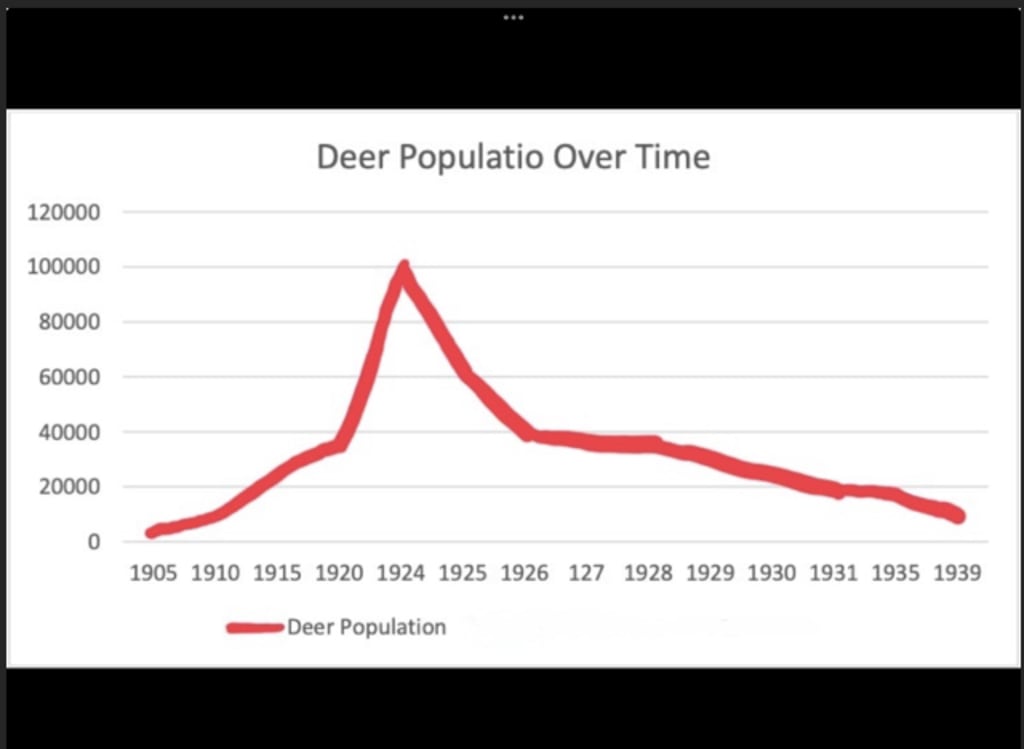
The Lesson of the Kaibab Introduction: The environment may be altered by forces within the biotic community, as well as by relationships between organisms and the physical environment. The carrying capacity of an ecosystem is the maximum number of organisms that an area can support on a sustained basis. The density of a population may produce such profound changes in the environment that the environment becomes unsuitable for the survival of that species. For instance, overgrazing of land may make the land unable to support the grazing of animals that lived there.
By Tayveon White2 years ago in Education
The Great Library of Imagination*:
The Great Library of Imagination In the heart of the city, where the streets were lined with ancient trees and the buildings whispered secrets to each other, there was a small, unassuming door tucked away in a narrow alley. The door was old and worn, with intricate carvings of fantastical creatures and symbols that seemed to shift and shimmer in the flickering light of the street lamps. Few people noticed the door, and even fewer knew what lay beyond it.
By Talhamuhammad6 days ago in Education
Building Success from the Ground Up: Foundations for Personal and Professional Growth
Personal and professional success begins with a strong foundation. It is more than achieving goals or earning recognition; it is the result of deliberate choices, consistent habits, and an understanding of what truly drives you. Without a solid base, even significant accomplishments may feel unsatisfying or fleeting. By focusing on the principles that sustain growth and resilience, individuals can create a life and career that are meaningful, productive, and aligned with their values.
By Philip Raymond Baquie6 days ago in Education


Comments
There are no comments for this story
Be the first to respond and start the conversation.