
With No Strange Tactics, You Can Delay Aging
Study Literature
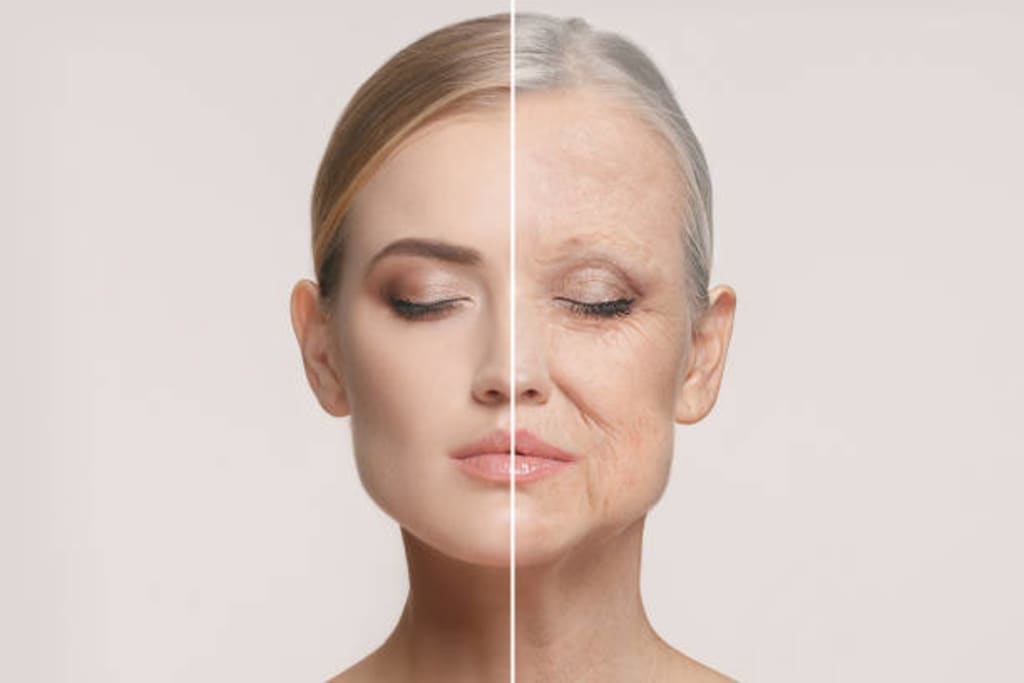
The question of why we age, whether you can stop getting older, or whether you can become immortal has been a subject of discussion for centuries. Many people, in my opinion, are unaware of our actual level of control over the aging process. Most people define age and aging in terms of chronological time. So, each of us is aware of the number of years that have passed since our birth, and we typically gauge our aging in terms of months, days, and years. A magic number is almost given to it. In other words, you're considered old when you're 65 or when you can see it in the mirror. We place a great deal of importance and emphasis on this metric, but it isn't the most important one.
Scientists believe that aging begins even before birth and is a continuous process that lasts our entire lives. People most frequently associate graying hair, changes in body composition, and changes in skin tone with aging. Our functional abilities, such as our ability to walk, balance, vision, and hearing, change. alterations in our risk of contracting various diseases. However, aging doesn't actually begin with these symptoms. These are what we would refer to as the emergence or the manifestations of aging. We firmly believe that aging begins at the molecular and cellular level, and that once it crosses a certain threshold, we will actually begin to notice it when we look in the mirror on a daily basis.
Therefore, the first thing someone would say when I asked them their age would be how many candles they had blown out on their most recent birthday. The number can be found on a person's passport or driver's license. In essence, this represents our chronological age. It's simply how long you have been alive in terms of time. Except for the fact that it is associated with the idea of biological aging, this number doesn't really mean much. Therefore, unlike chronological age, biological age is a factor that we are interested in. The degree to which your biology has changed over time is what scientists refer to as your biological age, and we believe that these changes will be unsuitable. More dysfunction, more aging, and ultimately more disease are going to result from them. Additionally, we can actually see these changes on our faces in the form of skin wrinkling and graying hair.
However, aging begins at the molecular level, and as a result, all the functional changes and manifestations that we typically associate with aging will eventually result. The decline in specific organ systems' functionality is actually a major cause of many aging-related diseases. Therefore, a condition like diabetes can be conceptualized as a decline in our metabolic system. Degeneration and dysfunction of our central nervous system are things like Alzheimer's disease. We can also think of sarcopenia, another aging-related disease, as a decline in our musculoskeletal systems because it causes the muscle wasting we observe as we age. Since the 1980s, there has been a suggestion that we attempt to quantify this idea of biological age. Alex Comfort was thus the first to suggest that there might be a concept of biological age that could be measured.
However, it was probably not until around 2010 or 2012 that people started putting forward algorithms that we could demonstrate and validate were respectable, if not entirely accurate, measures of this concept of biological aging. As opposed to, it will advance in a monotone manner. We believe that biological age is malleable. We are aware that aging can be delayed. This is evident when comparing various species. Different species experience extinction at different rates. Some of them actually carry out this process at such a slow rate—what we refer to as "negligible senescence"—that we are unable to detect aging in those systems. Therefore, we typically examine their "survival curve" to determine how quickly various organisms are aging. "Do you think that a population's mortality risk increases with time?".
And we consider that to be the general rate of actual species aging of that kind. Additionally, we can observe this in people. It is obvious that not everyone who has lived 50 years has experienced the same level of decline in their health and functioning. Tracking one's phenotypic age is a great way for individuals to actually use this science, which is really where the question of whether or not we can measure biological age arises. We first proposed the concept of phenotypic age in 2018. Your overall phenotype, or the rate of physiological aging, was what this was really intended to capture. We actually made an effort to use very standard laboratory or clinical chemistry tests. These are the things that would be measured when you visit your doctor for your annual checkup.
Various organs, such as our liver and kidney, function differently. They record lipid levels, metabolic health, and to some extent, our immune and inflammatory profiles. And we believe that this age-related measure is crucial because it accurately depicts the physiological changes that we believe come before dysfunction. that disease is the source of. The majority of people are predicted to be the same biological or phenotypic age as they are chronologically, according to a normal distribution if you were to look at a population. However, we also recognize that there is a range on either side. For instance, when we examine the average population of the United States, we find that the standard deviation is roughly five years.
Although extreme outliers, or people who appear 10 or even 20 years older or younger than expected for their chronological age, do exist, the majority of people fall within that range of plus or minus five years of their chronological age. You most likely qualify for a free phenotypic age test if you have already seen your doctor and had your annual blood test. Online calculators exist that provide a list of the nine biomarkers required to determine your phenotypic age. These can be accessed for free online. The algorithm will then generate a phenotypic age measure for you; all you would need to do is locate your most recent lab test, input the values, and run the program.
In light of this, many people may be saying to themselves, "I don't want to know what my biological age is. I'm worried that the result will be higher. Before I properly track it, I need a month of being at my best. However, it's crucial to keep in mind that this figure is not fixed. Our genes do not control it, and there are a lot of things you can do to truly influence it. Therefore, it is more crucial to really possess that knowledge and put it to use in an effort to better your life as a whole. Can aging thus be stopped?
The best way for us to slow down the aging process right now is through lifestyle choices, at least until science develops drugs or treatments that specifically target aging. Systems that are alive can adapt. We acclimate to our surroundings. We adjust to the circumstances we encounter. Therefore, you can actually increase traits like resilience through various lifestyle choices. Physical exercise, for example, can strengthen our resilience and act as a protective barrier against future stressors. We can become more resilient by changing our diets. The Phenotypic age of a person is greatly influenced by factors such as obesity, diet, smoking, and alcohol consumption. These things are also not brand-new. These are things that our mothers or grandmothers, to name a few, have told us about. It shouldn't come as a surprise to anyone, but I believe that many people are unaware of how much these factors affect both how quickly they age and how likely they are to contract various age-related diseases.
The biggest risk factor for the majority of diseases that people are concerned about is aging. And researchers believe that rather than attempting to treat each of those illnesses separately, if we could actually slow down the aging process and the decline of our various organ and physiological systems, we might be able to prevent or at least lessen the severity of many of these illnesses. Therefore, it's not just about extending people's lives; it's also about keeping them as active and healthy as they can be. In the end, it's crucial for people to understand how much control they actually have over how quickly they age and how likely they are to contract a disease. Our genes do not predetermine our risk of disease. Yes, we will all likely age, and we won't really be able to stop it. However, how quickly that occurs and how long you can maintain health and optimal functioning really depend on a lot of the things you do on a daily basis.
About the Creator
KeepMakingProgress
"Keep Making Progress" is a call to action, a reminder that growth is a lifelong journey with no fixed destination. It encourages us to embrace change, overcome obstacles, foster innovation, and contribute to the society.
Keep reading
More stories from KeepMakingProgress and writers in Education and other communities.
A Few Behaviors That IMPACT Your Sleep
It's not always easy to sleep. Your ability to sleep well and for long periods of time is influenced by several things. While others make it worse, certain things help you sleep better. Simply changing a few of your routines might be the difference between a restful night's sleep and one spent tossing and turning. Since these behaviors are causing your sleep to be ruined, I'll explain them in this video. Even while certain behaviors are worse than others, getting a decent night's sleep is nearly always possible if you can avoid all of them. Your knowledge and comprehension of both are crucial. So let's investigate some practices that may be preventing you from getting enough sleep.
By KeepMakingProgress3 years ago in Education
Unlock Pinpoint Precision: How to Improve Golf Accuracy and Control With Expert Techniques
Golf is a game of small margins. A shot that veers just a few yards off course can cost you a stroke or even more. While power may seem impressive, accuracy and control are what truly separate average players from skilled ones. These qualities help you land the ball where you want it, avoid hazards, and play with more confidence.
By Daniel Ladner3 days ago in Education
Rachel Reviews: The Spiral Archive by Pieter Hendrik
It's difficult for me to know where to start with a review of this book as it was, for me, an entirely unique experience and one that I'll probably never have again. I don't want that to be interpreted as unenjoyable but it has left me scratching my head a little and ruminating on its content, its themes and its characters.
By Rachel Deeming7 days ago in BookClub


Comments