
Will the Universe Expand Forever or Recollapse?
The fate of the universe is one of the most intriguing questions in cosmology. Since the dawn of modern astronomy, scientists have sought to understand whether our universe will continue to expand forever or eventually recollapse. Let’s explore the evidence and theories surrounding this cosmic mystery.

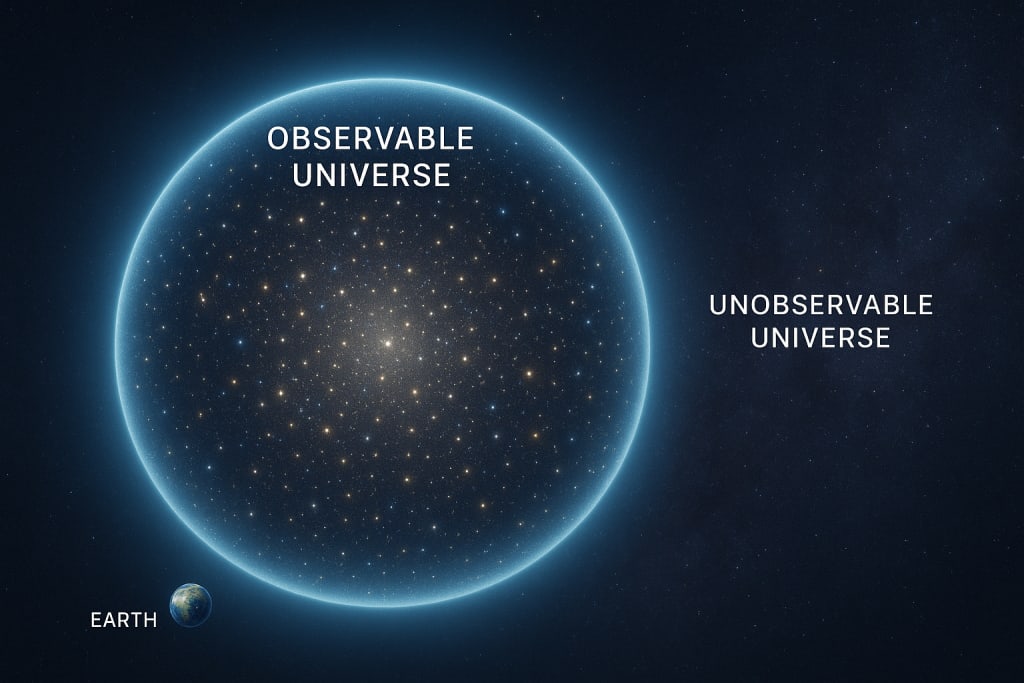
The Expanding Universe
In the early 20th century, astronomers discovered that the universe is expanding. Edwin Hubble, in the 1920s, observed that galaxies are moving away from us, and the farther a galaxy is, the faster it appears to be receding. This phenomenon is known as Hubble's Law. This discovery led to the idea that the universe began as a small, hot, and dense point—a theory called the Big Bang.
As the universe expands, it cools down, and structures like galaxies and stars form. This expansion has been happening for about 13.8 billion years, and it raises the question of how long it will continue.
The Forces at Play
The ultimate fate of the universe depends on several factors, primarily the density of matter and energy within it. Two main forces govern the expansion of the universe:
1. Gravity: This force pulls matter together. If there is enough matter in the universe, gravity could slow down the expansion and eventually reverse it, causing the universe to collapse.
2. Dark Energy: This mysterious force is believed to be driving the acceleration of the universe's expansion. Discovered in the late 1990s, dark energy makes up about 68% of the universe and appears to push galaxies apart, overcoming the pull of gravity.
Possible Scenarios for the Future
Based on the balance of these forces, scientists propose several scenarios for the future of the universe:
1. Infinite Expansion
In this scenario, the universe continues to expand forever. If the density of matter in the universe is low, the gravitational pull will not be strong enough to counteract dark energy. As a result, galaxies will drift further apart, and stars will burn out over trillions of years. This scenario is often referred to as the "Big Freeze."
In the Big Freeze, the universe becomes increasingly cold and dark as galaxies recede beyond our observational reach. Eventually, the universe will consist of isolated stars and black holes, and over an incredibly long time, even black holes will evaporate due to a process called Hawking radiation. The universe will grow increasingly desolate, leading to a state known as "heat death," where no usable energy exists.
2. The Big Crunch
The Big Crunch is another possible fate of the universe. In this scenario, the gravitational pull of matter eventually overcomes the repulsive effect of dark energy. As the expansion slows down, the universe would stop expanding and begin to contract. This contraction could lead all matter to collapse back into a hot, dense state, similar to the conditions of the Big Bang.
If the universe undergoes a Big Crunch, it would end in a cataclysmic event. The universe would heat up again, and all structures would be crushed into a singularity. However, current observations suggest that the density of the universe is not sufficient to trigger this scenario.
3. The Big Rip
A more speculative scenario is known as the Big Rip. In this scenario, dark energy's repulsive force becomes increasingly powerful over time. If the density of dark energy rises, it could eventually tear apart galaxies, stars, and even atoms. The universe would expand so rapidly that all structures would disintegrate into nothingness.
The Big Rip would result in a dramatic end to the universe, but current evidence does not strongly support this scenario. Nevertheless, it illustrates the uncertainty surrounding the nature of dark energy.
4. The Cyclic Model
The cyclic model presents an interesting alternative to linear expansion or collapse. In this theory, the universe goes through endless cycles of expansion and contraction. After a Big Crunch, a new Big Bang would occur, leading to a new expansion phase. This model suggests that the universe is eternal, existing in an infinite series of births and deaths.
While the cyclic model is intriguing, it remains a topic of debate among scientists. There is currently no direct evidence to support this theory, and understanding the mechanisms behind such cycles poses significant challenges.
Current Observations and Evidence To determine which scenario is most likely, scientists rely on observations and measurements of the universe's expansion rate and density. One critical tool is the measurement of the cosmic microwave background radiation, the afterglow of the Big Bang. This radiation provides a snapshot of the early universe and helps cosmologists estimate its composition.
Recent measurements suggest that the universe's density is very close to a critical value. This means that the universe is flat, balancing between expanding forever and recollapsing.
Observations of distant supernovae have confirmed that the universe's expansion is accelerating, indicating that dark energy plays a significant role.
Conclusion
The fate of the universe—whether it will expand forever, recollapse, or end in some other manner—remains one of the biggest questions in cosmology. Current evidence leans toward a scenario where the universe continues to expand, possibly leading to a Big Freeze.
However, the complexities of dark energy and the fundamental nature of the universe leave room for uncertainty. As scientists gather more data and develop better models, our understanding of the universe's future will continue to evolve.
Regardless of the outcome, contemplating the fate of the universe invites us to appreciate our place in the cosmos and the grand story of existence itself. The universe is a dynamic, ever changing entity, and its ultimate fate is a reminder of the wonders and mysteries that science continues to unravel.
About the Creator
Keep reading
More stories from shahkar jalal and writers in Education and other communities.
Which Came First in the Formation of the Universe: Stars or Galaxies?
The Early Universe: Conditions for Formation To understand whether stars or galaxies came first, we need to start with the conditions of the early universe. Following the Big Bang, the universe was a hot, dense state composed mostly of hydrogen and helium. As it expanded and cooled, matter began to clump together due to gravitational attraction, leading to the formation of the first structures.
By shahkar jalal2 months ago in Education
Banal Globalism vs. Electronic Nationalism, National Culture and Internet
Abstract Following the introduction of the term "banal nationalism" by Michael Billig in 1995, scholars began to speak of other banal ideologies such as globalism, Americanism, and Europeanism. These formations operate on a symbolic level within the mass media and articulate a performative ideal and a superficial sense of identity within certain groups. Banal nationalism functions as a form of soft propaganda, censoring inconvenient truths about a nation’s past by repeatedly circulating the same national myths through national mass media. With the development of Internet-based media, this system has been disrupted: the full range of facts concerning a nation’s shared history has become accessible, and many of these myths have been challenged or dismantled. The ideology of globalism has gradually taken the place of nationalism, generating discourses on the decline of the nation-state and the emergence of a new global order. Yet this shift, together with the imposition of banal globalism in official mass media, has produced the opposite effect within online platforms and social networks, contributing to the revival of nationalism in a new electronic form. This article examines the role of Internet media and social networks in sustaining national systems and in facilitating the rise of electronic nationalism as a contemporary mode of constructing and maintaining national identity.
By Peter Ayolov7 days ago in Education
Day 4 of Quitting
If this is how sobriety feels, maybe it’s better to go through life a little buzzed… this, along with other hits like, I want to kill myself, I wish I was dead, and I’m going to throw myself off a bridge have been the only thoughts on rotation these past few days. I promise myself that if, in a month, I still feel like this (‘this’ meaning despondent, full of rage, and simultaneously numb) I can go back to smoking. Until mid-February though? Nicotine is off the table.
By sleepy drafts7 days ago in Longevity


Comments
There are no comments for this story
Be the first to respond and start the conversation.