
Why You Should Embrace Being a Beginner
How Embracing the Unknown Fuels Growth and Joy
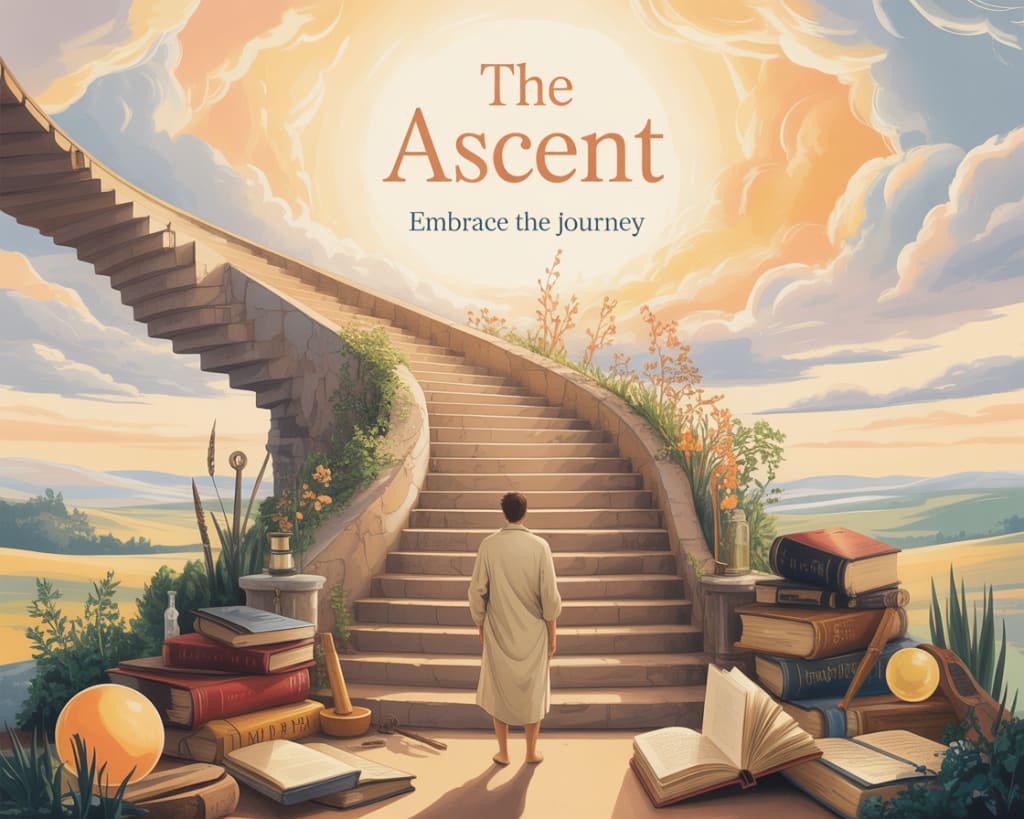
I remember the first time I picked up a paintbrush. I was twenty-seven, sitting on the floor of a small studio apartment that smelled faintly of coffee, dust, and pine-scented candles. A blank canvas stared at me like a challenge, whispering all the things I didn’t know. My fingers trembled slightly—not from fear, exactly, but from that sharp awareness that comes when you know you're about to enter a world completely unfamiliar to you.
I had no formal training, no grand plan. Just a brush, a cheap set of acrylics, and the stubborn desire to try something new.
The first stroke was terrible. Crooked. Hesitant. My hand didn’t know how to move. My eyes didn’t know what to look for. Colors turned muddy, shapes collapsed into one another, and perspective? Nonexistent. By all technical standards, it was a disaster.
But I was grinning.
Something about that mess of paint unlocked a joy I hadn’t felt in years. It wasn’t the product—it was the process. Every awkward line, every blotch of accidental color, every time I reached for the wrong brush—I loved it. Not because I was good at it, but because I wasn’t.
That’s the thing no one tells you about being a beginner: it’s not just about learning; it’s about discovering parts of yourself you’ve never met before.
We live in a culture obsessed with expertise. From an early age, we’re taught that success is knowing what you’re doing and doing it well. But what if the real magic happens before all of that?
What if the most vibrant part of life exists right there in the uncertain, unpolished, unmastered beginning?
I began painting every evening after work. Not to become an artist, not to sell prints or gain followers online—but because I craved the freedom of not knowing. I loved watching colors swirl together in surprising ways. I loved failing, fixing, and sometimes just laughing at how bad things turned out.
Slowly, without realizing it, I started changing outside of the canvas too.
At work, I became more willing to ask questions without shame. In conversations, I listened more carefully, not pretending to know what I didn’t. I stopped trying to be an expert in everything—and in doing so, became more curious, more open.
There was a time when I would’ve seen not knowing as weakness. Now, I see it as a doorway.
One day, a friend invited me to join her for a beginner’s rock-climbing session. I almost said no. I was in decent shape, but I’d never climbed a wall in my life. The old voice in my head started its familiar chant: You’ll be bad at it. You’ll embarrass yourself. People will laugh.
But the newer voice, the one that had grown stronger since that first brushstroke, whispered something else: And what if they don’t? What if you love it?
So I went.
I was terrible.
I slipped, I panicked, I bruised my shin and dropped my chalk bag from the top of the wall. But I laughed harder than I had in months. I cheered for strangers. I celebrated when I reached halfway up the beginner route, arms shaking and heart racing.
And afterward, I felt proud—not because I had succeeded, but because I had tried. That’s a kind of success in itself.
Since then, I’ve embraced being a beginner in all kinds of things—gardening, learning Spanish, taking dance classes where I tripped over my own feet. With every new attempt, I’ve built a deeper relationship with myself. I’ve discovered that growth isn’t linear, and mastery isn’t the only goal worth chasing.
Somewhere along the way, I stopped measuring myself by how well I did things. I started measuring by how bravely I showed up.
The irony is, once you stop being afraid of being a beginner, you learn faster. You fail better. You enjoy more.
And when you do improve—and you will—it feels even sweeter, because you remember where you started: knee-deep in confusion, self-doubt, and messy first tries.
So now, whenever someone says, “I’d love to try, but I’d be terrible at it,” I smile.
Of course you’ll be terrible. We all are, at first.
But you’ll also be alive in a way you haven’t been in a long time.
There’s beauty in the blank canvas, in the first climb, the first dance, the first stumbling sentence in a new language. There’s beauty in saying, “I don’t know how to do this—but I’m going to try anyway.”
And maybe, just maybe, the most beautiful part of being human isn’t mastery.
It’s becoming.
About the Creator
Keep reading
More stories from Ikram Ullah and writers in Education and other communities.
Time Management Tips for Busy People
In a world that's always moving faster, time often feels like it's slipping through our fingers. Deadlines loom, calendars overflow, and the to-do list grows no matter how hard we work. For busy people — entrepreneurs, students, working parents, and ambitious professionals — mastering time management isn't just a skill. It’s a necessity.
By Ikram Ullah10 months ago in Education
The Quiet Between Us
The first time Maya noticed him, he was laughing. Not the loud, attention-grabbing kind. Not the forced kind people use when they know they’re being watched. It was the kind that escaped before he could stop it — head tilted back slightly, hand covering his mouth like he didn’t mean to be that happy.
By Haidar ghafoori 6 days ago in Education
Modern-Day Monarchs: The Rise of Self-Sustaining Billionaire Compounds
Across the globe, a new form of elite living is taking shape. Billionaires are building expansive, self-sustaining compounds that resemble modern kingdoms. These estates are not simple homes. They are carefully planned domains designed to operate independently from surrounding systems. In many ways, they echo the private realms once occupied by monarchs.
By Inspirata Group5 days ago in Education
Lightning Never Strikes Twice
The distant rumble, the sudden deluge, the crescendo of sound, the flash of light, the explosive energy — it never gets old. I became an amateur storm chaser about two years ago. My wife, Cindy suggested it. Sort of. She said, "Alex, you know this cancer is killing me. I've come to terms with that, but you're smothering me. Go join a band, write a book, or become a storm chaser, for all I care. I love you, but you need a hobby."
By Julie Lacksonen6 days ago in Fiction



Comments
There are no comments for this story
Be the first to respond and start the conversation.