
Time Management Tips for Busy People
Master Your Time, Master Your Life
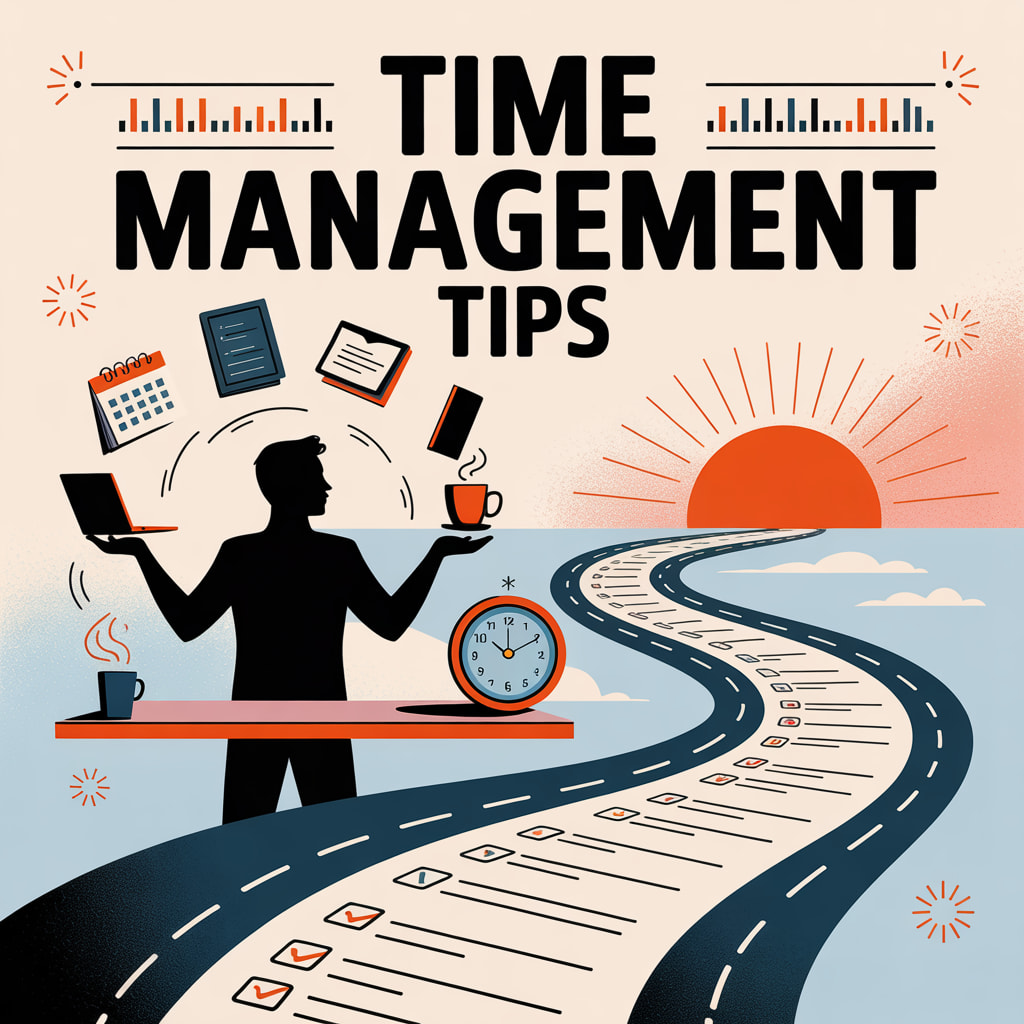
In a world that's always moving faster, time often feels like it's slipping through our fingers. Deadlines loom, calendars overflow, and the to-do list grows no matter how hard we work. For busy people — entrepreneurs, students, working parents, and ambitious professionals — mastering time management isn't just a skill. It’s a necessity.
The good news? You can take back control. It starts with shifting how you think about time and applying a few key strategies that can turn chaos into clarity. Here’s how.
1. Set Clear Priorities
Time management isn’t about doing more; it’s about doing what matters. Before you dive into your day, take a step back. Ask yourself:
What are the most important tasks today?
Not every task carries equal weight. Some activities move you forward toward your goals, while others are just noise. Learning to tell the difference is crucial.
One helpful tool is the Eisenhower Matrix — a simple system where you divide tasks into four categories:
Important and Urgent
Important but Not Urgent
Urgent but Not Important
Neither Urgent nor Important
Focus your energy first on what's important, even if it's not screaming for attention yet. This prevents last-minute scrambles and wasted effort.
2. Plan Your Day the Night Before
Highly productive people don't wake up and "wing it." Instead, they end each day by sketching out the next one. Spend 10 minutes every evening reviewing your priorities and scheduling your time.
By doing this, you wake up with purpose and clarity instead of starting your day reacting to whatever pops up first.
Use a planner, digital calendar, or a simple notebook. The tool matters less than the habit.
3. Time Blocking: Own Your Hours
One of the most powerful methods for controlling your schedule is time blocking.
Instead of working off a never-ending to-do list, divide your day into chunks dedicated to specific tasks.
For example:
8:00–10:00 AM: Deep work (writing, creating, problem-solving)
10:00–10:30 AM: Email responses
11:00–12:00 PM: Meetings
12:00–1:00 PM: Lunch and break
By assigning tasks to blocks of time, you create natural limits that help you stay focused. You also prevent small tasks like emails from eating up your whole day.
4. Learn the Power of "No"
You can't do it all. And you shouldn't try.
Learning to say "no" — graciously but firmly — is one of the most freeing skills for busy people. Every "yes" to something that doesn’t matter is a "no" to something that does.
Protect your time like it’s your most valuable asset — because it is. Decline meetings without clear agendas, unnecessary projects, and favors that pull you off track.
Remember: Saying "no" to others often means saying "yes" to yourself.
5. Break Tasks into Micro-Steps
Feeling overwhelmed often leads to procrastination. A great way to break that cycle is to divide large tasks into smaller, manageable steps.
Instead of "Write project report," list out:
Outline the main points
Write the introduction
Write the body sections
Edit the report
Format and submit
Each small step feels doable and gives you a hit of progress, making it easier to keep moving.
6. Embrace the Two-Minute Rule
If something will take less than two minutes, do it immediately.
Replying to a quick email, filing a document, or confirming an appointment — small tasks like these clutter your mind if left undone. Acting on them instantly clears mental space and keeps your momentum strong.
7. Manage Technology — Don't Let It Manage You
Modern tech is a double-edged sword. It can make you more efficient — or it can destroy your focus.
Set clear boundaries:
Turn off non-essential notifications.
Check email only at designated times.
Use apps like Focus@Will, Freedom, or Forest to help maintain attention.
Remember, multitasking is a myth. Deep, focused work will always outperform scattered attention.
8. Schedule Breaks and Respect Them
Even the busiest people need rest. Working for hours without a break isn't heroic; it’s counterproductive.
Use techniques like the Pomodoro Technique — 25 minutes of work followed by a 5-minute break. After four cycles, take a longer break.
Scheduling downtime recharges your brain and prevents burnout, helping you sustain high performance throughout the day.
9. Reflect and Adjust Weekly
End each week by reviewing what worked and what didn’t. Did you stick to your priorities? Where did distractions creep in?
Use this reflection to adjust your systems. Constant tweaking makes your time management stronger over time.
Conclusion: You Have More Time Than You Think
The reality is: It's not that you don't have enough time. It's that too much time slips away unused or unfocused.
By applying these time management tips, you reclaim your hours, your energy, and your peace of mind.
You don’t have to be busy and overwhelmed — you can be busy and in control.
Time is your most precious currency. Spend it wisely.
About the Creator
Keep reading
More stories from Ikram Ullah and writers in Education and other communities.
How to Set (and Actually Achieve) Your Goals
We’ve all been there—setting New Year’s resolutions with excitement, only to abandon them by February. Or scribbling down big dreams in a journal, only to forget about them weeks later. Why does this happen? And more importantly, how can we break the cycle and actually achieve what we set out to do?
By Ikram Ullah10 months ago in Education
Explosions in Tehran Force Pakistani Students to Leave Iran
The intensity of the explosions caused by the missile attacks on Tehran was extremely high. In such a situation, it is natural for a person to feel frightened. Because of this situation, we immediately decided to leave.
By Real content4 days ago in Education
Leading With Purpose: Cultivating a Philanthropic Mindset in Modern Medical Leadership
Medical leadership today extends far beyond supervising clinical teams or managing hospital operations. Physicians in leadership roles influence institutional strategy, community engagement, research priorities, and public policy. In an era marked by health inequities, rising costs, and global crises, medical leaders must adopt a broader vision of responsibility. Developing a philanthropic mindset is no longer optional. It is a defining characteristic of effective and ethical leadership in healthcare.
By Dr. Seth Eidemiller4 days ago in Education
Review of 'Man on the Run'
My wife and I saw Man on the Run, a nearly 2-hour documentary on Amazon Prime, about Wings, Paul McCartney's group that flew around the world from shortly after The Beatles broke up in early 1970 to shortly after John Lennon was murdered at the end of 1980, making a Beatles reunion forever impossible.
By Paul Levinson6 days ago in Beat




Comments
There are no comments for this story
Be the first to respond and start the conversation.