
Why you need to start Podcast?
Insights of Podcasting

Introduction
Podcasting is a form of digital media that allows users to create and distribute audio or video content to a wide audience over the internet.
Podcasts can include various content, such as music, talk shows, news, and educational content, and are usually focused on a specific topic or niche. Podcasts are typically delivered in a series or "season," and new episodes are typically released regularly.
The term "podcasting" comes from the combination of "iPod" and "broadcasting," as the first podcasts were typically listened to on Apple's iPod music player. However, today, podcasts can be listened to on various devices, including smartphones, tablets, and computers.
Podcasts can be created by anyone, from individuals to large media companies. Many podcasts are produced by amateurs, while others are professionally produced.
Some podcasts are free to listen to, while others are behind a paywall or require a subscription. Podcasts are distributed via RSS feed and can be found on platforms such as Spotify, Apple Podcasts, and many more.
Why do You need to start podcasting?
Podcasting is a rapidly growing medium, and a variety of statistics demonstrate its popularity and reach. Some examples include:
As of 2021, there are over 1.75 million active podcasts and over 42 million episodes.
The number of people who listen to podcasts is also growing. In 2021, around 131 million Americans listened to a podcast monthly, and 50% of the population has listened to a podcast in the past month.
Podcast listeners tend to be educated and well-off. In the US, over two-thirds of podcast listeners have at least a college degree, and half have a household income of more than $75,000 per year.
Podcast listeners are also highly engaged with the medium. Around 80% of podcast listeners listen to most or all of each episode they tune in to.
Podcasts are especially popular among younger audiences. Around 74% of people aged 12-24 have listened to a podcast before, compared to just 43% of people aged 55 and older.
Podcast advertising revenue is also on the rise, with projections of it to hit $1 billion by 2021 in the US alone.
Podcasts being a diverse medium, it's being adopted by various industry sectors and hence has a broad range of demographics.
Podcasts are consumed mostly on mobile devices and are often listened to during commutes, workouts, and other activities when people are on the go.
Steps needed to start a successful podcast
Choose a topic:
Your podcast should be centered around a topic or niche that you're passionate about and think will be of interest to your target audience.
Plan your episodes:
Decide on the format of your podcast and the topics you want to cover in each episode.
Get equipment:
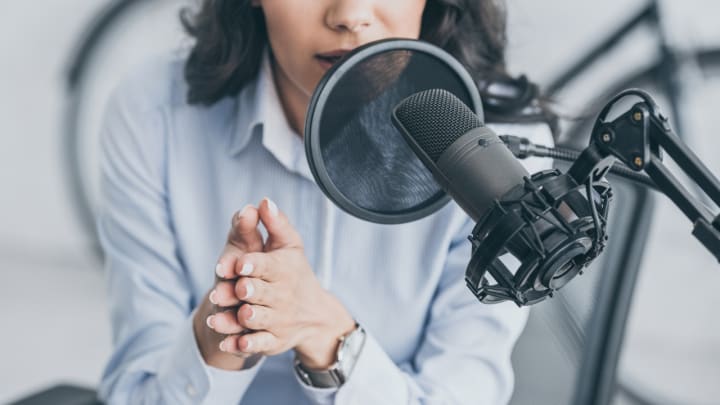
You'll need a microphone, headphones, and a computer or mobile device to record and edit your podcast.
Record and edit your episodes:
Use recording software to capture audio and editing software to cut and splice the recording as needed.
Choose a hosting service:
Hosting services like Buzzsprout, Anchor, and Simplecast provide a platform to host and distribute your podcast to various platforms like Spotify, Apple Podcasts, and so on.
Create a website and social media presence:
A website and social media profiles can help you promote your podcast and engage with your audience.
Promote your podcast:
Once you've created a few episodes, you can start promoting your podcast on social media and other platforms. You can also reach out to other podcasters or websites in your niche and ask them to share your episodes or be a guest on their podcast.
Keep Recording and Improving:
Continuously record your episodes, maintain a regular release schedule, listen to your audience for feedback and improve accordingly.

How to Learn podcast
1. Listen to various podcasts to understand different formats, styles, and topics.
2. Research the technical aspects of podcasting, such as equipment, software, and hosting options. You can use a microphone, an audio interface, and a digital audio workstation (DAW) for recording and editing your podcast. For hosting, you can use a platform such as Libsyn or Soundcloud.
3. Create a plan for your podcast, including the format, structure, and topics you want to cover. Consider your target audience and how you want to engage with them.
4. You can also learn the 30-Day Podcast Launch Course by Travis Chappell. In that course, you will learn the step-by-step guide tutorial
Conclusion
In conclusion, podcasting is a form of digital media that allows individuals and organizations to create and distribute audio or video content to a wide audience over the internet. Podcasts cover various topics and niches and can be listened to on various devices.
Podcasting is a rapidly growing medium, with a significant increase in podcasts, listeners, and revenue. Podcasts are typically delivered in a series or "season," and new episodes are typically released regularly.
Podcasts are a great way to share information, entertainment, and personal stories and allow creators to build a loyal community of listeners around a specific topic or niche.
With the accessibility of technology and ease of distribution, podcasting has become a popular medium for creators to share their messages with a wider audience.
About the Creator
iyal ezhilan
I help to transform your business and reach new audiences through targeted digital marketing efforts, So I'm here to help you with my articles.
I'm Iyal Ezhilan, a digital marketer who works with a wide range of clients in multiple domains.
Keep reading
More stories from iyal ezhilan and writers in Education and other communities.
What to Eat (And Avoid) During Colon Cancer Treatment: A Nutritionist-Approved Guide
When undergoing colon cancer treatment, your diet is more important than ever. The right nutrition can support your immune system, reduce side effects, and even enhance the effectiveness of treatments like chemotherapy and radiation. But knowing what to eat and what to avoid can be overwhelming.
By Erika Phillips 7 days ago in Education
Surviving Cancer: Entering the Golden Alchemical Door to Teaching
It starts with love . . . Entering the Golden Door: Who Am I? Going through cancer treatments with chemo, a strange thing happened, for I started to forget things, even who I am because my wife ghosted me and my friends would have nothing to do with me. Without human contact, you forget what it means to be human. I am a professor at a university, but I forgot what I taught. . . .
By WILD WAYNE : The Dragon King2 days ago in Education
Wild Card Weekend Recap: What Happens Now?
I think I figured out why I love Wild Card Weekend so much. It's because it's the first playoff anything of the calendar year. The NFL season starts in the fall, and once upon a time, the champion was crowned either on or slightly before New Year's. The evolution of the NFL schedule has resulted in the playoffs starting just into the New Year, and currently, the final week of the season falls on the first weekend of the New Year, with Wild Card Weekend coming a week after that. So yes, chronologically, the NFL's Wild Card Weekend serves as the first playoff anything of the calendar year.
By Clyde E. Dawkins6 days ago in Unbalanced



Comments
There are no comments for this story
Be the first to respond and start the conversation.