
Why we must resist men like Andrew Tate
A former teacher from Hexham explains why...
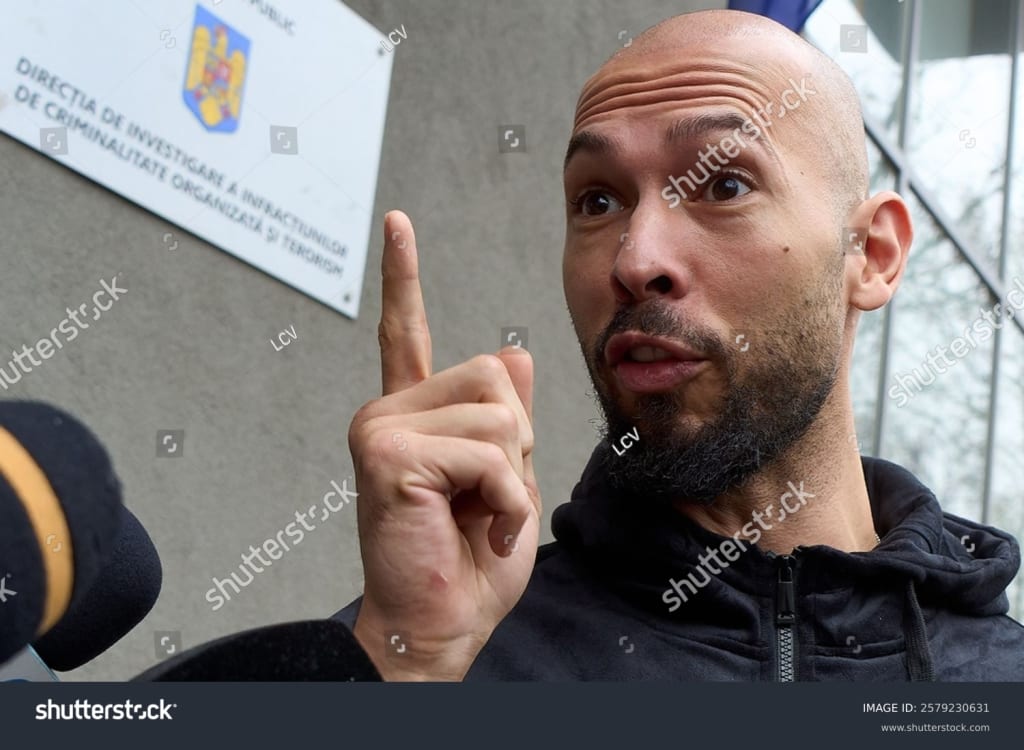
Why We Must Resist Andrew Tate
In recent years, Andrew Tate has emerged as a controversial and influential figure, especially among young men online. With his flashy lifestyle, bold opinions, and confrontational tone, he markets himself as a beacon of masculinity and self-made success. But behind the hyper-confident persona lies a worldview that is deeply toxic, misogynistic, and ultimately damaging.
Resisting Andrew Tate isn’t about silencing someone with controversial views—it’s about challenging a dangerous ideology that threatens social progress, mental health, and the safety of marginalized groups.
Domination Over Empathy: The Core of His Message
Tate’s entire brand is built on the idea that life is a brutal competition. He teaches young men that power must be taken, not earned through cooperation or kindness. His idea of masculinity revolves around control, wealth, and dominance—especially over women.
This message doesn’t empower. It exploits the insecurities of young men who feel lost in a rapidly changing world. Instead of offering tools for growth, Tate offers scapegoats—especially women—and encourages aggression over self-awareness. His ideology tells men to suppress vulnerability and reject emotional growth in favor of status and ego.
Misogyny Masquerading as Motivation
Perhaps the most alarming element of Tate’s rhetoric is his repeated, unapologetic misogyny. He has described women as property, questioned their intelligence, and made statements that excuse or trivialize male violence.
Defenders often claim he’s “just being provocative” or “playing a character.” But this argument falls apart when we consider his massive influence—and the real-world consequences. Young followers absorb these messages, normalizing disrespect and abuse toward women as part of “being a man.”
In a society still working toward gender equity, his views are not just outdated—they’re actively harmful.
Fueled by the Algorithm
Part of Andrew Tate’s meteoric rise can be attributed to the platforms that amplify him. Social media algorithms prioritize content that provokes strong emotions—outrage, envy, desire. Tate’s short, inflammatory clips are perfectly designed for this environment.
Once a user engages with a video, the algorithm floods them with similar content, reinforcing the same toxic themes. Young men who stumble upon his content quickly find themselves in an echo chamber, surrounded by messages that glamorize dominance and demean compassion.
This isn’t a coincidence—it’s a feature of how online platforms work. And it makes resisting Tate’s influence even more urgent.
The Impact on Young Men
There is no doubt that many young men are struggling. They face uncertainty, emotional repression, and a lack of positive role models. The traditional masculine ideal—stoic, powerful, self-sufficient—is increasingly at odds with the realities of modern life.
Andrew Tate steps into this void, offering certainty and purpose. But the price is high. He encourages emotional suppression, rejects mental health awareness, and teaches that relationships are battles for control.
Rather than helping young men thrive, he traps them in a cycle of isolation and aggression. He replaces vulnerability with bravado, growth with domination, and empathy with scorn.
Free Speech or Social Responsibility?
Critics of Tate’s deplatforming argue that we’re attacking free speech. But free speech does not mean freedom from consequences. When someone uses their platform to promote hate, abuse, or violence, society has a right—and a responsibility—to push back.
This isn’t about censorship. It’s about accountability. Platforms must enforce their own community standards. Schools and parents must teach critical thinking. And we, as a society, must decide which voices deserve to be amplified.
We can—and must—stand for the right to speak without condoning the right to harm.
What Resistance Looks Like
To resist Andrew Tate effectively, we need to do more than criticize. We must build better alternatives.
Promote healthier models of masculinity. Celebrate men who are empathetic, creative, collaborative, and emotionally intelligent.
Teach media literacy. Equip young people with tools to analyze and question the content they consume.
Support educators and parents. Give them the language and resources to discuss gender, identity, and online culture openly.
Amplify constructive voices. Encourage diverse, positive role models in online spaces and classrooms alike.
Resisting Tate means creating a world where young men don’t feel drawn to his message in the first place.
A Cultural Crossroads
Andrew Tate is not the cause of male frustration—he is a symptom. But left unchecked, he becomes a catalyst for something much darker.
We are at a cultural crossroads. One path leads toward empathy, equality, and progress. The other, toward division, cruelty, and regression. The popularity of influencers like Tate shows how urgently we must address the fears and frustrations of young men, without giving in to hate.
This is not just a gender issue. It is a human issue—a fight for the kind of world we want to live in.
Conclusion: Resistance Is a Responsibility
Andrew Tate’s message is built on fear, insecurity, and exclusion. To resist him is to reject a culture that glorifies cruelty and celebrates control. It is to affirm that success does not require stepping on others, that masculinity does not demand emotional repression, and that equality is not a threat.
The solution is not to ban every offensive voice, but to drown them out with better ones—to offer compassion instead of contempt, complexity instead of slogans, and hope instead of hate.
Resisting Andrew Tate isn’t just necessary. It’s a moral imperative.
For more essays by this author please click here,
#teacher #AndrewTate #Hexham
About the Creator
Retired Teacher from Haydon Bridge School, Northumberland
Long retired teacher from Northumberland, UK
He was a deputy head that taught physics (plus maths and economics) at Haydon Bridge School, Northumberland back in the '70s and early '80s
Now living in Canada, having retired some years ago.
Keep reading
More stories from Retired Teacher from Haydon Bridge School, Northumberland and writers in Education and other communities.
The Lionesses Won More Than a Trophy—They Won for All of Us
There are victories that shine brightly for a moment—and there are those that change the atmosphere of a nation. The Lionesses’ recent triumph belongs firmly in the second category.
By Retired Teacher from Haydon Bridge School, Northumberland2 months ago in Education


Comments
There are no comments for this story
Be the first to respond and start the conversation.