
Why “Growth” Quietly Became the Wrong Goal for Creators
From metrics to meaningful connections: what truly sustains creators over time


For creators, when they feel that things are slowly slipping away is often not easy to know until they hit rock bottom or their metrics start to drop. For example, from the view of those monitoring growth and interaction, everything seems to be going well, but underneath the surface, there is a feeling of trust that everything you put into producing will eventually disappear without warning because of a change to the outside world; however, as a result of an algorithm change, policy change or a sudden drop in reach. This is because the creator does not have any control over how something is valued in a system that is outside of their control. Therefore, instead of asking how you can grow faster, the question will be, “What can I do to protect that it continues?”
Platforms support creators, but they often do not continue to do so indefinitely.
Initially, platforms give creators lots of opportunities to improve their work, reward them for persistence and give them lots of exposure for new ideas.
As those platforms develop a bigger audience and start to see success, the creators start to see a drop in their visibility and no explanation for it.
At the same time, there will be a sudden swing in revenue and creators are usually told to adapt, pivot and increase what they are doing.
This cycle repeats itself for many creators and has become a norm for most creators because of the way most platforms work.
There is no way for most platforms to support creators as they have created their businesses around leveraging creators' value while keeping control of the access to it.
There are many creators who still struggle with these issues:
1. How do I stop starting over from zero?
2. How do I stabilize my income?
3. How do I maintain my relationship rather than simply leasing it?

An Audience and a Community What They Are and What Will Sustain Them
An Audience Watches
A Community Engages
Membership is Forever
This distinguishes all of what we will see later. When the audience turns into the community; then the fragile growth becomes durable, engagement becomes reciprocal versus extracted, and the progress we all share is what we perform; thus, instead of endless scaling outwards…creators begin to build upwards with fewer numbers and stronger bonds of trust between the members who have a truly deep-seated connection with that creator, their legacy, their creation, etc.
Therefore, the 'creative' structure that continues to exist when there is pressure behaves differently.
Why Do Communities Multiply While Funnels Die Off?
Funnels are Flow Based, Communities are Continuity Based
In a community's ecosystem, the value is not moving one direction, rather, it is continuously moving to multiple directions and through a process of exchange, the Participation produces Value, Contribution creates Identity, and, Identity sustains Retention - Retention creates Revenue Stability - and Stability creates Advocacy. None of the above rely on going viral or receiving a high algorithm rank… Rather these rely on Human Incentives (Belonging, Progress and Pride of Ownership).
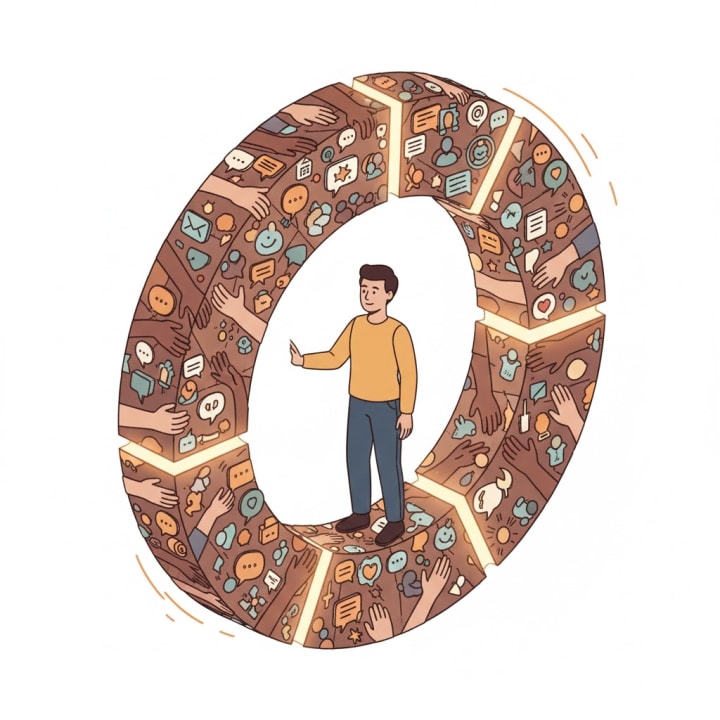
Engagement Continues Beyond Content
Engagement is rarely maintained through information alone; it is maintained through the continuation and development of orientation.
High-retention communities provide participants with constant but subtle validation, such as:
•“You’re in the right place.”
•“Your progress is visible.”
•“Your contributions are acknowledged.”
•“The story is fluid (it’s not starting over again).”
When people feel anchored in a particular community and connected to the system, they are naturally committed—not out of conviction, but out of investment.
When Making Money Aligns with Creating Value
Numerous strategies that generate revenue have the unintended consequence of eroding trust; other strategies build trust. In environments that offer people a clear understanding of what to expect in return for their time and by having incentive structures that support engagement, the transaction of money, or other currencies, is seen as less critical. The exchange does not interfere with the relationship—it reflects it. Money is a signal of commitment, not an obstacle. This is not common, and once broken, repairing it will be difficult.
Infrastructure Without Overreach.
Surprisingly, the majority of unsuccessful new entrepreneurs do not fail due to a lack of creative concepts. The main reason for this failure is often linked to the tendency for early stage founders to become too ambitious by creating an extensive range of offerings/products even before getting feedback from customers. A number of successful infrastructures are developed through deliberation, as enunciated below.
• A well-defined transformation
• A few interaction points with customers
• A small, intentional group of founders
• Roughly the least amount of systems necessary to promote focus rather than excessive complication
To establish required forward momentum whilst maintaining required focus without outside distractions, many new entrepreneurs rely on temporary assistance from third parties, who perform narrow functions (e.g. onboarding functions), but are typically assessed through freelance marketplaces prior to becoming a part of the vertical arrangement of support systems internally.
AVOIDING THE HUMDIUM OF GROWTH = CREATING AN ORGANIZATION WITHOUT EXCESSISVE COMPOLICITY.
Resistance to Algorithms Is a Paradox.
Most Structures That Require Little to No Algorithmic Input Are The Most In-Line with Current Discoveries.
Search Algorithms Reward:
•Well Defined Topical Range
•Evidence Of Proficiency Over Time
•Repeated Interest
•Brand-To-Brand Relationships
Communities Create This Information In A Natural Way, Without Being Developed To Provide It.
The Long-Term Most Secure Option Is To Develop A Community That Algorithms Can Not Duplicate.
Slow Starts Don't Tiptoe They Build For A Long Future
Many People Have Great Ambition For Creating a Community; However, When They Move Too Quickly Or Create Too Many Structures, The Ambitious Community Will Fail.
A Slow Pathway Is Generally More Durable Than An Expedited Pathway:
- Created Transformation Exists: We Need To Articulate Transformation Before Creating A "Wide Door";
- Participation Needs To Be Designed Prior To Weaving Layers Into Their Community;
- We Need To Let Cultural Systems Evolve Before We Think About Scaling Up.
Slow Doesn’t Mean Inactive; Slow Means Security, Stability, And Safety Are On The Horizon.
Eventually
as we move to the conclusion of this article, there are many questions that may arise.
Is this Model Only for the Large Creator?
This model can often work better prior to scaling because the depth of relationship will compound faster than reach will.
Will This Replace, or Reframe, the Current Social Platforms?
This model will not replace any current social platforms, it will simply reframe them as channels of distribution for creators rather than foundational platforms.
What if Your Niche is Small?
Being connected through a shared identity is often far more important than just having a large audience/base of support.
In sum
Sustainability is not growing; it is now based on ownership, relationships and structure. A creator’s main focus should no longer be capturing their audience’s attention, but on creating a community with which to connect and protect. Examining existing models of ownership, relational and structural will provide insight into what theories alone cannot.
About the Creator
Aref
Passionate writer and storyteller exploring life's depths through words. I share insights, personal experiences, and creative tales to connect with readers. Join me on this journey of discovery and inspiration!
What to Expect From Bookkeeping Outsourcing Services
Money has a way of revealing how well a business is truly operating. Clean records signal control. Messy books hint at missed opportunities, tax risks, and sleepless nights. Many growing companies reach a point where spreadsheets, late-night reconciliations, and rushed reports are no longer sustainable. That’s usually when leaders begin exploring Bookkeeping Outsourcing as a smarter, scalable solution.
By Charles Brighta day ago in Education
Professional Skills That Separate Good Consultants from Great Ones
Consulting is a competitive field where expertise alone is no longer enough to stand out. While many consultants possess strong technical knowledge and industry experience, only a select group consistently delivers transformative results for their clients. What separates good consultants from great ones is the ability to combine analytical strength with exceptional communication, leadership, adaptability, and emotional intelligence to accelerate sustainable business growth.
By Nicole Metz5 days ago in Education


Comments
There are no comments for this story
Be the first to respond and start the conversation.