
When the Water Runs Quietly Dry: Ancient Wisdom for Modern Megadroughts
Discover how faith and ancient wisdom can guide calm preparation for the coming water crisis.


When the Water Runs Quietly Dry
The first signs of a water crisis are usually not obvious and are not usually public. These signs include reservoirs that do not seem to refill fully, wells recovering longer than usual, and summer restrictions that feel temporary only to later find their permanence.
People do not ignore these signals for fear of admitting that they have ignored them. The reason people ignore these delays is that in today's society we have come to trust that the system will always provide what we need, despite the fact we never actually see the system working. People have learned to depend upon the flow of water to our homes, flushing, cleaning, cooking, and growing crops through call of duty.
The way we have learned to depend upon systems has changed the visibility of the assumption of continuance of those systems. The way we live our lives has removed the way we view these assumptions.
Through history, we know that societies fall apart slowly. Civilizations slowly develop weaknesses through the loss of reliability of their systems such as water. By the time people are aware of the scarcity of their water supply, it is far too late to prepare.
This is a story about foresight, not fear
Understanding the Silent Megadrought
Megadroughts differ from droughts in that they're not "few and far between," but represent a steady change in climate over decades or longer. Over time, precipitation patterns shift from dry to wet years; snow accumulation happens earlier; and water comes back into the atmosphere after being "consumed" by people, plants, animals, etc. Also, the recharge rate of underground water sources (aquifers) decreases through time.
Unlike droughts that end, megadroughts keep accumulating. Eventually, the increased strain on infrastructure in urban areas and large increases in agricultural production will reach a point where they cannot sustain the increasing demand on that infrastructure. As demand on available water sources decreases, so does the supply of water to homes.
The "Day Zero" in Cape Town didn't happen immediately; it was preceded by years of warning. Cape Town had months, not years, to react when "Day Zero" became a reality. If it hadn't been for extreme conservation efforts, community collaboration, and emergency measures, Cape Town would have experienced a "Day Zero."
To illustrate the alternative paths of most cities:
Singapore invested early on in water recycling technology, allowing them to have the water independence they enjoy today.
Los Angeles has begun a similar process of relocating the source of their water supply. These cities exemplify: the most effective response to climate change is to begin developing your own solutions and implementing them before it becomes too late.
Preparedness: A Brief Reflection
Preparedness is becoming a common topic among families. Generally, families view water differently today than before. Many families have begun to view water as something that is not limitless, but rather something that must be managed or cared for, and are doing so more out of responsibility than from a place of panic.
In many cases, spiritual approaches to preparation view our preparations towards water not as fear, but instead as two forms of stewardship. You can see one form of this viewpoint here
The preparation that is done in this way does not draw attention to itself and does not require drastic lifestyle changes to occur. Preparation, in this sense, begins with understanding.
Joseph’s Strategy: Faithful Foresight
Joseph's story in the Bible gives us both spiritual guidance and steps for preparing for tough times. Rather than panicking when he learned about the impending famine, Joseph acted responsibly when he was faced with an abundance of food. He stored food away in an orderly manner during times of abundance so that he could use it later during the time of famine. In doing so, he did not allow fear to dictate his actions. Instead, he exercised foresight by being calm, disciplined, and prudent in his decision to prepare for the future. Faith in God is the belief that God will provide, but it does not mean that you are living in a state of denial about the future.
A principle of Joseph's preparation was that it was an act of understanding rather than fear. Today, this is still a principle that applies to families and communities that are prepared, with knowledge, not panic. Joseph's preparation for the famine was an example of how intelligence and discipline can prepare you to endure multiple prolonged crises. In modern society, families can utilize Joseph's method by prepping water supplies and monitoring their consumption as well as developing an ongoing awareness within their households.

Water: The First Domino
Every system relies on water.
- Food production suffers if there is no water.
- If there is no water, energy ceases to flow.
- Without water, health and sanitation both deteriorate.
Today's world lets us forget about our reliance on water because of pipes, pumps, and treatment plants. However, as our infrastructure continues to degrade due to age, climate change, and population growth, this perception of security may not be as reliable as once thought.
An example of this reliance on water can be seen with any random failure of a municipal water main. People will not be able to take access to their water for granted. Those households that prepare ahead of time (quietly) create a sense of stability, rather than panic, through foresight.
There are practical steps that can be taken to create a stable water system in your family:
- - Establish a modest, rotating water supply (if needed).
- - Check and maintain all household pipes and storage tanks.
- - Encourage water-saving habits by helping the family develop a habit of conserving water.
While the steps may seem minor, they create a base for resilience, providing families with the capability of weathering disruptions to their water supply without creating chaos.
Preparation Without Fear
Most survival-related online content focuses on urgency, countdowns and worst-case scenarios. This "maybe" approach may attract an audience's attention, but it does not help you build your ability to cope with challenges.
When you prepare yourself calmly, the way you prepare will differ from a rushed approach to preparation.
The Calm Prep Values are:
- Simplicity over Excess
- Consistency over Intensity
- Understanding over Stockpiling
When families take small, steady steps toward preparing, they tend to feel more empowered and less stressed about preparing than families who take huge leaps. Over time, awareness becomes habitual and habitual actions lead to stability.
There are many contemporary writers and planners that endorse this "Mindset First" approach by recommending that people to become familiar with their water systems and drinking water before they buy tools or gear to be able to safely obtain drinking water.
A comprehensive written reference to this Philosophy can be found here
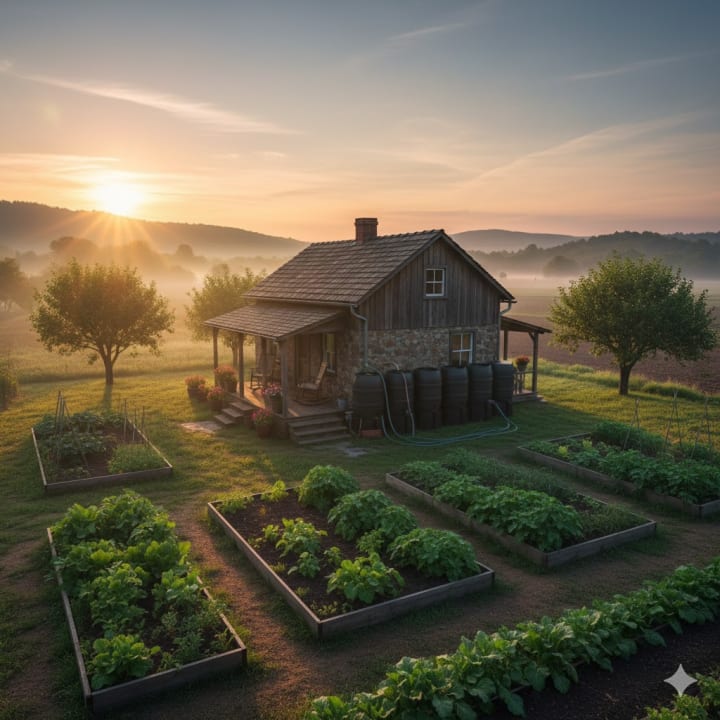
What accurate information provides
Being prepared doesn't give anybody control over the future. Nothing does.
What preparedness gives is understanding.
By providing understanding to avoid panic during disruption, preparedness enables individuals to respond flexibly to system overloads. Thus, preparedness helps develop space in people's minds so they can respond in a thoughtful way rather than respond emotionally.
When viewed through the lens of historical evidence, it is evident that the early adopters of Preparedness are typically the least impacted by harmonizing perfect forecasts. Rather, early adopters of Preparedness respect the element of uncertainty.
Quiet Wisdom for an Uncertain Future
Water challenges are a reality affecting different people groups at different times, in different places, and with different intensity.
The longstanding lesson from all of this? Planning is always better long before you need it.
Moreover, preparing to handle the unknown in your future does not come from being afraid; it comes from being humble—being aware of the fact that abundance can change and that wisdom usually comes softly before coming on strong.
If you are seeking to grow in your understanding of how this may impact your faith, a number of reflective materials can help you learn how to prepare yourself better for water use and water quality.
We include one such perspective here
We're not attempting to offer a solution for everything with this information; however, we want to invite you to consider a different way of doing things.
It is often the case that some of our greatest wisdom comes from lessons taught to us many years ago.
About the Creator
Aref
Passionate writer and storyteller exploring life's depths through words. I share insights, personal experiences, and creative tales to connect with readers. Join me on this journey of discovery and inspiration!
Time Management Hacks Every Entrepreneur Should Know
Running a startup demands more than hustle—it requires precision in how you use your time. As a founder, your daily choices directly impact your company’s growth, culture, and long-term sustainability. Without the right strategies, it's easy to get overwhelmed by tasks and lose sight of what truly matters. Mastering a few smart productivity habits can dramatically improve how you work.
By Per Jacob Solli3 days ago in Education
The "Free" Lead Trap: Why New Real Estate Agents Are Paying a Hidden Price
In the early stages of a real estate career, an agent’s most precious asset isn't their luxury car, their high-end camera gear, or a downtown office lease. It is their time. Yet, for many new professionals, time is the one resource they are most willing to squander in exchange for the "dopamine hit" of a smartphone notification.
By SiftlyLeads2 days ago in Education



Comments
There are no comments for this story
Be the first to respond and start the conversation.