


Imagine it’s winter 1862, and you’re a chemistry professor in Belgium. You’re grappling with one of chemistry’s biggest mysteries: the structure of benzene. Unlike most hydrocarbons, benzene has an unusual ratio—six hydrogen atoms and six carbon atoms. What kind of structure could allow these atoms to fit together? Frustrated, you turn your chair towards the fire and drift into sleep. As you dream, visions of atoms and molecules morph into serpents, one of which coils around and bites its own tail, like the ancient symbol of the ouroboros. Suddenly, you’ve solved the structure of benzene in your dream—a breakthrough that will revolutionize chemistry and earn you a statue people love to dress up. August Kekulé’s dream-led discovery of benzene’s structure is one of history’s most famous dream-inspired breakthroughs. But it begs the question: Why do we dream?
The Quest for Understanding Dreams

Dreaming has puzzled humanity for centuries. Ancient Greeks and Confucian scholars speculated about the meaning and function of dreams. Today, scientists continue to explore this enigmatic phenomenon. Despite being an experience that occurs only during sleep, dreams have been studied extensively to uncover their benefits and purposes. Humans spend about two hours dreaming each night, totaling nearly 60,000 hours over an 80-year lifetime. This significant amount of time spent dreaming suggests that dreaming might serve important functions.
Historical Perspectives on Dreams
Ancient Beliefs
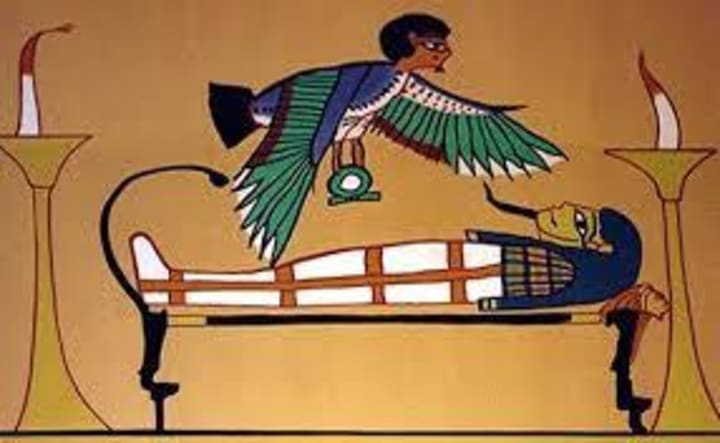
In ancient Egypt, dreams held significant spiritual importance. Dream interpreters used extensive volumes to decode the meanings of dreams. Common interpretations could be both comical and profound. For example, if someone dreamed their leg came off, it was thought to signify judgment from the deceased. Conversely, dreaming of a violent death might be seen as an omen of a long life. These interpretations reflected a belief in dreams as messages or omens.
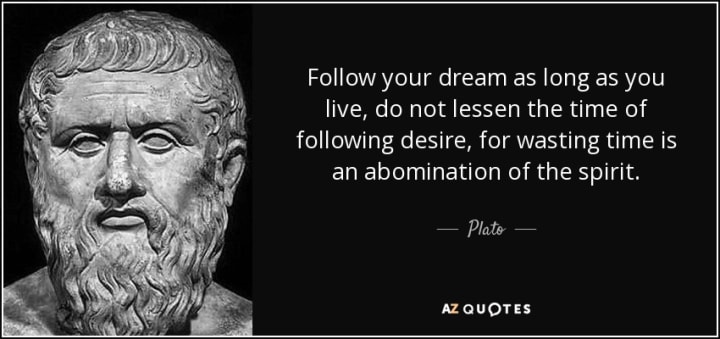
Greek philosopher Plato also viewed dreams as divine communication, a way for gods to relay messages to humans. Meanwhile, Confucian scholar Zhu Xi considered dreams as reflections of the dreamer's mental state and moral conduct.
Freud and Jung: Early Psychological Theories
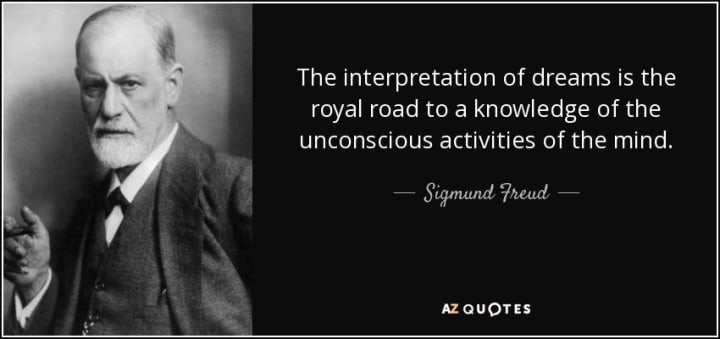
In 1900, Sigmund Freud’s Interpretation of Dreams introduced groundbreaking theories about the nature of dreams. Freud proposed that dreams were a window into our unconscious desires and conflicts. He introduced the concepts of manifest content (the actual storyline of the dream) and latent content (the hidden, underlying meaning). Freud’s theory suggested that dreams were a way for the unconscious mind to process repressed wishes and desires.
Carl Jung, a contemporary of Freud, expanded on these ideas. He introduced the concept of archetypal symbols—universal symbols that appear in dreams, such as wise old sages or tricksters. Jung believed that dreams not only reflected personal unconscious content but also tapped into a collective unconscious shared by all humans. According to Jung, dreams served two main functions: they compensated for neglected aspects of the dreamer’s life and offered glimpses into possible future events.
Scientific Theories of Dreaming
Activation-Synthesis Theory
Initially, scientists viewed dreams as mere byproducts of neural activity during sleep. The Activation-Synthesis Theory proposed that dreams were a form of neurological noise. According to this theory, the brain tries to make sense of random neural activity, creating a narrative from these seemingly disjointed signals.
However, subsequent research challenged this notion. Dreams are not entirely random; certain themes and scenarios recur more frequently. This led scientists to explore whether dreams serve specific functions.
Memory Consolidation
One prominent theory is that dreams help consolidate memories. During sleep, particularly in the REM (Rapid Eye Movement) stage, the brain replays daily experiences, which helps transfer information from short-term to long-term memory. Studies have shown that people often dream about recent experiences or tasks they are learning. For example, participants who played Tetris reported dreaming about the game, suggesting that dreams help reinforce new skills and knowledge.
Threat-Simulation Theory
Dreams can sometimes turn into nightmares, and the Threat-Simulation Theory offers an explanation. This theory suggests that nightmares serve as a way for the brain to rehearse and prepare for potential threats. By simulating dangerous or stressful situations, dreams may have provided an evolutionary advantage by helping our ancestors better handle real-life threats.
Social Simulation Theory
Dreams frequently involve social interactions, such as arguments or embarrassing scenarios. The Social Simulation Theory posits that dreams help us practice social skills and navigate complex social situations. This theory suggests that rehearsing social scenarios in dreams could have offered evolutionary benefits by improving our ability to interact with others.
Modern Research and Future Directions
Dream Incubation
Dream incubation involves focusing on a problem or question before sleep to influence the content of dreams. This technique is being studied as a potential way to enhance creativity and problem-solving. Research has shown that priming the brain with specific thoughts or problems before sleep can lead to more relevant and creative dream content.
Visual Cortex Hypothesis
The Visual Cortex Hypothesis proposes that dreaming evolved to keep the visual cortex active during sleep. Since the visual cortex is crucial for processing visual information, dreaming might help maintain its function during the long periods of darkness at night. This hypothesis suggests that dreams could play a role in preserving brain functions by providing visual stimulation while we sleep.
Closing
Dreams remain one of the most intriguing and mysterious aspects of human experience. From ancient interpretations to modern scientific theories, our understanding of dreams has evolved significantly. While we’ve made great strides in uncovering their functions and benefits, many questions remain. As research continues, we may uncover even more about the purpose of dreams and their role in our lives. Whether through problem-solving, memory consolidation, or social rehearsal, dreaming appears to be a vital aspect of our psychological and neurological well-being. And who knows? Perhaps the next great scientific or artistic breakthrough will come from a dream, just as Kekulé’s did.
About the Creator
Horace Wasland
Research analyst, writer & mystical healer. Exploring the edge where science meets mystery. From mystery/the mystical, to facts, news & psychology. Follow for weekly insights on all four and please leave a tip if you like what you read :)
Keep reading
More stories from Horace Wasland and writers in Education and other communities.
Tutankhamun’s Tomb
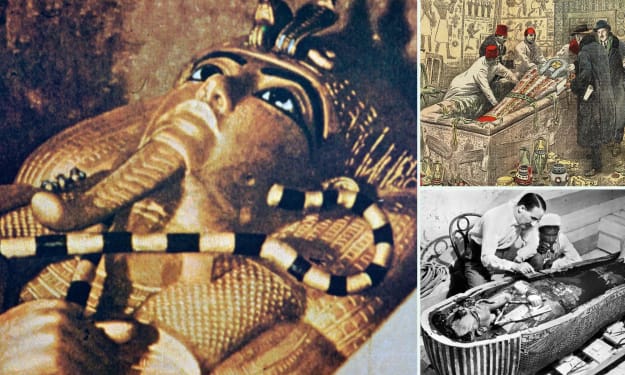
In November 1922, Howard Carter discovered the final resting place of a little-known Egyptian pharaoh named Tutankhamun. Upon carefully removing the outer door and stepping over the threshold, Carter became the first human being to do so in over 3,000 years. At that moment, Carter didn't know that Tutankhamun's tomb would become one of the greatest archaeological finds in history, comparable to the Terracotta Army, the remains of Pompeii, and the Rosetta Stone. News of the incredible discovery hit the headlines, drawing the world's media attention to the Valley of the Kings in Egypt, near what was once Thebes. It was the crowning achievement of Carter's career, immortalizing him among archaeologists. But from the moment he first stepped inside the pharaoh's tomb, rumors began to spread that his actions had unleashed a terrible curse, a punishment from beyond the grave for disturbing the long-dead pharaoh. Many dismissed it as nonsense, including Carter himself, until people started dying.
By Horace Waslandabout a year ago in Education
Are wormholes stable or self-destructing?
What Is a Wormhole? A Quick Scientific Overview In Einstein’s theory of general relativity, gravity arises from the curvature of spacetime. Wormholes are solutions to Einstein’s equations that connect two distant regions of spacetime through a tunnel-like geometry.
By shahkar jalal8 days ago in Education
The Human Guide Behind Technical Excellence
Mentorship of skilled technicians plays a decisive role in shaping strong careers and reliable work standards. Technical skill alone does not make a technician capable. Real growth comes from shared experience, steady guidance, and trust built over time. In many industries, mentorship fills the gap between classroom learning and real job demands. It helps technicians move from basic ability to confident performance. This article explores how mentorship supports learning, builds skills, and strengthens the future workforce.
By Michael Gastinelabout 14 hours ago in Education
Miss Persephone's Manual to a Seemingly Ordinary Life
Miss Persephone was found at the dining table, her blue eyes swollen, her tears arriving and retreating like the tides of the ocean. Earlier that day, her family had visited her in the retirement home where she had lived for eight years. It was her eightieth birthday.
By Imola Tótha day ago in Fiction


Comments (1)
Very interesting article on an exploration into our subconscious thoughts and desires.