
Why Do People Think Octopuses Are Aliens
From their strange bodies to their surprising intelligence, octopuses have fascinated humans for centuries.
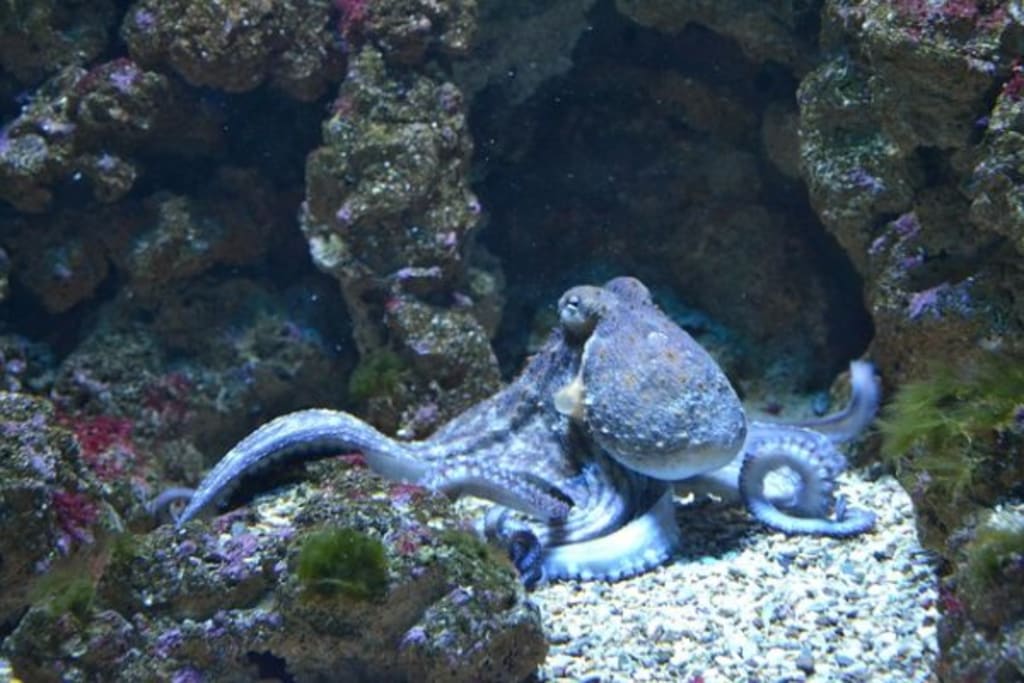
Many people often ask why do people think octopuses are aliens, especially when they see videos of these creatures solving puzzles, changing colors, or squeezing through impossibly small spaces. The idea may sound humorous, but there are real reasons behind this belief. In this article, we will explore those reasons in simple words and understand why octopuses feel so different from other animals on Earth.
A Body That Looks Truly Unfamiliar
One of the main reasons people feel octopuses are “alien-like” is their appearance. Unlike most animals, they have no bones. Their soft, flexible bodies allow them to change shape easily. An octopus can flatten itself, stretch its arms in different directions, or flow through tiny gaps that seem too small to fit through.

They also have eight arms covered with suckers, each capable of moving independently. To the human eye, this looks unusual and even unsettling. Most land animals have symmetry we recognize, but octopuses break that pattern, making them appear as if they belong to another world.
Masters of Color and Shape Shifting
Octopuses can change their skin color, texture, and pattern within seconds. They do this to hide from predators, communicate, or hunt prey. Their skin contains special cells that react instantly to their surroundings.
What makes this ability seem alien is how fast and accurate it is. An octopus can match coral, rocks, sand, or seaweed almost perfectly. Some species can even create moving patterns on their skin. This level of control over appearance is rare in nature and feels more like science fiction than biology.
Intelligence That Surprises Scientists
Octopuses are considered one of the most intelligent invertebrates on Earth. They can solve puzzles, open jars, escape from closed containers, and remember solutions for future use. Some have even been observed using tools, such as carrying coconut shells for shelter.
What makes their intelligence so strange is how it works. An octopus has a large brain, but more than half of its neurons are located in its arms. This means each arm can act almost on its own, sensing and responding independently. To humans, this distributed intelligence feels very unfamiliar and adds to the mystery.
Behavior That Feels Almost Conscious
Octopuses show behaviors that people often associate with higher thinking. They can be curious, playful, and sometimes even mischievous. There are stories of octopuses recognizing individual humans, squirting water at people they dislike, or repeatedly escaping from aquariums.
They also seem capable of learning by observation and experience. This makes people wonder how such a short-lived creature can develop such complex behavior. Their actions often feel intentional, which leads some to imagine they possess an awareness beyond what we expect from sea animals.
Short Lifespan With Rapid Learning
Another puzzling trait is their short lifespan. Most octopus species live only one to three years. Despite this, they learn quickly and display advanced problem-solving skills. From a human perspective, it feels strange that such intelligence exists in a creature with so little time to live.
This contrast between high intelligence and short life fuels the idea that octopuses are somehow different from the rest of Earth’s animals, as if they follow a completely separate set of biological rules.
Evolution That Took a Unique Path
Scientists believe octopuses evolved along a very different path from mammals, birds, or reptiles. They separated from our evolutionary line hundreds of millions of years ago. Because of this, their bodies, nervous systems, and behaviors developed in unique ways.
This distant evolutionary history explains why they feel so unfamiliar. They are not aliens, but they are the result of evolution experimenting in a completely different direction, deep under the sea where conditions are unlike those on land.
Cultural Influence and Popular Media
Movies, books, and internet content have also played a role in shaping this belief. Octopuses are often shown as mysterious, powerful, and intelligent beings. Their tentacles and deep-sea habitats fit well into alien-themed stories.
Online discussions and viral videos exaggerate their abilities, sometimes jokingly suggesting they came from outer space. Over time, these ideas blend with real science, making the concept more believable to the public.
Conclusion
People think octopuses are aliens because they challenge our understanding of what intelligence, behavior, and body structure should look like. Their unusual appearance, advanced abilities, and unique evolution make them feel completely different from animals we see every day.
While octopuses are very much creatures of Earth, they remind us that life can take many unexpected forms. Instead of being aliens, they are proof of how diverse and creative nature can be, especially in the depths of the ocean.
Source: https://horizondwellers.com/why-do-people-think-octopuses-are-aliens-science-vs-speculation/
About the Creator
Horizon Dwellers
At Horizon Dwellers, we believe the world is a vast canvas of knowledge, adventure, and creativity waiting to be explored.
Visit us- https://horizondwellers.com/
Keep reading
More stories from Horizon Dwellers and writers in Education and other communities.
Most Expensive Flowers in the World
The most expensive flowers in the world are admired not only for their beauty but also for their rarity, growing conditions, and the effort required to cultivate them. Some flowers are priceless because they bloom for only a short time, while others take years of research and care to grow. Their high value often comes from limited availability, special environments, and strong cultural importance. In this article, we explore what makes certain flowers so valuable and why people around the world are fascinated by them.
By Horizon Dwellersa day ago in Education
What It Really Takes to Get a Wikipedia Page Approved in 2026
These days, Wikipedia isn't like the one some folks recall. Back then, an okay article often made it through with just small tweaks. Now things feel tighter, more intense. Every day brings thousands of fresh entries. Most vanish fast, blocked before they stick around. Getting turned down used to be rare. Lately, that's just how it goes.
By Hillshire Media3 days ago in Education
'20/20'
"Do It Again" the track that would ultimately open the Beach Boys final album on Capitol Records which was released on February 10th 1969 had originally been released as a single in August of 1968. The track was the first of many post-Pet Sounds era throwbacks to the early Beach Boys sound which would become continually more cliched and eventually lead the Beach Boys to the level of self-parody they would eventually succumb to in the 1980s while their closest contemporaries The Beatles nearing the end of their run in 1969 would go on to be viewed as the most influential band of all time. However, the song itself is not bad on its surface, and it opens with a futuristic sounding (for 1969) drumbeat captured by then-Beach Boys engineer Stephen Desper using tape delays on the drums performed by Dennis Wilson and John Guerin. The song has been re-recorded numerous times over the years on various Beach Boys-related projects most notably the 2011 re-recording at Capitol studios featuring the five surviving Beach Boys at the time backed instrumentally by various members of both the Brian Wilson Band and Mike Loves touring "Beach Boys" to promote the then upcoming Beach Boys 50th Anniversary reunion tour in 2012. The hammering and power drill sound at the end of the song was an excerpt from a track called "Workshop" that was to be a part of the uncompleted "SMiLE" album.
By Sean Callaghan5 days ago in Beat



Comments
There are no comments for this story
Be the first to respond and start the conversation.