
Why BIM: The Key to Digital Transformation in Construction
Unlocking Efficiency and Innovation in Construction


The construction industry is going through a big change because of digital technology. This change is focused on improving efficiency, saving money, and promoting green practices. Building Information Modeling (BIM) plays a key role in this shift. BIM allows people to work together using data on construction projects. This teamwork helps achieve better results.
Exploring the Role of BIM in Construction's Digital Era

Digital transformation is changing the construction industry a lot, and information modeling plays a big part in this change. It affects every stage of a construction project. This starts from the first design ideas and goes all the way to managing the completed building.
BIM, which means Building Information Modeling, uses smart 3D models. It is a main factor in this digital change. BIM offers a shared space for design, construction, and operation. This makes projects more efficient, cuts down on waste, and helps in making better choices during the whole project.
Defining Building Information Modeling (BIM)
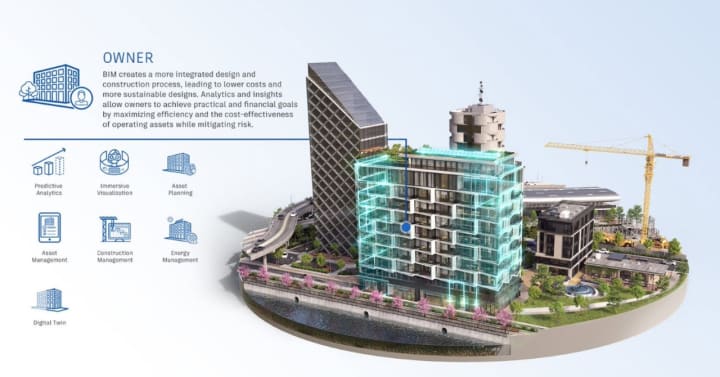
Building Information Modeling (BIM) is a process that helps in creating and managing digital versions of the physical and functional aspects of a construction project.
BIM brings together geometry, spatial relationships, geographic data, and quantities. This gives a complete view of the entire project from start to finish. By using digital tools and integrating data, BIM makes projects more efficient, cuts down construction costs, and leads to better results.
Construction firms can improve project management with BIM, optimize designs, and manage facilities effectively. This digital method changes the construction industry by encouraging collaboration, new ideas, and sustainability.
The Evolution of BIM in the Construction Industry
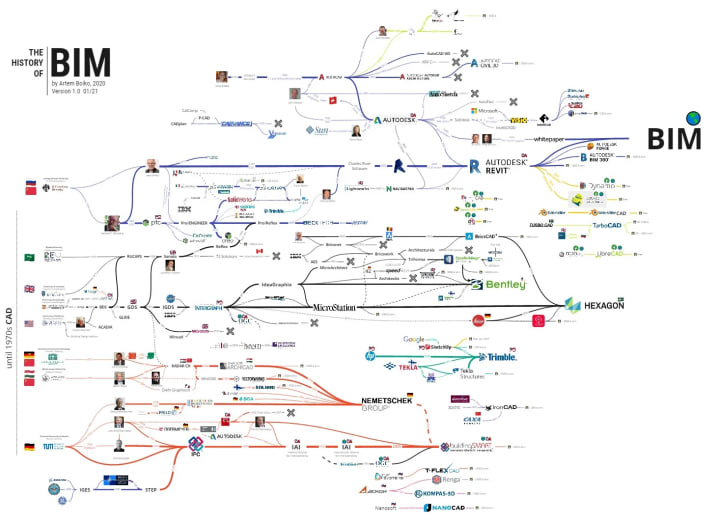
The development of BIM marks an important shift in the construction industry. It has moved from simple 3D modeling to a smart and detailed process with a lot of data.
In the beginning, BIM was all about showing designs. Over time, it started to include data management, cost estimates, and schedules.
As digital technologies grew, BIM kept up. The use of cloud computing, mobile devices, and new technologies like artificial intelligence (AI) and virtual reality (VR) improved what BIM can do. This helped make design better and construction easier.
Now, BIM plays a key role in the digital transformation of the construction industry. Its growth is bringing new ideas like digital twins. These twins give instant feedback on how things are working and help with maintenance during the life of a building.
The Impact of Digital Transformation on Construction
The construction industry is going through significant changes due to digital transformation. This change is more than just using new technologies. It is a deep change in how the industry works, shares ideas, and creates.
Several reasons drive this shift. There is a need for more efficiency and productivity. There is also a demand for building in a sustainable way. Plus, modern projects are becoming more complex. Digital tools provide solutions to these challenges. They help in making decisions based on data, improving processes, and boosting collaboration.
Key Drivers Behind Construction's Digital Shift
Many factors are pushing the construction industry to adopt new technologies and become more digital. One major factor is the need to improve how efficient and productive the industry is. It often faces delays and cost overruns.
Using digital tools, like project management software with cloud solutions, helps make communication smoother. These tools can also automate tasks and provide real-time data. This leads to better decision-making, improved project schedules, less rework, and significant cost savings.
Additionally, concerns about sustainability are affecting construction practices more and more. Buildings use a lot of energy and create greenhouse gas emissions. This makes it urgent to find greener ways to build. Tools like BIM and other digital tools are essential in solving this issue.
Overcoming Barriers to Digital Adoption in Construction
Digital tools can greatly help the construction industry, but there are some barriers that can stop them from being used widely. One big issue is that many construction firms do not know about the benefits these digital solutions can bring. Smaller companies, in particular, often think that these tools are just extra costs rather than necessities.
Another challenge is the resistance to change. The construction field relies heavily on traditional practices. Because of this, many people hesitate to try new methods. This reluctance is because they may not know much about digital tools.
Also Read - How BIM Clash Detection Reduce Construction Rework & Costs?
They also worry about how difficult it will be to learn them and fear losing jobs. To help with this, it's important to show how easy these solutions are to use. Giving proper training and pointing out the long-term advantages for everyone involved can help ease these worries.
On top of these issues, meeting regulatory compliance and industry standards is also tough. The construction industry has many strict rules about safety, building codes, and sustainability. It is important that digital tools follow these regulations; this is key for their successful use and acceptance in the industry.
The Benefits of Implementing BIM

Implementing BIM has many benefits for construction projects. It helps improve project efficiency, saves money, and leads to better results. BIM allows for better coordination and fewer mistakes. It also provides a central place for sharing information, which changes how buildings and infrastructure are designed, built, and operated.
The benefits of BIM last throughout a project’s lifecycle. From the beginning design to construction and facility management, it combines data from different areas into one model. This helps everyone involved make smart decisions, use resources wisely, and avoid expensive redo work.
Enhancing Collaboration Across Project Teams
Effective teamwork is important for the success of any construction project. BIM helps with teamwork by giving everyone a central place to access and share information easily. This helps keep communication clear between architects, engineers, contractors, and clients during the whole project.
In contrast to traditional design methods that often struggle with broken communication paths, BIM allows for live updates and changes to the model. This means that whenever changes happen, all team members can see them right away. This cuts down on misunderstandings and costly mistakes.
By offering a common understanding of the project goals, design ideas, and building progress, BIM improves project management. It lowers conflicts and creates a more effective and cooperative working environment.
Improving Accuracy and Efficiency in Construction Projects
BIM makes construction projects more accurate and efficient. It helps cut down on expensive rework and keeps projects on schedule and within budget. By spotting possible problems early in the design phase, BIM lets teams make changes before building starts. This saves time and resources.
BIM also provides detailed models that help with accurate quantity takeoffs. This reduces waste and leads to better cost control. When contractors have accurate material estimates, they can buy materials more effectively. This helps avoid delays and keeps budgets in check.
In summary, BIM improves accuracy and efficiency. This results in better construction projects, lower construction costs, and happier clients.
Streamlining Project Lifecycle Management

Building Information Modeling (BIM) changes how we manage construction projects, starting from design to building and operation. BIM helps manage data better, improves communication, and makes project work more efficient.
In the design phase, BIM offers different design options. It shows how these choices affect costs, schedules, and sustainability. This allows people to make better choices and improves building performance right from the start.
During the construction phase, BIM helps with accurate building and assembly. It reduces mistakes and lowers material waste. The BIM model acts as a digital guide for construction teams. It helps ensure that the completed building matches the design, leading to better efficiency and quicker project completion.
BIM and Sustainability in Construction

Sustainability is very important in the construction industry. BIM, or building information modeling, helps promote eco-friendly building practices. Its advanced modeling features let architects and engineers check how energy-efficient a building design is, use materials better, and reduce waste.
By simulating how much energy a building will use, project teams can make smart choices. This leads to better energy efficiency, lower operating costs, and less harm to the environment over the building's entire life. Focusing on managing resources and cutting waste is key because more people want sustainable construction.
Also Read - Discover how architectural BIM is Revolutionizing Sustainable Building Design
Reducing Waste Through Precise Planning
Waste reduction is very important for sustainable construction projects. BIM, or Building Information Modeling, plays a big role in this. With its detailed modeling and planning tools, BIM helps decrease material waste during the construction process. Traditional methods often lead to a lot of wasted materials. This happens because of wrong estimates, changes made on-site, and unexpected issues.
BIM solves these problems by giving accurate quantity takeoffs. It also helps order the right amount of materials and lowers the chances of overstocking or ordering the wrong ones. The precise modeling means there are fewer adjustments needed on-site, which cuts down on wasted materials.
Using less waste is good for the environment. It saves resources and reduces the amount of construction debris that goes to landfills. Also, saving money by using materials more efficiently helps make the project more economically viable. This shows how sustainability and cost savings go hand in hand in construction.
Optimizing Resource Utilization for Sustainability
BIM greatly affects sustainability. It does this by reducing waste and improving how we use resources throughout a building's life. With BIM, architects and engineers can design buildings that use less energy and water. They achieve this by simulating and checking energy performance.
BIM supports green design ideas. This includes things like passive heating and cooling systems, better use of natural light, and eco-friendly materials. This helps create buildings that perform better and have less impact on the environment.
BIM also helps include renewable energy sources, like solar panels and wind turbines, in building designs. By carefully modeling these systems, BIM helps find the best way to place them. This maximizes their efficiency and supports a better energy plan for the building.
Real-world Applications of BIM in Construction Projects

The use of BIM is moving beyond theory. It is changing how construction projects are planned, done, and managed around the world. Whether it's big infrastructure projects or detailed healthcare buildings and eco-friendly homes, BIM is used in many types of construction projects.
These real-life uses include better teamwork and fewer mistakes in complicated building designs. BIM also helps manage budgets and timelines in large construction jobs. This shows how BIM can adapt to different needs and challenges in the construction industry.
Case Study: Success Stories of BIM Implementation
Numerous construction projects worldwide stand as testaments to the successful implementation of BIM. These case studies highlight how BIM can lead to tangible benefits, including reduced costs, improved collaboration, and enhanced project outcomes. One such example is the construction of the Shanghai Tower in China, one of the world's tallest structures.
The project team utilized BIM to manage the tower's complex geometry and coordinate the work of various disciplines involved. This BIM implementation resulted in significant time and cost savings and improved communication and collaboration. Below are some key highlights of the project:
This case study highlights the effectiveness of BIM in managing large-scale, intricate construction projects. The successful implementation of BIM in the Shanghai Tower's construction exemplifies its potential to transform the industry.
Analyzing the ROI of BIM in Large-scale Projects
Analyzing the Return on Investment (ROI) of BIM in large construction projects is important to see its value. While BIM needs some upfront money for software, training, and setup, studies show that the long-term benefits are much greater than these initial costs. BIM can help stop costly mistakes, improve how resources are used, and make schedules better. This leads to big savings.
Large construction projects often have more complexity and a higher chance of cost overruns. In these cases, the ROI of BIM matters greatly. With BIM, problems can be found in the design phase. This means issues can be fixed before building starts, reducing expensive rework and delays.
Also, BIM helps communication and teamwork among all the people involved in a project. This improves choices, lowers the risk of conflicts, and makes project results more predictable. Better control over costs and schedules makes it clear why BIM is a good choice for big construction projects.
The use of BIM is becoming more common, but it also brings challenges for construction firms. It is important to overcome these issues for a smooth shift to using digital methods. These challenges include dealing with initial costs, training workers, and changing the company culture to accept new technologies.
To solve these problems, construction firms need a smart plan that fits their own needs, resources, and long-term goals. By tackling these challenges early, the construction industry can use BIM to boost efficiency, support sustainability, and drive innovation.
Navigating the Challenges of BIM Adoption

The use of BIM is becoming more common, but it also brings challenges for construction firms. It is important to overcome these issues for a smooth shift to using digital methods. These challenges include dealing with initial costs, training workers, and changing the company culture to accept new technologies.
To solve these problems, construction firms need a smart plan that fits their own needs, resources, and long-term goals. By tackling these challenges early, the construction industry can use BIM to boost efficiency, support sustainability, and drive innovation.
Identifying Common Obstacles in BIM Implementation

While BIM has many benefits for the construction industry, there are some challenges that keep it from being used widely. Knowing these challenges is important for construction firms that want to use BIM successfully.
One main challenge is the resistance to change. This is a common issue in an industry that relies on traditional practices. Construction professionals who are used to old workflows may be hesitant to try new technologies and methods like BIM. This hesitation often comes from not knowing enough about the benefits of BIM or worrying about how hard it will be to learn.
Another big challenge is the need for initial investment in software, hardware, and training. This is especially hard for smaller firms, which may struggle with these costs.
To get past these obstacles, it is important to explain the long-term return on investment (ROI) of BIM. Giving clear training and addressing worries early on can help ease the transition.
Strategies for Effective BIM Adoption in Construction Firms
Successfully using BIM requires a plan that looks at the special challenges and chances in the construction industry. Using BIM is not just about new software. It needs a big change in how people think and work.
One good way to start is with small pilot projects. By picking smaller and simpler projects, construction firms can learn how to use BIM. They can find problems and improve their work processes before using BIM in all their projects.
Another important method is to invest in training and education for all employees. By giving good support and chances for learning, firms can reduce worries about how hard it will be to learn. This helps everyone transition more smoothly.
The Future of BIM in Construction

The future of BIM in the construction industry is promising. It keeps evolving with new technologies. As the industry adopts digital transformation, BIM is set to change construction processes. It will change how we design, build, and manage our buildings.
By combining BIM with other advanced technologies like artificial intelligence (AI), machine learning, and the Internet of Things (IoT), we can open up new chances for automation and data analysis. This will help us make smarter predictions and lead to better efficiency and sustainability in construction.
Emerging Technologies and Their Integration with BIM
The use of new technologies with BIM will change the construction industry in the coming years. One of these technologies is the digital twin. A digital twin is a virtual version of a real asset that changes as it is used over time. By linking the BIM model to live data from sensors, a digital twin helps us see how well a building is performing.
Another important technology is artificial intelligence (AI) and machine learning. With AI, BIM models can look at a lot of data. They can find patterns, predict problems, and improve building designs. This is good for energy efficiency, costs, and safety. This connection helps us make better choices during the entire project.
Also, the internet of things (IoT) links many devices to help manage construction sites from afar. When we mix BIM with IoT data, we can track materials and equipment in real-time. This helps us make decisions quickly, lower risks, and improve safety on construction projects.
Predictions for BIM's Evolution in the Next Decade
Looking to the future, BIM will change the construction industry a lot in the next ten years. As technology gets better, BIM will likely become smarter, more automated, and really fit into how the construction world works.
One idea is that BIM will cover more than just single buildings. It might help with planning and managing entire cities. Picture a future where city planners and people who manage infrastructure can use BIM to create and track urban designs. This could help improve traffic flow, save energy consumption, and better use resources.
In addition, AI and machine learning will make BIM even better at predicting things. Imagine a time when BIM can find design problems before they happen, suggest maintenance before it's needed, and improve how buildings work using real-time data.
BIM Standards and Regulations in the United States
In the United States, BIM standards and rules are always changing. This is because government agencies and industry groups see how powerful this technology can be. More people are using BIM in public and private projects. Because of this, there is a need for clear practices and guidelines.
The creation of BIM standards makes sure that BIM data is made, shared, and used in the same way during a project. This helps different software and people work together better. This consistency is very important for good teamwork. It allows a smooth flow of information from the design phase right through construction and operation.
Understanding BIM Compliance and Industry Standards
BIM compliance is very important for construction projects in the United States. It helps make sure that projects follow set guidelines and enjoy all the benefits that come from using BIM. Industry standards, like those from buildingSmart International, offer a way to create, share, and manage BIM data consistently.
These standards cover important areas of BIM. They define data structures, file types, and how to share models. Following these standards helps all project participants, no matter where they are or what software they use, work together easily and share information during the project.
Regulatory compliance is also key in the growth of BIM use. Government groups, like the General Services Administration (GSA), are more and more requiring or suggesting the use of BIM for building projects that are public.
The Role of Government in Shaping BIM Adoption

The government has an important role in promoting the use of BIM in the construction industry in the United States. They can help more people use BIM by creating rules that either suggest or require it for construction projects that get public funding.
Also Read - BIM for the Government Sector in USA
In addition, the government can encourage companies to adopt BIM by providing tax breaks, grants, or other financial help. This support can inspire construction firms, especially smaller ones, to spend money on BIM software, training, and using BIM in their work.
The government can also help create and follow BIM standards. By working with people in the industry, they can make sure that BIM data is made, shared, and used correctly. This way, construction projects can finish smoothly, clearly, and within budget.
How BIM Facilitates Better Decision Making

In today's world that relies heavily on data, BIM is changing the game for the construction industry. It helps people involved in projects make better decisions by giving them lots of useful information and supporting data analytics throughout the project's life.
BIM data is more than just showing 3D images. It includes details about costs, schedules, sustainability, and facility management. By using this rich data, project teams can try out different scenarios. They can also foresee potential problems, improve designs, and make smart choices that affect a building's performance, its cost, and how sustainable it is.
Leveraging Data for Advanced Project Insights
BIM plays a big role in the construction industry. It creates a lot of data that helps in understanding projects better. Compared to traditional methods, which mostly depend on gut feelings and past experiences, BIM supports decisions based on facts. This leads to smarter choices and better results.
You can use BIM data to look into possible issues, improve building designs, and find ways to save money. This way of using data reduces guesswork. It helps teams make informed choices based on real-time updates about a project's costs, speed, and overall performance.
Also, BIM data lets teams run simulations and test "what-if" scenarios. This means they can try out various design and building strategies in a virtual setting. By doing this, they can spot problems before they happen. This strategy supports ongoing improvement during the project, helping achieve better and more affordable results.
Case Studies: Decision Making Enhanced by BIM
Many case studies show how BIM helps with decision-making in the construction industry. It affects many parts of a project. For example, in one large hospital project, BIM was used to look at different design choices for the HVAC system.
The BIM model let the project team test how different systems would work in various conditions. This data-focused approach helped them choose the system that used the least energy. This choice led to big cost savings over the life of the building.
In another case, a construction management firm used BIM to study different building sequences for a high-rise project. The BIM model found the best way to construct the building. It took into account things like when to deliver materials, how to use cranes, and when crews were available.
The Intersection of BIM and IoT: A New Frontier
The combination of BIM and the Internet of Things (IoT) is changing the construction industry. It brings better ways to collect and analyze data and make decisions. This connection offers great opportunities to improve construction processes and create smarter, more efficient buildings.
When we connect BIM models to sensors and devices, we can easily add real-time data from the construction site to the digital model. This blend of the physical and digital worlds helps us keep track of progress, manage resources, improve safety, and create a more connected and efficient construction environment.
Exploring the Synergy Between BIM and IoT Technologies
The combination of BIM and IoT technologies can greatly change the construction industry. BIM creates a complete digital view of a building project. IoT gives real-time data from physical objects. Together, they create a lively and data-filled space that helps with decision-making and improves how things work.
A key area where this combination works well is in managing and monitoring construction sites. By putting sensors in construction materials, tools, and the area around them, project managers can get real-time information about the construction site. This data can go back into the BIM model. This gives an up-to-date look at progress, resources, and possible safety risks.
Also, merging BIM with IoT data can help with maintenance. By checking how building systems work in real-time, building managers can spot issues before they become big problems. This can reduce downtime and increase the life of building assets.
Case Examples: IoT Integration in BIM Projects
IoT integration in BIM projects is changing construction for the better. It is making it more efficient and safer. For instance, in a big infrastructure project, sensors in concrete watched the curing process live. They sent data back to the BIM model.
This let project managers see how strong the concrete was getting. They could then adjust curing times to make sure the building stayed strong. This integration reduced the chance of delays from bad curing. It helped speed up construction and led to a successful project.
In another example, a tall building project used IoT sensors to check environmental conditions, like temperature and air quality, during construction. This data went into the BIM model. Project managers used this information to adjust ventilation systems and decide construction schedules in real-time.
Training and Education in BIM for Construction Professionals
As more people use BIM, it is very important that construction workers get the right training and education. This training is not just about learning how to use the software. It includes understanding BIM principles, workflows, and working together as a team.
Programs to develop the workforce that focus on BIM training are vital. They help both individuals and companies stay ahead in the competition. Offering educational chances, certifications, and programs for professional growth gives construction workers the skills they need. This way, they can work well in a BIM-focused workplace and use the technology to its fullest.
Current Trends in BIM Education and Certification
BIM education and certifications are growing fast. More people in the construction industry see how important it is to have a skilled BIM workforce. Because of this, many schools are starting to offer more educational programs, training courses, and certifications in BIM.
Colleges and universities are adding BIM to their programs for construction management, architecture, and engineering. These programs help students learn the basics of BIM. They cover important principles, software, and best practices. This training gets them ready for jobs that use BIM.
Certification trends show that there is now more focus on special skills in BIM.Groups like the American Institute of Architects (AIA) and the Associated General Contractors of America (AGC) provide BIM-specific certifications. These certifications prove a person's skills in BIM management, modeling, and coordination.
Bridging the Skill Gap: Strategies for Workforce Development
As the construction industry quickly adopts BIM, it is very important to close the skill gap and get the workforce ready for this change. It highlights how essential workforce development strategies are to overcome the BIM knowledge gap.
One good way to do this is by teaming up with schools to create training programs that match what the industry needs. This partnership can include things like internships, apprenticeships, and mentoring. These experiences give people real-world practice and help build a group of skilled BIM workers.
Another key part of closing the skill gap is to push for upskilling and reskilling for current employees. Providing rewards for professional development and building a culture of ongoing learning in construction firms can help make the shift to BIM-centered workflows easier. This will ensure all employees are ready to succeed in a tech-driven workplace.
Final Words
BIM is a key part of digital transformation in the construction industry. It leads to better teamwork, efficiency, and eco-friendliness. When construction firms use BIM, they can improve their project results, cut down on waste, and use resources better. BIM is changing how decisions are made and making project information clearer. It also connects well with new technologies like IoT.
As construction professionals face challenges with BIM, it is very important to invest in training and education. This way, we can build a skilled workforce that knows how to use the benefits of this important technology. Let’s focus on BIM to shape the future of construction as part of your digital plan.
About the Creator
Matt Sharon
A professional content writer. Having years of experience in Technology, health, finance, and construction and real estate field. Writing is my passion and I love to play with words Confidently.
Keep reading
More stories from Matt Sharon and writers in Education and other communities.
Point Cloud Modeling for Virginia Infrastructure Development
Virginia is known for its rich history and focus on progress. It is leading the way in using new technologies to improve city development. One important innovation is point cloud modeling. This technology is changing how public infrastructure projects are planned, designed, and built.
By Matt Sharon11 months ago in Education
Step-by-Step Guide to Going Pro in Poker in 2026: From Novice to Expert
In 2026, poker continues to thrive as a competitive and lucrative field for skilled players. With hybrid formats that combine the convenience of online access with the prestige of live events, the game offers greater flexibility and opportunities than ever. If you're thinking of turning your passion into a full-time career, now is a great time to get serious.
By Micah Raskin6 days ago in Education
The Colors of Learning
The sun was warm that morning, and the school walls glowed with bright colors, reflecting the laughter and chatter of children and parents on the narrow village paths. But in the midst of all this noise, Maryam’s heart carried a calm determination, a spark for knowledge that seemed to shine brighter than the sun. She was young, but her spirit was fearless. Every morning, she walked to school with a single thought in mind: one day, she would bring the light of education not just to herself, but to every child in her village. Maryam’s journey to school was long. The paths were lined with flowers and the occasional fluttering bird, yet she paid little attention to them; her focus was unwavering. As she entered the school gates, her face lit up with a smile. Mr. Anwar, her class teacher, greeted each student warmly, patiently guiding them through lessons, always encouraging curiosity. Maryam was known among her peers for her sharp mind and her ability to understand solutions where others struggled. But Maryam’s dream extended far beyond her own learning. She wished to create opportunities for other children in her village, to fill their lives with the colors of knowledge. The village, however, was not an easy place for education. The school library was sparse, there were no computers, and modern teaching resources were practically nonexistent. Parents were often busy with daily work and could not fully grasp how education could brighten their children’s future. Undeterred, Maryam began to devise a plan. She decided to start a small reading club at her school. Every morning, she gathered her classmates in the little library and shared stories from the few books available, encouraging discussions and curiosity. It was not an easy task. Books were limited, electricity was unreliable, and many children had chores that kept them busy at home. But Maryam’s determination never wavered. She patiently organized reading sessions, helped students with lessons, and inspired them to dream beyond their immediate surroundings. One day, Maryam took her plan a step further. She requested a meeting with the local school board. She explained the challenges her school faced and asked for support. “If we provide children with the resources they need,” she told them, “their hearts and minds will light up with learning, and their futures will shine brighter than ever.” The board members were impressed by Maryam’s courage and clarity. They agreed to provide books, computers, and other resources to help her vision take shape. The day the library reopened was unforgettable. Children explored colorful books, their eyes wide with excitement. The computers brought a new wave of learning, allowing them to explore technology for the first time. Maryam’s heart swelled with pride and hope. She realized that with courage, dedication, and passion, even the greatest challenges could be overcome. Her reading club soon became a hub of creativity. Maryam helped her classmates with homework, extra lessons, and new skills. She organized storytelling sessions, science projects, and activities that motivated even the shyest students. Slowly, parents began to notice the transformation. They saw their children excited to learn, eager to attend school, and willing to embrace new knowledge. As weeks turned into months, the small library became a beacon of hope. Maryam’s efforts inspired not only her peers but also the entire community. Villagers, once indifferent to education, started valuing it, realizing it was the key to a brighter future. The children learned that education was not just a subject in textbooks but a tool that could empower them, open doors to new opportunities, and allow them to dream bigger than the village boundaries. Maryam herself grew through this journey. She learned leadership, empathy, and the true meaning of perseverance. She discovered that one person’s determination could spark change in an entire community. The joy of seeing other children learn, explore, and succeed became her greatest reward. By the end of the year, the school had transformed. The library was thriving, classes were full of energy, and Maryam’s vision was no longer just a dream—it was a living reality. Her village had begun to embrace education as the path to progress, and Maryam had become a symbol of hope for every child who dared to dream. In the end, Maryam realized that the colors of learning were not just in books or computers—they were in the hearts of those who chose to embrace knowledge, curiosity, and the courage to dream. And she knew that as long as there were children willing to learn, the light of education would never fade from her village.
By Abubakar khan 6 days ago in Education


Comments
There are no comments for this story
Be the first to respond and start the conversation.