
Why Are China and the U.S. at Odds? A Breakdown of Global Tensions
A Deep Dive into the Complex Relationship Between the U.S. and China
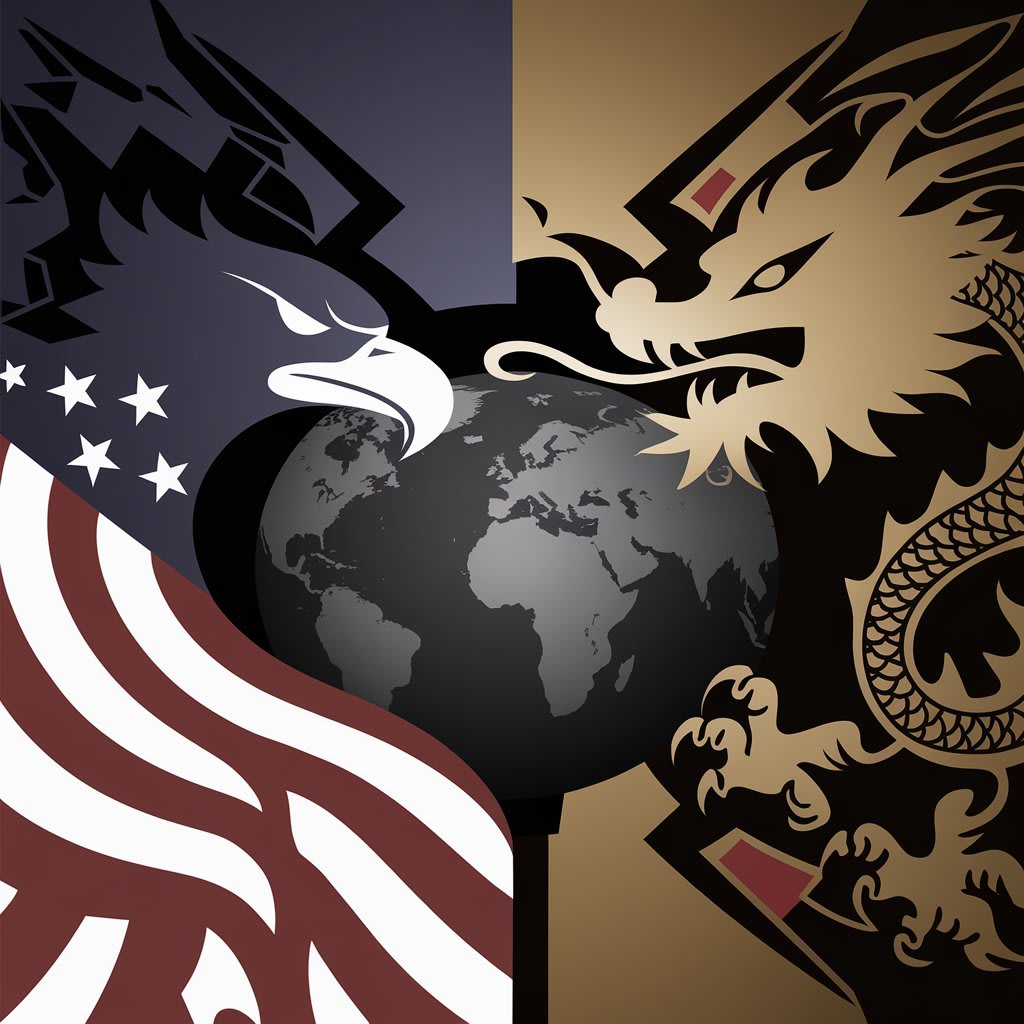
The relationship between China and the United States has become one of the most defining—and tense—dynamics in modern geopolitics. What was once a cooperative, albeit cautious, partnership has evolved into a full-blown strategic rivalry. From trade disputes to technological competition, military posturing, and ideological clashes, the two global superpowers are increasingly finding themselves at odds. But what’s really driving this tension? To understand the current state of affairs, we need to dive into the historical context, the key friction points, and the broader implications for the world.
1. The Rise of China: A Challenge to U.S. Dominance
For decades, the United States has held the position of the world’s dominant economic and military power. However, China’s rapid rise—economically, militarily, and politically—has disrupted this balance. Since the 1980s, China has transformed from an isolated, agrarian society into a global powerhouse, now ranking as the world’s second-largest economy. Its ambitious “Made in China 2025” initiative aims to make the country a global leader in advanced technologies like AI, robotics, and semiconductors.
From the U.S. perspective, this rise poses a direct challenge to its long-standing leadership role. China’s growing influence in Asia, Africa, and even Latin America has led American policymakers to view it not just as a competitor, but as a potential threat to the liberal international order that the U.S. helped build after World War II.
2. Economic Competition and Trade Wars
One of the most visible aspects of the U.S.-China conflict has been the economic struggle. The trade war that began under President Donald Trump in 2018 marked a significant turning point. The U.S. imposed tariffs on hundreds of billions of dollars' worth of Chinese goods, citing unfair trade practices, forced technology transfers, and intellectual property theft. China responded with retaliatory tariffs, leading to a tit-for-tat escalation that strained both economies and disrupted global supply chains.
Even with shifting administrations, the fundamental economic distrust has remained. The U.S. continues to impose export controls on Chinese tech firms, including giants like Huawei, limiting their access to critical American technologies such as microchips and operating systems. Meanwhile, China has doubled down on self-reliance, investing heavily in domestic innovation and supply chain resilience.
3. Technology and the Battle for Innovation Leadership
Perhaps no area of conflict is more intense than the battle for technological supremacy. The U.S. has long dominated sectors like software, semiconductors, and internet infrastructure, but China is quickly catching up. 5G networks, artificial intelligence, quantum computing, and space exploration have become critical battlegrounds.
Washington fears that China’s technological advancements could not only displace American firms but also tilt the global balance of power. This fear has led to strict export bans, investment restrictions, and even moves to ban or limit Chinese apps like TikTok and WeChat on security grounds. China, in response, has ramped up state-backed research, formed tech alliances with other nations, and pushed for greater data sovereignty.
4. Military Posturing and Flashpoints in Asia
The strategic rivalry between China and the U.S. is not confined to boardrooms and factories—it’s playing out in real time across the Asia-Pacific region. Nowhere is this more visible than in the Taiwan Strait. The U.S. maintains unofficial relations with Taiwan and supplies it with defensive weapons, while China views the self-governed island as a breakaway province that must eventually be reunited with the mainland, by force if necessary.
In recent years, tensions have escalated with increased Chinese military exercises near Taiwan and frequent incursions into its air defense zone. The U.S. has responded with naval deployments, freedom of navigation operations in the South China Sea, and enhanced security cooperation with allies like Japan, South Korea, and the Philippines.
Beyond Taiwan, the South China Sea is another major flashpoint. China claims vast areas of the sea as its own, constructing artificial islands and militarizing them despite international rulings against its claims. The U.S. and its allies see this as a threat to free navigation and regional stability.
5. Ideological Divide: Democracy vs. Authoritarianism
At the heart of many U.S.-China tensions lies a deeper ideological divide. The U.S. promotes liberal democracy, freedom of speech, and open markets, while China operates under a centralized, one-party authoritarian system. This fundamental difference influences how each country views global governance, human rights, and sovereignty.
Issues such as the treatment of Uyghur Muslims in Xinjiang, the crackdown on democracy activists in Hong Kong, and China's strict censorship of the internet have drawn sharp criticism from the U.S. government and human rights organizations. China, in turn, accuses the U.S. of hypocrisy and of meddling in its internal affairs.
6. Diplomatic and Global Influence
Both nations are also competing for influence on the global stage. The U.S. has long relied on alliances like NATO and institutions like the World Bank and the United Nations. China, meanwhile, is building its own networks through the Belt and Road Initiative, investing in infrastructure projects across Asia, Africa, and Europe to extend its economic and political reach.
This global tug-of-war is also evident in international forums, where the U.S. and China often back opposing agendas. Whether it's climate policy, internet governance, or pandemic response, the two countries frequently find themselves on opposite sides.
Conclusion: A Defining Rivalry of the 21st Century
The U.S.-China rivalry is not a simple matter of disagreement—it's a complex, multi-layered contest for global influence, technological dominance, and ideological legitimacy. While direct military conflict is unlikely and undesirable for both sides, the potential for escalation through proxy conflicts, cyber warfare, or political miscalculation is real.
In a globalized world, the tension between these two giants affects everyone—from supply chains and stock markets to international stability and innovation. Whether they can find a way to coexist peacefully while competing fiercely will be one of the most important questions of our time.
About the Creator
Keep reading
More stories from Faraz Shahid and writers in Education and other communities.
The Greedy Fox and the Wise Camel
Once upon a time, in a land where golden sands stretched far and wide, there lived a greedy fox named Faro and a wise camel named Kareem. Faro was known throughout the desert for his clever tricks and sneaky ways. He was quick-witted and fast on his paws, but he often used his smarts to fool others for his own gain.
By Faraz Shahid10 months ago in Fiction
Creating a Safer Future: Essential Occupational Health & Safety Practices
A safe workplace is a strong workplace. When you protect your employees, you also protect your business's future. Injuries, stress, and unsafe working conditions can damage morale and lower productivity. In contrast, a strong focus on occupational health and safety builds trust, boosts motivation, and shows your team that their well-being truly matters.
By Dr. Todd Young7 days ago in Education
Leading With Care Under Pressure
Healthcare systems depend on strong leaders to guide teams, protect patients, and manage change. Today, healthcare leadership challenges are growing fast in medical settings of every size. Hospitals, clinics, and care centers face pressure from staffing shortages, rising costs, and rapidly advancing technology. Leaders must respond with skill, empathy, and clear thinking while keeping care safe and humane.
By Evyatar Nitzany6 days ago in Education



Comments
There are no comments for this story
Be the first to respond and start the conversation.