
As you groggily hit the snooze button, uttering a sleepy 'Why did I set it so early?', you head to your bathroom, lost in thought - mentally debating whether you need a haircut. As you grab your keys to leave the house, you realize with a sinking feeling that they're not there.
Feeling a pang of frustration, you exclaim to yourself, “I can't do anything right!”, only to realize too late that your neighbor had overheard. It can be embarrassing to be caught talking to oneself, and unfortunately, many people misconstrue this behavior as a sign of mental instability.
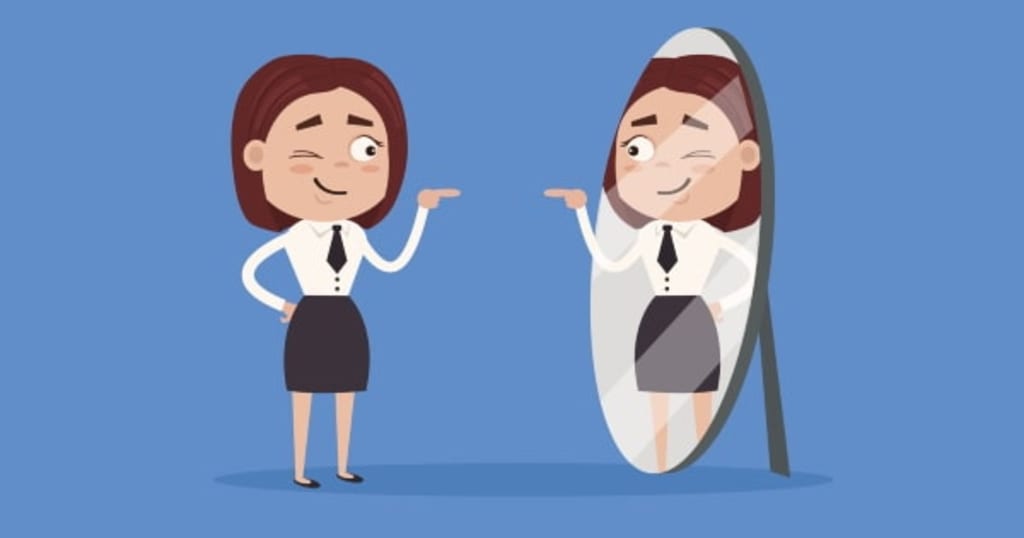
Decades of psychology research have proven that talking to yourself is not only normal, but most of us engage in some form of self-talk on a daily basis. This form of 'inner speech' is known as self-talk, and is defined as verbalized thoughts directed towards yourself or a part of your life. Why do we talk to ourselves? And does what we say matter? These are both valid questions, but ultimately, the answer is up to the individual.
Self-talk involves more than just personal conversations, like 'I need to work on my free throw.' It can also refer to reflections you make throughout the day, like 'The gym is crowded tonight. I'll come back tomorrow.' While most self-talk is silent, speaking to oneself out loud is also a form of self-talk. Lev Vygotsky, a Russian psychologist in the 1930s, even theorized that vocal self-talk may be essential for development, as children usually talk to themselves out loud when they are playing.
As children mature, the conversations they have with adults gradually begin to take on an inner form. Self-talk, or talking to oneself internally, is integral for managing behaviors, emotions, and developing plans. It can even motivate us and give us strength to work through difficult situations. Ultimately, self-talk is hugely beneficial for our growth and development.
Studying self-talk can be challenging as it requires people to monitor their behavior closely in order to capture something that often occurs subconsciously. Researchers are thus still in the process of answering fundamental questions, such as why some individuals self-talk more than others, which parts of the brain are activated during self-talk, and how these processes differ from that of regular conversation. Nonetheless, what can be affirmed with confidence is that what individuals say in these conversations can have a consequential effect on their mentality and performance. Studies have indicated that engaging in instructional or inspirational self-talk can result in elevated attention, enhanced self-confidence, and can aid in completing everyday activities.
A study of collegiate tennis players discovered that tying instructional self-talk into their practice enhanced their focus and accuracy. Just as talking with someone can lower your anxiety levels, speaking to yourself can also be a useful way to manage your emotional state. Distanced self-talk, where you talk to yourself as if you were speaking to another individual, is a great way to try and reduce stress. Rather than telling yourself 'I'm going to smash this examination,' you should aim to phrase it like 'Caleb, you are totally ready for this assessment!' This research showed that using self-talk in this way is especially beneficial in situations where you may be feeling anxious, for example, going up to strangers or talking in front of a crowd.
Though many people find it beneficial to talk positively to themselves, too much negative self-talk can have a detrimental effect. Excessively critical behaviour or an over-abundance of negative thoughts can be difficult to overcome and lead to anxiety for both children and adults. When someone constantly blames themselves for their issues and remains stuck in this thought pattern, the likelihood of experiencing depression significantly increases.
Cognitive Behavioral Therapy (CBT) is a psychological treatment aimed at regulating our own inner dialogue. Therapists often provide ways to identify negative thoughts and replace them with more positive reflections. Implementing these tools regularly can have a positive effect on our mental wellbeing. The next time we find ourselves chatting internally, let us remember to be kind to ourselves; that internal voice is someone we'll be with for many years to come.
About the Creator
The Electric Command Center: China’s $7 Billion EV Fleet Revolution (2026-2034)
In 2026, the silhouette of the Chinese skyline is defined not just by skyscrapers, but by a quiet, invisible revolution. The traditional roar of diesel engines in logistics hubs from Shenzhen to Shanghai is fading, replaced by the high-tech hum of a fully electrified commercial world. But the true story isn't just about the vehicles; it’s about the "intelligence" managing them.
By Neeraj kumar4 days ago in Education




Comments
There are no comments for this story
Be the first to respond and start the conversation.