
The Electric Command Center: China’s $7 Billion EV Fleet Revolution (2026-2034)
From Diesel to Electric: China’s Commercial Mobility Shift
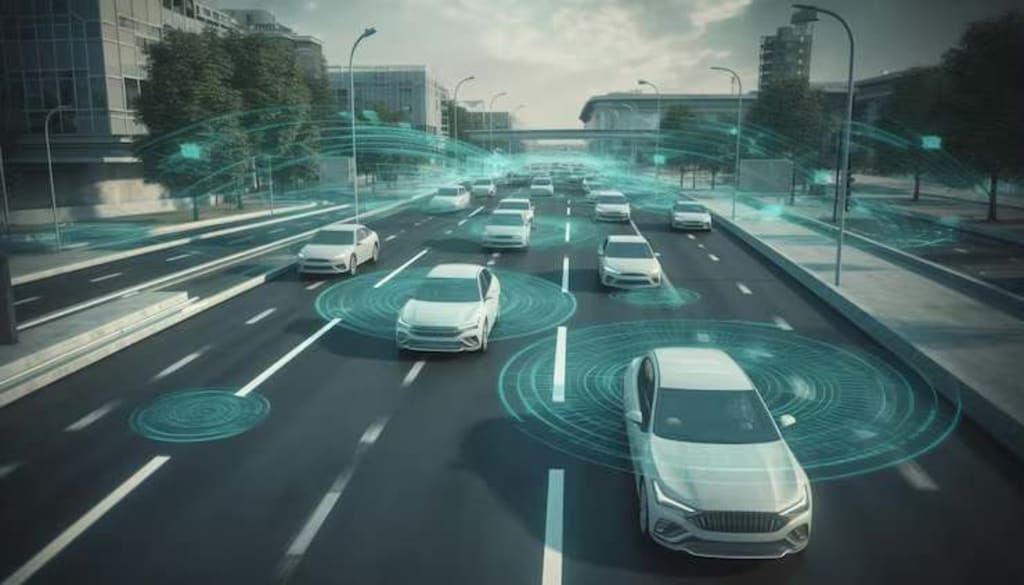
In 2026, the silhouette of the Chinese skyline is defined not just by skyscrapers, but by a quiet, invisible revolution. The traditional roar of diesel engines in logistics hubs from Shenzhen to Shanghai is fading, replaced by the high-tech hum of a fully electrified commercial world. But the true story isn't just about the vehicles; it’s about the "intelligence" managing them.
The China EV fleet management sector has reached a critical inflection point. Valued at USD 4.13 Billion in 2025, the industry is projected to grow to USD 7.15 Billion by 2034, expanding at a CAGR of 6.28%. In 2026, this field is where government vision, cutting-edge AI, and massive infrastructure projects converge to rewrite the rules of global logistics.
1. The Policy Pivot: From Incentives to Structural Mandates
In 2026, China's "New Energy Vehicle" (NEV) strategy has matured. While the era of broad consumer subsidies is tapering, the government has doubled down on commercial fleet electrification. The 2026 policy landscape is defined by the extension of vehicle trade-in subsidies and strategic tax exemptions specifically designed to lower the barrier for logistics giants.
Targeted Decarbonization: National mandates now prioritize "Green Logistics Zones" in major urban centers. In 2026, many Tier-1 cities require 100% electrification for last-mile delivery and public transport fleets to meet strict 2030 carbon-peaking goals.
Fiscal Continuity: The extension of tax exemptions for commercial EV purchases through 2026 provides the financial predictability that fleet managers need to commit to multi-year transition plans.
The "Dual-Credit" Expansion: As of early 2026, the dual-credit system—which historically penalized manufacturers of internal combustion enginesis being refined to more heavily reward the production of heavy-duty electric trucks and specialized commercial units.
2. Infrastructure Breakthrough: The Era of "Zero-Downtime"
The single greatest hurdle to EV fleet adoption has always been "downtime"the hours lost while a vehicle sits at a charger. In 2026, China has effectively solved this through the rapid scaling of Battery Swapping Infrastructure, led by industry titans CATL and NIO.
The "Swap" Advantage
By early 2026, the joint network of CATL and NIO has established thousands of stations across the national highway network. For a fleet manager, this is a total game-changer:
Lightning-Fast Turnaround: A commercial truck or van can swap its battery in under 5 minutes, making the "refueling" process faster than traditional diesel pumping.
Asset Decoupling: Through "Battery as a Service" (BaaS) models, fleet operators can lease batteries separately from the vehicle chassis. This reduces upfront capital expenditure by up to 35%, as companies only pay for the energy they consume.
Lifecycle Intelligence: Swapping stations serve as diagnostic centers. Every time a battery is swapped, its health is analyzed by AI, ensuring that the fleet always runs on optimized, high-performance cells.
3. The AI Brain: Telematics and Real-Time Optimization
In 2026, an EV fleet is no longer just a group of vehicles; it is a distributed network of "sensors on wheels." The integration of Artificial Intelligence and Advanced Telematics has turned fleet management into a data-driven science.
Predictive Maintenance (PdM): Using AI algorithms, fleet managers in 2026 can predict component failures weeks before they happen. By monitoring "Digital Twins" of their vehicles, companies have reported a 30% reduction in unplanned downtime.
Intelligent Charging Management: AI platforms now interface directly with the state grid. They automatically schedule charging during "off-peak" hours when electricity prices are lowest, while ensuring every vehicle has exactly enough range for its next shift.
Real-time Route Optimization: 2026 telematics solutions don't just provide GPS; they provide energy-efficient routing. AI calculates the most efficient path based on traffic, elevation, weather, and current battery levels, often saving up to 12% in energy consumption per trip.
4. Human-Centric Innovation: Safety and Standards
As the world’s largest EV laboratory, China is now setting global technical standards. In early 2026, the Ministry of Industry and Information Technology (MIIT) introduced new safety regulations that prioritize manual accessibility over high-tech design—most notably the mandate for mechanical door handles to ensure safety during power failures.
This shift underscores a broader trend in 2026: the prioritization of operational reliability over aesthetic novelty. For fleet managers, these standards mean safer work environments for drivers and reduced liability in the event of accidents.
5. Market Segmentation: From Last-Mile to Heavy-Duty
In 2026, the landscape of electrification has expanded far beyond small delivery vans.
Last-Mile Delivery: Platforms like JD.com and Meituan have largely achieved 100% electrification in their urban fleets, utilizing AI-driven sorting and dispatch.
Heavy-Duty & Mining: The "New Frontier" of 2026 is the electrification of heavy-duty trucks used in mining and port operations. These vehicles utilize megawatt-scale charging and high-density swapping to maintain 24/7 operations.
Shared Mobility: Ride-hailing fleets are now dominated by EVs, with AI-driven "dynamic positioning" that moves vehicles to high-demand areas before orders even come in.
6. Challenges and the Path to 2034
While the path to USD 7.15 Billion is paved with innovation, 2026 also brings significant challenges that fleet managers must navigate:
Grid Integration: The massive demand for localized power at charging hubs requires significant upgrades to urban electrical grids.
Data Cybersecurity: As vehicles become increasingly connected, protecting the fleet’s data from cyber threats has become a top-tier corporate priority.
Talent Scarcity: There is a growing gap for specialized "EV Technicians" who can manage the high-voltage systems and complex software stacks that define 2026 fleets.
Conclusion: A Global Blueprint for Green Logistics
China’s EV fleet management story in 2026 is a glimpse into the future of global commerce. By harmonizing aggressive infrastructure (Swapping), intelligent software (AI Telematics), and supportive policy (Tax Exemptions), China has created a self-optimizing ecosystem that is the envy of the world.
As we look toward 2034, the lessons learned in the bustling hubs of Shenzhen and Beijing will likely become the global standard. For investors, operators, and policymakers, the message of 2026 is clear: the transition to electric is no longer a question of "if"—it is a question of how intelligently you can manage it.
About the Creator
Keep reading
More stories from Neeraj kumar and writers in Education and other communities.
The Healing Giant China $573 Billion Pharmaceutical Revolution (2025-2033)
In 2026, the global healthcare map is being redrawn, and its epicenter is undeniably moving East. China is no longer just the world’s manufacturing hub; it is now its second-biggest pharmaceutical laboratory. Driven by a rapidly aging population, a massive surge in chronic disease prevalence, and a government-led "Innovation-First" mandate, the China pharmaceutical industry is entering its most transformative decade. According to latest research, the sector reached USD 306.5 Billion in 2024 and is projected to skyrocket to USD 573.0 Billion by 2033. Exhibiting a robust CAGR of 7.20% during 2025-2033, the nation is successfully transitioning from "Made in China" to "Innovated in China."
By Neeraj kumarabout 22 hours ago in Education
Is Gravity a Force or an Illusion?
Gravity in Everyday Experience In daily life, gravity feels unquestionably real. When you drop an object, it accelerates downward. When you jump, gravity pulls you back to Earth. These experiences suggest a force acting continuously on matter.
By shahkar jalal7 days ago in Education
The Rise of Blooket: Shaping the Future of Learning and Digital Interaction
The world of education, business, and design is constantly evolving. Every year, new technologies emerge, promising to revolutionize the way we interact, learn, and even think. However, there’s one concept that has recently been gaining attention in the education sector that may not be on the tip of everyone’s tongue: Blooket.
By Backlinks Carta day ago in Education




Comments
There are no comments for this story
Be the first to respond and start the conversation.