
Why AI Might Be Weakening Your Math Brain
Shocking Truth Revealed


AI may be weakening your math brain by reducing mental effort and problem-solving engagement. Overreliance on tools like calculators and chatbots can dull analytical thinking and make it harder to perform even basic math tasks without assistance.
In today’s digital world, the idea that AI is making your math brain weaker isn’t just a theory—it’s a growing concern. With the rise of AI-powered calculators, auto-solvers, and chatbots that provide instant answers, many are unknowingly losing their ability to think critically and solve problems independently. As dependency on these tools increases, your brain’s natural cognitive functions—especially in math—may begin to decline.
AI math tools have completely transformed our approach to problem-solving since ChatGPT emerged just two and a half years ago. Our relationship with numbers and calculations has undergone a remarkable transformation. AI now handles most of the mental heavy lifting.
The growing popularity of math-solving AI applications presents both opportunities and challenges. Math tutor AI systems provide quick solutions but might weaken our fundamental numerical skills. Research indicates that people who regularly use AI could become less creative as time passes. Advanced math AI tools can tackle complex problems easily, but we must consider the tradeoffs. Google’s 2024 report showed AI generated more than 25% of its code. AI engineer Andrej Karpathy took this further in February 2024 by introducing “vibecoding” – a method that turns spoken prompts into code without requiring traditional coding expertise. Major companies have reduced their software engineering hiring from 3,000 positions monthly to almost none, which suggests the “ai kills jobs” narrative might be accurate.
This piece examines how our mathematical abilities are declining, why numbers face bigger challenges than reading and writing, and what these changes mean for education and our careers ahead.
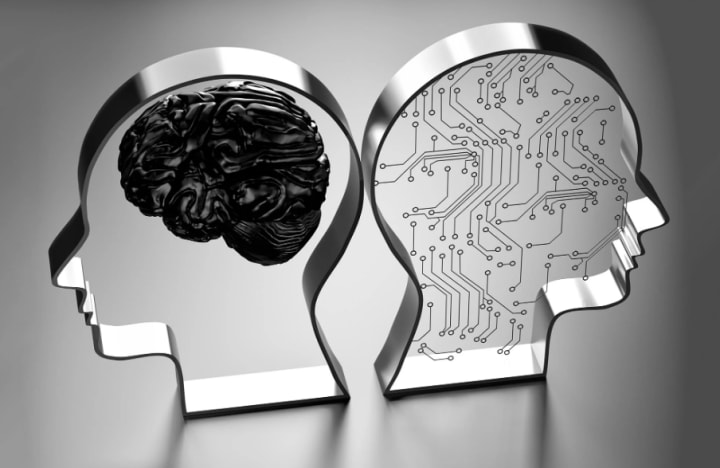
How AI is quietly replacing your math brain
Do you recall when calculators sparked heated debates? Back in the mid-1970s, 72% of teachers and mathematicians stood against giving calculators to seventh graders. Today, we see the same pushback against AI math tools, but the stakes are much higher.
From calculators to ChatGPT: a change in dependency
The calculator debates of the ’80s and ’90s look almost naive compared to our current AI revolution. Teachers worried that simple calculation devices would damage basic math skills back then. Now, advanced math AI solvers tackle everything from simple arithmetic to complex calculus and more.
Modern AI math tools have changed our approach to problem-solving, unlike calculators that just automated mechanical operations. The contrast stands out: calculators did the same work as students, just quicker and with better accuracy. Today’s math AI doesn’t just give answers—it shows complete reasoning paths that often skip the learning process.
This radical change has created new levels of dependency. Research shows students use AI-based math tools mainly because they find them engaging and habit-forming. Many students now reach for AI help as soon as they face difficulty instead of strengthening their math skills through practice.
Teachers have mixed views about this development. A newer study of 250 teachers shows 61% believe their students see AI as “a mentor or study partner rather than a crutch”. All the same, many worry we’re trading quick fixes for lasting math skills.
Why numeracy is more at risk than literacy
Math skills face greater risks from AI disruption than language skills. Mathematical reasoning needs step-by-step problem-solving abilities that quickly weaken without regular practice.
The data raises red flags. Turkish high school students with ChatGPT access solved 48% more practice math problems correctly but scored 17% lower on actual tests. This pattern suggests AI tools might help finish homework while hurting real learning.
Math abilities get less natural practice than language skills, which we use daily in conversation. The precision math requires means small gaps in understanding grow quickly. Students who use AI to skip learning basic concepts miss vital building blocks for advanced mathematical thinking.
AI dependency seems to actively harm key mathematical abilities. Studies show that relying on AI-based math tools hurts:
Problem-solving ability
Critical thinking
Creative thinking
Self-confidence
Independent decision-making
This issue goes beyond theory. One expert points out that “AI is not very good at math”—yet students trust these imperfect tools more than their own mathematical instincts. Even as AI gets better, the core issue remains: outsourcing our mathematical thinking weakens these mental muscles.
Looking at calculator adoption offers warnings and hope. While calculators faced early resistance, they boosted mathematical possibilities when used properly. The question remains whether today’s more powerful AI tools will enhance human abilities—or replace them completely.
The rise of ‘vibecoding’ and the fall of hands-on problem solving
“Vibecoding” changes how we work with computers faster than ever, just like math AI tools changed our way of doing calculations. This new development shows how we depend more on artificial intelligence to handle our thinking tasks. Now it targets programming itself.
What is vibecoding?
Computer scientist Andrej Karpathy introduced “vibecoding” in February 2025. This new way of creating software lets developers tell AI what they want in plain language and AI writes the code. Developers no longer write each line of code. They adopt a “code first, refine later” mindset that puts trying things out ahead of structure and performance.
“It’s not really coding – I just see things, say things, run things, and copy-paste things, and it mostly works,” Karpathy said about his method. The system uses large language models (LLMs) like ChatGPT and OpenAI’s Codex. Now even beginners can create software without years of training.
Vibecoding changes a programmer’s job from writing code to guiding and testing what AI creates. This marks a complete change in software development.
How AI-generated code is changing developer habits
AI-assisted coding already shows measurable effects on how developers work. GitClear studied 153 million changed lines of code. They found “code churn”—code thrown away within two weeks—will likely double in 2024.
Developers copy and paste code more often than they update, delete, or move it. This shows AI-generated code doesn’t fit well into bigger projects. GitClear founder Bill Harding calls this problem “AI-induced tech debt”.
Changes happen faster throughout the industry. Y Combinator found that AI wrote 95% of the code for 25% of startups in its Winter 2025 batch. These companies don’t just use AI as a helper—AI writes most of their software.
The risk of forgetting how to code
The biggest worry is that vibecoding might make developers forget basic programming skills. Developers who lean too much on AI might lose their knack for thinking through problems and solving them on their own.
This creates several risks:
Security vulnerabilities: Security checks often skip AI-generated code, which creates weak spots
Debugging challenges: Developers can’t fix problems they don’t understand
Skill atrophy: Using AI coding helpers too much can weaken problem-solving and basic coding skills
Money matters too. OpenAI CEO Sam Altman warns that we might need fewer software engineers because of AI. “Each software engineer will just do much, much more for a while,” he said, “And then at some point, yeah, maybe we do need less software engineers”.
Altman backs this up with facts—AI now writes over 50% of code in many organizations. This looks like what’s happening with math AI tools: when we let AI do our thinking, we might lose those skills ourselves.
Yet not everyone thinks coding skills will die out. Some experts say knowing how code works will matter more as AI handles routine tasks. One data scientist put it well: “It is great to have powerful tools that generate useful output, but we feel much better about them if we know what they are doing inside the black-box”.
Why students and workers are losing core math skills
Students around the world are losing their mathematical abilities quietly, and AI systems play a key role in this decline. AI tools that solve complex math problems are now available to more people, which creates unprecedented challenges to our collective numeracy.
AI as a shortcut for data analysis
AI tools now complete data analysis tasks that once needed strong mathematical skills in just minutes. Companies say AI implementation helps 54% of businesses save money. Nobody can deny the appeal—AI processes huge datasets faster than humans and gives quick insights without needing deep math knowledge.
This transformation moves even faster in our data-rich world. Studies show people created 90% of the world’s data just in the last two years. Data analysts need different skills now. They must know AI and machine learning concepts, which often leaves little room to build simple mathematical intuition.
“If routine data analysis tasks take up too much of an analyst’s time, generative AI can automate them,” notes one industry report. But this convenience comes at a price—it weakens our thinking abilities.
The decline of simple quantitative reasoning
Students and professionals are getting worse at quantitative reasoning (QR)—the skill to interpret data and draw conclusions from numbers. A survey found only 34% of first-year college students “often” drew conclusions by analyzing numbers themselves.
Researchers noticed students take mathematics and biology courses almost separately. They rarely see how math applies to their field of study. This gap creates dangerous problems in practical mathematical thinking.
AI advances will likely make this worse. Studies show people who use AI tools more tend to think critically less. A study participant said, “The more I use AI, the less I feel the need to problem-solve on my own. It’s like I’m losing my ability to think critically”.
How math solving AI tools are reshaping learning
Math teachers don’t agree about AI’s effect on education. About 35% think AI-powered teaching tools won’t affect achievement, while 20% believe these tools will make math scores drop. Yet 70% of math teachers say they haven’t learned how to use AI effectively.
Turkish high school students showed the most worrying results. Students with AI math solvers finished 48% more practice problems correctly. But they scored 17% worse on tests without AI later. This shows AI math tools might help finish homework but hurt real learning.
Education experts say AI tools push teachers to move beyond simple computation tests. But students often become dependent on AI instead of understanding math better. A researcher pointed out, “While AI can be used to provide students with accurate and quick results, it can also lead to students becoming complacent and overly reliant on technology”.
This mental outsourcing creates a troubling pattern. Our mathematical abilities get weaker as we let AI do more of our mathematical thinking.
About the Creator
Peter Ahn
DoggyZine.com provides unique articles. Health, Behavior, Life Style, Nutrition, Toys and Training for dog owners.
The Power of Fellowship: Strengthening Faith Through Shared Moments and Unity
The Power of Fellowship in Everyday Faith The power of fellowship plays an important role in many faith communities. It brings people together through shared beliefs, prayer, and support. Fellowship is not only about gathering in one place. It is about building meaningful relationships that help people grow in faith.
By World Olivet Assemblyabout 8 hours ago in Education
I asked Gemini, Claude, and ChatGPT to create a website, and there was one obvious winner
Vibe-coding seems to be on the rise, and it is fast democratizing software and web development. Not too long ago, a huge barrier of syntax errors separated the average user from developing a website that worked. Times have changed over the last few years. The latest generation of LLMs are powerful and capable enough to turn plain language descriptions into functional code, allowing even non-coders like myself to put together HTML pages with nothing more than a prompt
By Rosalina Jane4 days ago in Education
Early March 2026: 4 Goals Accomplished
It's early March and I've now accomplished my 4th writing goal for the year of 2026. Before diving into the behind-the-scenes of it... why not tell you up front what that accomplishment was? I was published in a 2nd publication for this year. Published in Helix Literary Magazine out of Central Connecticut State University. You can read it for free right now!
By Stephen Kramer Avitabile6 days ago in Writers


Comments
There are no comments for this story
Be the first to respond and start the conversation.