
When Politics Interrupted the Game: Sports Boycotts in History
Sports Boycotts in History

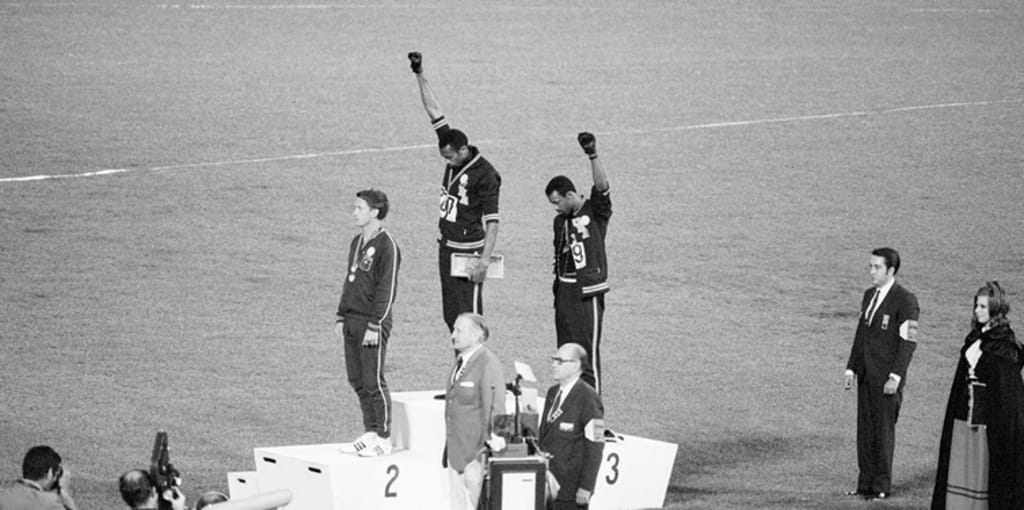
Sports have long been celebrated as a universal language that transcends borders, ideologies, and political divides. Yet history shows that athletic arenas are not immune to the pressures of politics. At pivotal moments, governments, athletes, and organizations have used boycotts as a way to protest injustice, apply diplomatic pressure, or draw attention to global conflicts. These boycotts, while controversial, have left lasting marks on both sports history and international relations.
The 1980 Moscow Olympics – A Cold War Flashpoint
The 1980 Summer Olympics in Moscow became one of the most politically charged sporting events in history. Tensions had been escalating between the United States and the Soviet Union for years, but the flashpoint came in December 1979 when the Soviet military invaded Afghanistan. Viewing the move as an aggressive expansion of Soviet influence, U.S. President Jimmy Carter called for a boycott of the Games unless Soviet troops withdrew.
When the deadline passed without change, the United States formally announced its withdrawal from the Olympics. The decision was quickly joined by more than 60 other nations, including Canada, West Germany, Japan, and China. Some countries allowed individual athletes to compete under the Olympic flag rather than their national banners, but the absence of entire delegations from powerful sporting nations left a visible void in the competition.
The boycott deeply altered the athletic landscape of the Games. Events such as track and field, swimming, and gymnastics—normally dominated by U.S. and Western athletes—saw new faces atop the podium. While the Soviet Union and its allies celebrated their increased medal counts, critics argued that the victories were diminished by the absence of world-class competitors.
Beyond the sporting results, the boycott’s political symbolism resonated worldwide. Supporters viewed it as a strong moral stance against Soviet aggression, while detractors saw it as an unfair politicization of sport that punished athletes for political disputes beyond their control.
In the end, the 1980 Moscow Olympics demonstrated that the Olympic ideal of unity could not entirely escape the gravity of geopolitical conflict. The Games became a Cold War battleground in a different arena—one where victories and losses were measured not only in medals but in political influence and international perception.
The 1984 Los Angeles Olympics – A Tit-for-Tat Response
Four years after the politically charged Moscow Games, the Olympic movement once again found itself caught in the crossfire of Cold War politics. In May 1984, just weeks before the Summer Olympics were set to open in Los Angeles, the Soviet Union announced it would not participate. Citing “security concerns” and an alleged anti-Soviet atmosphere in the United States, the USSR claimed it could not guarantee the safety of its athletes.
To many observers, the explanation was unconvincing. The move was widely interpreted as retaliation for the U.S.-led boycott of the 1980 Moscow Olympics. The absence of the Soviet Union was compounded by the withdrawal of 14 other Eastern Bloc and allied nations, including East Germany, Cuba, and Bulgaria. However, Romania broke ranks and competed, earning significant praise and goodwill in the West.
The Soviet boycott had a substantial impact on competition. Events such as gymnastics, wrestling, weightlifting, and athletics—traditionally dominated by Eastern Bloc athletes—saw new champions emerge. American athletes, in particular, enjoyed a surge in medal wins, with the United States topping the medal table by a wide margin. While this was a moment of pride for the host nation, some questioned the value of the victories given the absence of some of the world’s strongest competitors.
From a political standpoint, the boycott underscored the extent to which global rivalries had infiltrated the Olympic stage. For the Soviets, it was a way to deny legitimacy to an American-hosted Games and highlight the ideological divide between East and West. For the United States, the event became an opportunity to showcase its organizational prowess, economic strength, and sporting excellence to a global audience.
Ultimately, the 1984 Los Angeles Olympics mirrored the Moscow Games of 1980: both were less about athletic unity and more about the enduring tug-of-war for influence during the Cold War.
Apartheid-Era South Africa – A Long Sporting Isolation
From the early 1960s until the early 1990s, South Africa became a global sporting outcast due to its policy of apartheid—an institutionalized system of racial segregation and discrimination. The international community, outraged by the country’s exclusionary laws and treatment of nonwhite citizens, used sports boycotts as a highly visible means of protest.
The movement began to gather momentum in 1964, when the International Olympic Committee (IOC) banned South Africa from the Tokyo Games after it refused to field racially integrated teams. This ban remained in place for nearly three decades, effectively erasing the country from the world’s premier sporting events. Other organizations soon followed: FIFA suspended South Africa from international football in 1964, and in cricket, rugby, and tennis, tours involving South African teams became increasingly rare and controversial.
Perhaps the most visible form of protest came through rugby and cricket tours, which were frequently disrupted by demonstrations and government pressure. In 1970, South Africa was expelled from the International Cricket Council, and in 1977, the Commonwealth countries agreed to a “Gleneagles Agreement” discouraging sporting contact with South Africa. These measures were not simply symbolic—they struck at the heart of South Africa’s sporting pride and international image.
The boycotts served a dual purpose: they denied the apartheid regime a platform for soft power while also signaling to South Africans that racial segregation carried real global consequences. For many athletes—white and nonwhite alike—the isolation meant losing years of potential competition at the highest level.
It was only after the dismantling of apartheid in the early 1990s that South Africa was welcomed back. The nation’s return, marked by appearances at the 1992 Barcelona Olympics and the 1995 Rugby World Cup, symbolized both political transformation and the enduring belief that sport can reflect—and inspire—societal change.
Beyond the Olympics – Other Notable Boycotts
While Olympic boycotts tend to capture global headlines, political disputes and moral protests have influenced many other sporting arenas. From football to cricket to regional competitions, teams and nations have at times refused to compete, using sport as a platform for political expression or resistance.
One of the earliest major examples came during the 1966 FIFA World Cup. Several African nations boycotted the tournament to protest FIFA’s qualification system, which effectively denied Africa an automatic spot at the finals. At the time, African and Asian teams had to compete for a single berth, a policy seen as disrespectful to emerging football nations. The protest ultimately pressured FIFA to expand representation for non-European, non-South American teams in future tournaments.
In cricket, political tensions between India and Pakistan have frequently spilled over into sports. On multiple occasions, bilateral series were canceled due to diplomatic disputes, border conflicts, or acts of terrorism. These cancellations not only deprived fans of one of cricket’s most intense rivalries but also highlighted how sports could become collateral damage in geopolitical struggles.
In wrestling and other combat sports, boycotts have occurred when nations refuse to face opponents due to political or ideological differences. For example, athletes from certain countries have forfeited matches rather than compete against representatives of nations with whom their governments have hostile relations. Such acts, while controversial, are often celebrated at home as political statements.
Even regional competitions have seen boycotts. In the 1990s and early 2000s, diplomatic disputes in parts of the Middle East led to withdrawals from football tournaments and multi-sport events. These actions, while smaller in scale than Olympic boycotts, still carried symbolic weight and reflected broader political divides.
Across all these examples, the message is clear: the influence of politics in sport is not confined to the Olympic Games—it is a recurring global phenomenon.
The Double-Edged Sword of Boycotts
Sports boycotts occupy a complex and often contentious place in history. On one hand, they are seen as powerful tools for drawing global attention to political injustice, human rights violations, or aggressive state actions. On the other, they raise ethical questions about whether athletes—who train for years to reach peak performance—should bear the consequences of political disputes beyond their control.
Supporters of boycotts argue that sports, far from being purely apolitical, are deeply intertwined with national image and prestige. Denying a country the chance to compete or host can deliver a symbolic blow that resonates with both domestic and international audiences. The isolation of apartheid-era South Africa, for instance, demonstrated how sustained sporting bans could apply moral and diplomatic pressure, contributing to real political change.
Critics, however, point out the human cost. Athletes dedicate years—sometimes decades—of training for a brief window of competition at the highest level. A boycott can abruptly erase that opportunity, leaving careers unfinished and dreams unrealized. The 1980 and 1984 Olympic boycotts, for example, denied hundreds of world-class athletes their chance to compete, regardless of their personal political beliefs. Many never returned to that stage.
There is also the question of effectiveness. Some boycotts achieve tangible political impact, but others fade into symbolic gestures that fail to shift the policies they aim to challenge. In such cases, the loss often feels greater for the athletes and fans than for the targeted governments.
Ultimately, sports boycotts remain a double-edged sword: they can be moral statements of solidarity and resistance, but they also risk undermining the unifying spirit of sport itself. As history shows, when politics and athletics collide, the outcome is rarely clear-cut, and the ripple effects often last long after the final whistle.
About the Creator
Gus Woltmann
Hi everyone, nice to meet you all! I am Gus Woltmann, sports journalist from Toronto.
Keep reading
More stories from Gus Woltmann and writers in Education and other communities.
Fan Culture: How Supporters Shape Teams and Leagues
Fans are more than just spectators. They are the beating heart of sports. Their chants, loyalty, and passion help define what a team stands for. Without fans, games lose energy. Stadiums fall silent. And the connection between clubs and communities breaks down.
By Gus Woltmann7 months ago in Education
Surviving Cancer: Entering the Golden Alchemical Door to Teaching
It starts with love . . . Entering the Golden Door: Who Am I? Going through cancer treatments with chemo, a strange thing happened, for I started to forget things, even who I am because my wife ghosted me and my friends would have nothing to do with me. Without human contact, you forget what it means to be human. I am a professor at a university, but I forgot what I taught. . . .
By WILD WAYNE : The Dragon Kingabout 20 hours ago in Education
Hands of Hope: The Impact of Volunteer Service in Faith-Based Communities
Faith is often expressed through prayer and reflection, but its true strength is revealed through action. Volunteers play a vital role in translating belief into meaningful service, helping churches grow and positively influence the communities around them. Through dedication, compassion, and teamwork, volunteers become the driving force behind outreach, support, and connection. Their efforts demonstrate how service rooted in faith can create lasting change.
By Mike Signorelli7 days ago in Education



Comments
There are no comments for this story
Be the first to respond and start the conversation.